Many commentators are already claiming that the war with Iran is ‘spiralling out of control.’ I try not to be uncharitable: I am a Catholic, after all, and the Church tells me it is a sin. But if I were tempted, I should say that the only thing spiralling out of control is cliché.
You could argue that drone attacks are a sign that Iran’s ballistic and cruise missiles aren’t actually proving that effective
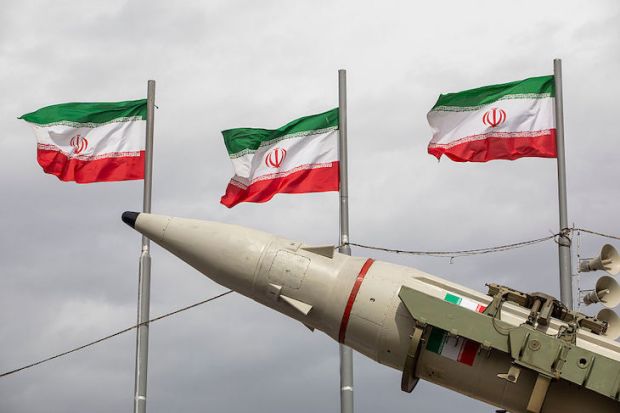
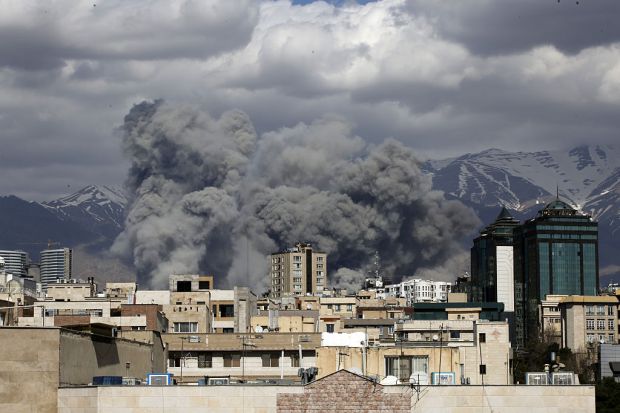
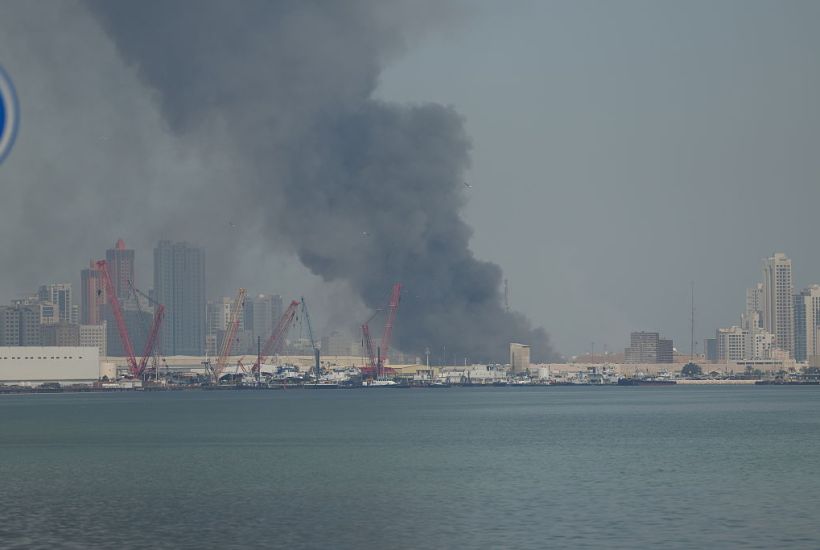
Iran said it would hit out wildly if it were attacked. It also made clear that direct attacks on the leadership of the Islamic Republic would be treated as an existential threat. So why anyone is now surprised that Iranian missiles are hitting targets, some clearly deliberate, some apparently random, in every Gulf Cooperation Council state (including Oman), in Jordan, in Cyprus, and of course in Israel, is a mystery.
One of the latest shock-horror stories is that the US Embassy compound in Riyadh has been struck by drones. The Saudi government says they caused a small fire and minor damage. I know the compound well. It is big – as all US embassies are. So it’s a pretty big target. And the diplomatic quarter is not a place where many Saudis live. So the risk of collateral damage is low. The risk to Americans is pretty low too: the State Department will have evacuated non-essential staff and families already and their diplomatic sites across the region had gone into lockdown well in advance of the first strikes on Tehran.
In addition, the US has seen this play before. The marine barracks in Beirut and the US embassies in Beirut and Kuwait were all car-bombed in 1983 – the Beirut embassy again in 1984. Their embassy in Damascus was very nearly destroyed by a car bomber in 2006. After the fall of Saddam, the huge new embassy in Baghdad was regularly rocketed from Sadr city – diagonally opposite across the Tigris, which meant that if anything fell short, they’d kill fish not Iraqis.
Between 2011 and 2013 mobs from time to time threatened the US embassy in Cairo. In Libya in 2012, Chris Stevens, the admirable US ambassador – and a friend – was murdered by a gang of jihadis just for being American. And, of course, the US consulate-general in Erbil – in Iraqi Kurdistan – has been regularly targeted by Iran’s friends in the local Shia militias.
It’s happened to us, as well, usually at the hands of inflamed mobs burning things down, as happened at the time of Suez in 1956, and in 1967 when Nasser – in his usual mendacious way – accused the RAF and the USAF of flying sorties for the Israelis during the six-day war. It also happened across the West Bank in 2006 after we were accused (falsely: I was there) of collusion with the Israelis when they seized Ahmad Sa’adat of the Popular Front for the Liberation of Palestine and five other security prisoners from prison in Jericho. Our embassy in Baghdad and our consulate-general in Basra were regularly rocketed between 2003 and 2011. The French and the Danes have been hit from time to time too. But generally speaking, it’s the Anglo-Americans who get it in the neck.
And quite frankly, it goes with the territory. If you want to be a diplomat and want to work in troubled parts of the world, then there will be personal risk attached. Inside the Foreign Office, at the foot of the grand staircase, there is a memorial to British diplomats killed in service. It’s a surprisingly long list for those who think all diplomats do is go to cocktail parties and make small talk. Two of the names are of people I knew and liked very much – Percy Norris, who was murdered in 1984 in Bombay (as it was still then called) by Abu Nidal gunmen and Brigadier Stephen Saunders, murdered in Athens by a small Greek terrorist faction 16 years later. During my time in Libya in 2011 we detected – we thought – two plots to attack our pretty defenceless mission in Benghazi. Fire fights erupted close by. My successor’s convoy was attacked by RPGs in 2012 – and two of our excellent close protection team seriously injured. It hits home. But people will take the risk if they think they are doing something worthwhile. And that means believing in the value of a proper (and I emphasise that term) foreign policy and understanding what is at stake if diplomacy fails.
In the end, a couple of drones aren’t going to worry anyone in DC too much. Indeed, you could argue that drone attacks are a sign that Iran’s ballistic and cruise missiles aren’t actually proving that effective, given the strength of the region’s generally American-made air defences. And that’s perhaps also a lesson from the war in Ukraine, where drones – including the suicide version (the Shahed) that the Iranians have sold in their thousands to Moscow – have been highly effective on the battlefield.
So the calculus now will be: how many more missiles and drones does Iran have at its disposal? The US and Israeli air strikes have undoubtedly done a huge amount of damage to Iranian missile launch, storage and fuelling sites and to its own air defences – which now seem to be non-existent. Iran can doubtless still do a lot of damage. Energy prices are starting to spike. And US public opinion is uncertain. But it is not at all clear whether this will matter much in Washington. For the moment, the goal seems to be the Venezuela option: decapitate the regime and wait (or arrange) for someone else to take power who won’t screw with the US or take sides with its enemies but concentrate on getting domestic stuff right. That might not help Iranian democrats. And it certainly doesn’t look like the long arc of the universe bending towards justice. But it sure as hell looks like Trump. And like it or not, it is in its own way a foreign policy, the sort diplomats with a certain transactional and kinetic nature might get behind.
It would actually meet many of the recommendations we at Policy Exchange made in our 2023 report on The Iran Question and British Strategy (though it would have been nicer if British policy had met them). Even diplomats used to cocktail parties might think that some damage to some diplomatic premises is worth it if that’s where we end up.