It’s been a while, but student censors are on the march once more. This time, they have Reform UK firmly in their sights. With eight MPs in Parliament and a huge lead in opinion polls, Reform has rapidly become a key part of Britain’s political landscape. But denial is the current vibe on campus, and students seem determined to make universities Reform-free zones.
Students need to get with the times. This anti-free speech on campus stuff is all so 2022
Bangor University is the latest to hit the headlines after a Reform MP was banned from addressing students. Sarah Pochin, MP for Runcorn and Helsby, offered to conduct a question-and-answer session, but her request was dismissed. The Bangor Debating and Political Society, based at the university in north Wales, issued a statement claiming: ‘We have zero tolerance for any form of racism, transphobia or homophobia displayed by the members of Reform UK’. ‘Their approach to the lives of others is antithetical to the values of welcoming and fair debate that our society has upheld for 177 years,’ the group pompously declared. And so a ban was issued in the name of ‘keeping hate out of our universities’.
The multiple ironies of a debating society banning debate, a political society refusing to engage in political discussion, and students insulting their opponents in the name of stopping hate are almost too much to bear. But these anti-free speech activists are not ashamed. Quite the opposite. They are ‘proud to be the first of the debating unions to take a stand against Reform UK’ and hope other universities will follow suit.
Given Reform’s lead in the polls, it is highly likely that a good proportion of students, or their parents, friends, and neighbours back home, support Nigel Farage’s party. Branding Reform racist, transphobic, homophobic, hateful, and antithetical to the debating society’s values tells these students that it’s not just Sarah Pochin who is not welcome on campus. The message, loud and clear, is that university is not for the likes of them. So much for inclusivity and that elusive sense of ‘belonging’ universities are now meant to promote. Instead of nurturing tolerance, academia now enforces political conformity.
Pedants cheering on Bangor’s decision claim that students have not ‘banned’ Reform; rather, they have simply turned down a request by Pochin to speak – and no one has a right to a platform on campus. These righteous authoritarians need a reality check. Not only is there a very real possibility that Reform could be the next party of government, but the culture academics and students have themselves created means Reform MPs are wasting their time waiting politely for invitations to be issued. If Reform is to stand any chance of reaching students, its members have no choice but to be proactive. It is ridiculous for a political society to turn down a request from a sitting MP.
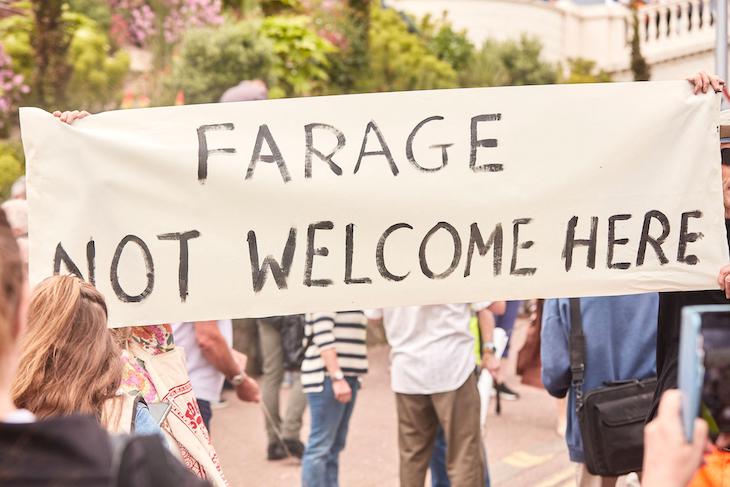
After all, it’s not as if Bangor is the only university that has a problem with Reform. Last month, students at the University of Sussex were granted permission to set up a Reform Society. Good. Student Reformers have as much right to get together as young members of the Labour, Conservative or Green Party. But while other societies are allowed to operate peacefully, the Reform Society’s attempt to recruit new members was thwarted by a protest organised by members of Antifascist Students Sussex, and backed by Brighton and Hove Young Greens.
Meanwhile, over in Lancaster, a group of university societies issued a collective statement against ‘the presence of Reform UK groups on campus’ after Farage appointed Lancaster student, Jack Eccles, as leader of Students for Reform. ‘We, the student body, wholeheartedly reject the presence of Reform UK on campus,’ they wrote, at a stroke excluding Eccles himself from ‘the student body’.
Students need to get with the times. This anti-free speech on campus stuff is all so 2022. The Higher Education (Freedom of Speech) Act should have heralded a renaissance for academic freedom. But with a change of government and a new Education Secretary, legal protections for free speech appear to have been watered down. Most significantly, universities – with a duty to protect academic freedom – can now distance themselves from student unions. This is exactly what has happened at Bangor. Bangor University says it welcomes debate ‘across the political spectrum’ and blames the student union for the Reform ban. The union similarly claims to remain ‘politically neutral’ and to support ‘freedom of speech within the law’.
This is bunkum. Not only do universities themselves fund student unions, which in turn pass money to societies, but, more to the point, if either institution truly wanted to support debate, they could issue an invitation to Pochin themselves. I will not hold my breath.
Reform, meanwhile, is fighting back with a vow to end ‘militant cancel culture’ at universities within 100 days of winning the Welsh parliament election in May. The party plans to introduce legislation to the Senedd designed to create ‘the strongest duty anywhere in the UK on higher education providers to protect free speech on campus.’ It cannot come soon enough.