There once was a time when you couldn’t move for some progressive voice complaining in superior tones about the latest ‘moral panic’ bestriding the country, stoked in their imagination by right-wing neurotics fearful that Britain was going to the dogs. Whether it be concerns related to pornography, video nasties, Mary Whitehouse’s latest campaign to clean up television, or Mods and Rockers fighting on the beaches, liberals were forever fond of dismissing such worries as reactionary, risible nonsense.
It’s widely assumed that there is a problem with men today. Yet that’s not the underlying issue
You don’t hear the phrase ‘moral panic’ much these days. That’s not surprising. You don’t hear it because it’s not right-wing people who are now guilty of stoking hysteria. In recent decades, it’s been progressives who have been responsible for spreading moral panics. They have been endlessly warning us that this country is stalked by racist bogeymen, what with the ethereal force of ‘unconscious racism’ being ubiquitous and omnipotent. The ‘glass ceiling’, another noumenal and abstract invention, is evidence of everyday sexism. Brexit was the epitome of xenophobia. And they continue to tell us how that amorphous entity of ‘toxic masculinity’ is a threat to everyone.
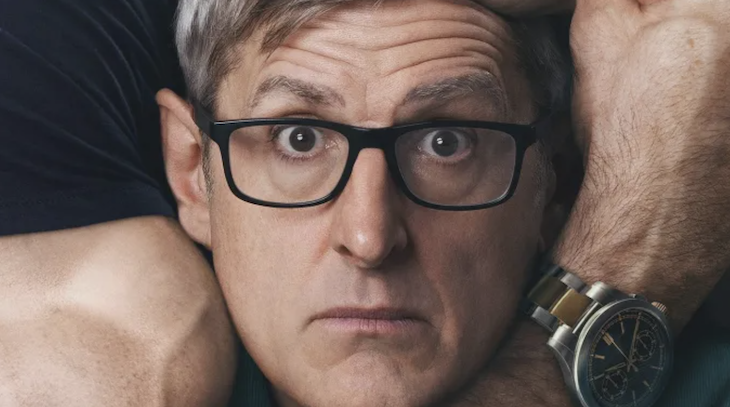
It’s thus no surprise to learn the title of the latest Netflix documentary, Louis Theroux: Inside the Manosphere, due to be released next month. The ninety-minute film is set to see him travelling to Miami, New York and Marbella to meet influencers and content creators at the extreme end of the ‘Manosphere’.
I happen to be a long-time fan of Louis Theroux and the faux-realist style that made his name in the 1990s. His technique seemed consonant with the postmodernist spirit of those times, when reality television came to the fore, when the boundary between fact and fiction seemed so delightfully precarious and playful, when a documentary maker could address his interlocutors with simultaneous sincerity and outrageous mendacity. Here was a presenter who deployed to cynical effect the stereotype of the intelligent Englishman abroad to lure moronic Americans into venting their stupid and horrible opinions.
It’s always been a ruse, of course, falsified reality TV posing as a serious documentary, with Theroux’s feigned earnestness both serving to trap his unwitting victims and entertain his knowing progressive audience back home, to make the latter feel smug and superior. Audiences in Britain have always warmed to Louis Theroux because he helps us to assuage our inferiority complex in relation to Americans. He plays to the ancient perception that we are culturally and intellectually more elevated, even if we are less powerful and consequential.
His previous documentaries from America, on the far right, neo-Nazis and Christian fundamentalists, have pandered to a typically safe and progressive British mindset, one which gleefully looks down on mid-west or southern-state Americans as places inhabited by halfwits. Liberals laugh at these toothless simpletons for the same reason that they cackle with derision at people who voted for Brexit: hark at the lowlifes who live in such poverty and ignorance!
Theroux’s latest outing is only likely to reinforce the lazy conceit that we are imperilled by the spectre of ‘toxic masculinity’. But that diagnosis is wrong, both in the way people diagnose its origins and its symptoms.
So-called ‘toxic masculinity’ has its roots in the decline of masculine values that were once normal and cherished in our culture: those of strength, fortitude and stoicism. These have been supplanted by the feminine virtues of compassion, consensus, caring and sharing one’s feelings. We live in a society in which these values are valorised and masculine ones are demonised. We are constantly exhorted not be confrontational and combative, not to be offensive or say nasty words.
It’s widely assumed that there is a problem with men today. Yet that’s not the underlying issue. The real issue is the false expectations we have of young men. Only the other morning on the BBC’s Today programme we had a nice man speaking of his remedy for today’s crisis of masculinity. In his opinion, it could be solved by having role models who were more caring, nurturing and willing to share their feelings. In other words: he thought men should be more like women.
That is the ultimate source of our problems. We expect boys to behave like girls, and we are bemused when they don’t. Decades after Simone de Beauvoir observed that women were the secondary sex, defined as the inferior and secondary version of their species, matters have become inverted. Women are now held to be the archetype of humanity, with men the second sex. We are now the curious deviants and degenerates in need of therapy, exhorted continuously to cure our wayward thinking and inappropriate conduct.
The best means to solve the crisis of masculinity, and confront toxic masculinity, would be stop demonising men and stop expecting them to be like women. Let boys be boys.