SpaceX CEO Elon Musk announced a celestial shift.
His company will prioritise constructing a base on the Moon, achievable within the decade, while shifting Mars to the backburner.
For those unaware, SpaceX has already shifted focus to building a self-growing city on the Moon, as we can potentially achieve that in less than 10 years, whereas Mars would take 20+ years.
The mission of SpaceX remains the same: extend consciousness and life as we know it to the stars.
It is only possible travel to Mars when the planets align every 26 months (six month trip time), whereas we can launch to the Moon every 10 days (two day trip time). This means we can iterate much faster to complete a Moon city than a Mars city.
That said, SpaceX will also strive to build a Mars city and begin doing so in about five-to-seven years, but the overriding priority is securing the future of civilisation and the Moon is faster.
There are a lot of reasons why this is a sensible idea. Not only is a Moon base faster and easier, it is a safer testing ground for humanity’s first step toward outer-Earth settlements. If something goes wrong on a Moon base, help can reach them. This will be critical.
The Moon base also makes the Mars settlement less risky, as it can be used as a launchpad. My science fiction readers know that all advanced Earths have a Moon base for this reason.
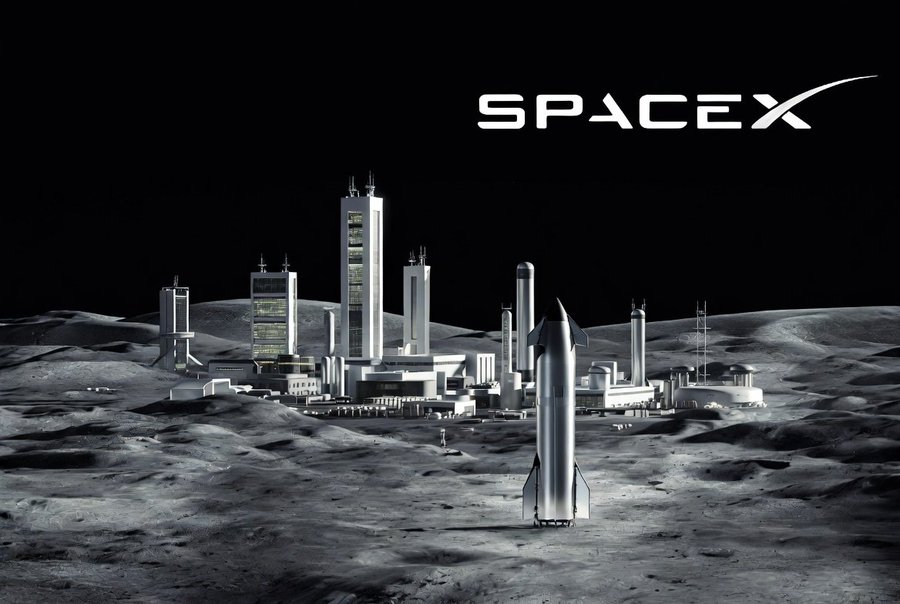
SpaceX Moon base promotion
As Musk said in another post, ‘The critical junction for humanity’s expansion beyond Earth is a self-growing civilisation off-world before the resupply ships stop coming.’
He has also promised to do a very Asimov thing and put a copy of Grokipedia on Mars as a ‘sci-fi version of the Library of Alexandria’. ‘Copies will be etched in stone and sent to the Moon, Mars, and beyond. This time, it will not be lost.’
As I was writing this, Elon Musk tweeted: ‘The Moon would establish a foothold beyond Earth quickly, to protect life against risk of a natural or manmade disaster on Earth. We would continue to launch directly from Earth to Mars while possible, rather than Moon to Mars, as fuel is relatively scarce on the Moon.’
This is all well and good, but there are other reasons to hunt down the Moon.
Matters of global and national security.
The last Cold War had a Space Race, this Cold War between the world’s superpowers will be a Moon Race.
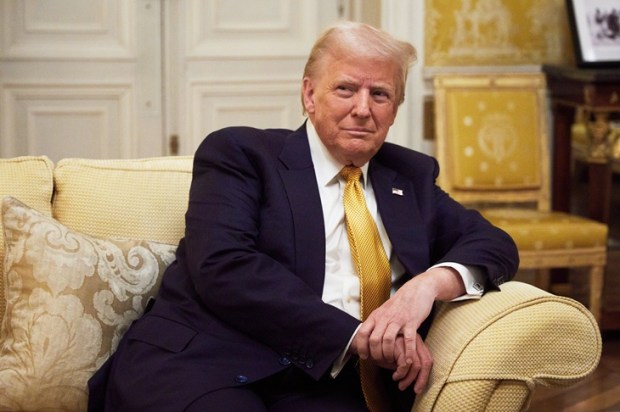
This is another historical moment Donald Trump will be remembered for when the dust settles on his presidency. During his first presidency, he signed the Space Policy Directive-1 which set America on a course for both the Moon and Mars.
China is seeking to set up a permanent manned presence on the Moon by 2030, establishing an International Lunar Research Station at the south pole five years later. Let’s not forget, America might have been the first nation to put boot-prints on the surface, but China was the first to land on the far side.
Of great concern is the absence of China’s signature on the Artemis Accords which have been drafted to keep space civil.
As Nasa administrator Bill Nelson said, ‘China has made extraordinary strides, especially in the last 10 years, but they are very, very secretive. We believe that a lot of their so-called civilian space program is a military program. And I think, in effect, we are in a race.’
India is also eyeing off the south pole, but they are further behind yet closer to America and may arrive as part of joint missions. Australia is also assisting.
Russia is being just as secretive as China.
While all these nations are known to be looking to militarise their Moon bases, there is a territorial concern where those who plant their flag are effectively going to colonise brand new corners of the map. The south pole has the water. Everyone wants water. They will compete for this resource.
The head of Nasa, Jared Isaacman, said:
‘We are in a great competition with a rival that has the will and means to challenge American exceptionalism across multiple domains, including in the high ground of space. This is not the time for delay, but for action, because if we fall behind – if we make a mistake – we may never catch up, and the consequences could shift the balance of power here on Earth.’
Moon or die. Got it.
Great powers need great rivals to drive them to expand, invent, and strive. The trick is to make sure competitive powers don’t turn into existential threats. Always tricky. The Cold War pushed our technology into the modern era, and the Space Race will shove us forward again into the future.
These next few decades will be critical, especially if you listen to commentary in DefenseOne:
‘China is building a “very deliberate” space architecture specifically designed to keep the US from intervening in the Pacific, Mastalir said.’
It goes on to cite Mastalir: ‘The sense of urgency to be ready to be able to close the blue kill chains, disrupt the red kill chains, that’s part of why we’re there.’
Whether you are interested in space or not, the conquest of the Moon will have security implications for Australia, especially as China starts bearing down on the Pacific.