Tony Abbott’s history of Australia comes as a surprise. It has a spellbinding verve which will beguile friend and foe alike. We don’t expect such narrative command from a former prime minister of Australia.
In office, Abbott was a believer in the ‘lean and lift’ principle of civic life, with a marked preference for the lifting side, which led to policies like work for the dole and budgets which were generally perceived as rough on the poor. His great ideological influence was the radical conservatism of Bob Santamaria and the formation of the Democratic Labor Party, the anti-communist ‘Groupers’ who caused the Split (in 1956) which stopped Labor from achieving government again until Gough Whitlam won the 1972 election.
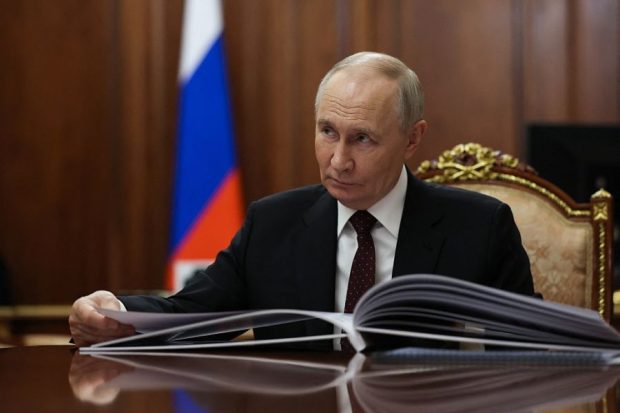
But Abbott was always a vivid figure on the Australian political landscape – Jesuit-educated and a Rhodes scholar, with an Oxford blue in boxing and the gift of the gab. At the Lindt Café siege in Sydney in 2014 he was asked: ‘Is this the fault of the Imams?’ He replied: ‘Is the IRA the fault of the Pope?’ He said he would ‘shirtfront’ Putin. He also mused recently that perhaps we should send the Australian army to Ukraine.
No one ever doubted his power. He studied for the Catholic priesthood and one of his teachers said he was like a whale in a wading pool. He embodies one kind of Australianness. He does not rank highly among prime ministers since the heyday of John Howard on the Liberal (i.e. Conservative) side, and before him the last great Labor leader, Paul Keating.
The bookcaptures the sweeping drama of the country’s political history, and it feels weird to be in the hands of a man who clearly wants to paint his masterpiece. Well, it is not the equal of Robert Hughes’s The Fatal Shore, the epic history of convictism, but it is still difficult to put down.
Abbott believes in the progressive transformation of Australia. In the First Fleet days, under Governor Arthur Phillip (chronicled by his lieutenant Watkin Tench), we get a clear sense of how these improvising military men were inheritors of the Enlightenment. Abbott has no love for the Exclusives, the Rum Corps led by John Macarthur, but he is impressed by Governor Lachlan Macquarie, who seated the emancipists, the ex-convicts, at the governor’s table. Arthur Phillip had indicated that there would be no slavery and Macquarie was a supporter of William Wilberforce.
Abbott has the inflamed, relishing eloquence of a chronicler who does everything in his power to recreate the past. Despite being a monarchist and a radical right-winger, he knows events lead to democratic advances. He is intoxicated by the ‘beautiful lies’ of Australian history that enchanted Mark Twain. His own political blooding came from the Split and he is open to the compromises that Australian political progress was heir to. The rebellion at the Eureka Stockade brought charges against a racially divided group of miners, but the jury refused to convict.
Abbott celebrates how old and grand Australian democracy actually is. He emphasises how a government such as Joe Lyons’s, originally Labor, was bound to break the bonds of that association. He is also too keen to claim that Robert Menzies (‘the great grey god of Australian sleep’, as Robert Hughes called him) was impressive in forging a path for ‘middle’ people; but this can’t possibly have the status of John Curtin, the Labor wartime prime minister who signalled a pivot to America in his celebrated 1941 ‘All In’ speech. The great ‘Light on the Hill’ speech comes from Curtin’s much-loved Labor successor Ben Chifley.
Gough Whitlam lives in legend because of his dismissal by the governor general, but he embodied a more culturally confident Australia. His nemesis, Malcolm Fraser, was a squatter who was also a powerful anti-apartheid liberal. He would not let John Howard, his treasurer, free the market. Abbott’s favourite Labor prime minister, Bob Hawke, did just that. Abbott sees Hawke as a true lover of Australia. He acknowledges Hawke’s successor, Paul Keating, but views him as a vituperative good hater. The Labor government of this period was an example of proto-monetarist third wayism and may have influenced Tony Blair and Bill Clinton.
Abbott has the flash and glory of anecdote as parable. Here’s one he doesn’t have: no one who has ever been greeted in the Senior Common Room of King’s College, Cambridge with the words ‘Orstralian, eh? Two wongs don’t make a white!’ can ever be mistaken as to the most famous words ever spoken by an Australian. They were quoted by Tony Tanner, the literary critic, with booming ferocity and echo Arthur Calwell, who transformed Australian immigration after the second world war.
Here’s Abbott’s thumbnail sketch:
Calwell sat and passed the state public service examinations and began working as a clerk at the age of 16… Much of his vast knowledge was self-taught… He studied Mandarin Chinese… Calwell was old Labor: working-class, socialist, fiercely anti-conscription and racially conscious… He survived an assassination attempt and generously forgave the young assailant… His only son, Art, had died from leukemia at the age of 11 and Calwell wore only black ties for the rest of his life.
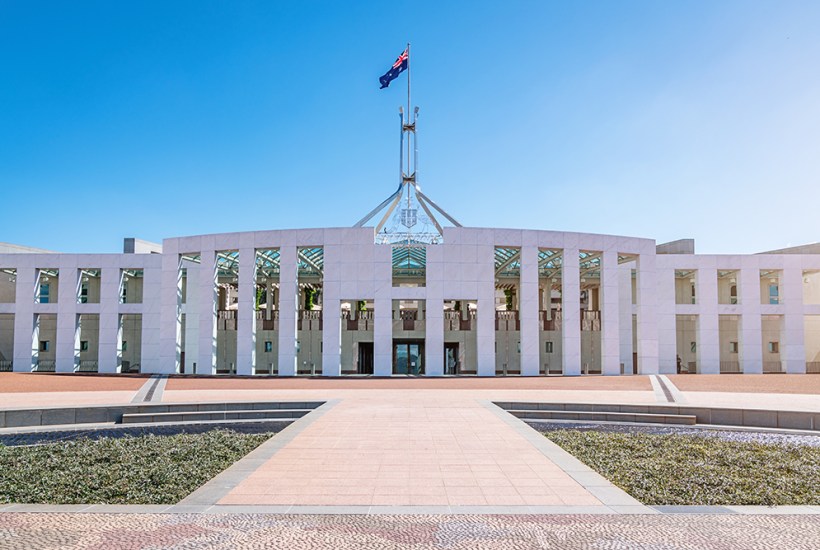
Australia has been in a state of mourning and confusion since the Bondi massacre on 14 December, which saw 15 people, many of them Jewish celebrating Hanukkah, murdered. The mourning reached its zenith when the former attorney general Mark Dreyfus read in parliament the ancient Hebrew lament for the dead, the Kaddish.
Got something to add? Join the discussion and comment below.
You might disagree with half of it, but you’ll enjoy reading all of it. Try your first month for free, then just $2 a week for the remainder of your first year.