During the last election campaign, to ensure there would be at least one centre of down-to-earth common sense in the 48th Parliament, this column suggested readers cast their first preference for One Nation and place the LNP ahead of Labor and the Greens.
With an election normally due by 20 May 2028, there is no reason to change that advice. Given the Albanese government’s shocking performance, Labor should be defeated. At the same time, the One Nation vote can no longer be easily dismissed as just a peripheral protest; with its polling now eclipsing that of a fractured Liberal-National Coalition, it could well be a seismic surge. And with their recent declaration of a readiness to govern – a stark contrast to the LNP, currently consumed by yet another round of internal spill motions and leadership squabbles.
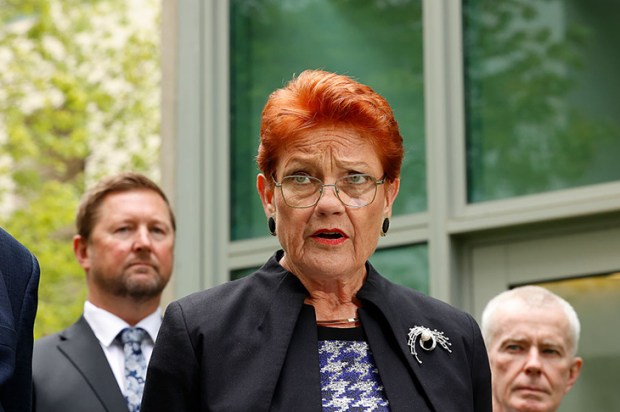
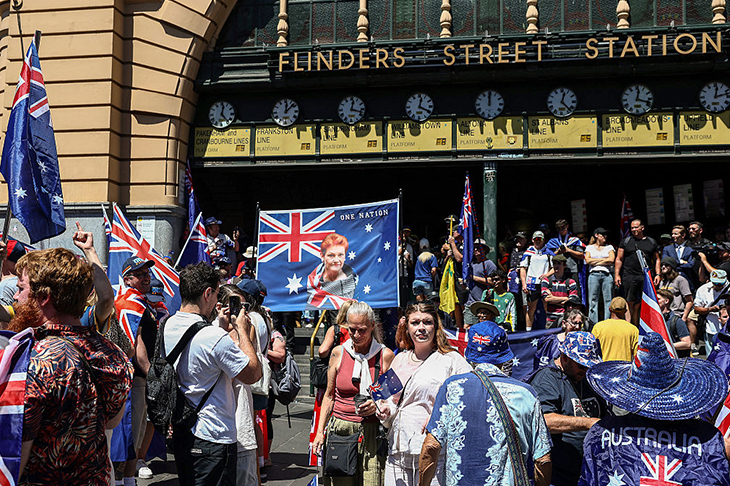
With Pauline Hanson on first-name terms with Australians, One Nation’s rise could well reflect the fact that she is attracting not only disillusioned Coalition voters, but also Labor’s. If the One Nation lead is now structural, the inexorable logic is that One Nation could become the largest party on the right. If that is reflected in the election, convention suggests that Pauline Hanson – one of the few politicians who never fell for the ‘fake politicians’ republic’ – could well be the first person invited by the Governor-General to form a government.
The most tired trope in Australian commentary is that One Nation is merely a ‘party of complaint’ – a collection of grievances without a blueprint. Despite little media interest, One Nation’s current policy suite reveals a sophisticated, popular and nationalist framework that addresses, with common sense, the very issues the out-of-touch two-party duopoly ignores: immigration, housing, water, fake climate catastrophism about which Beijing is laughing all the way to the bank, and enabling constitutional change to be made directly by the people.
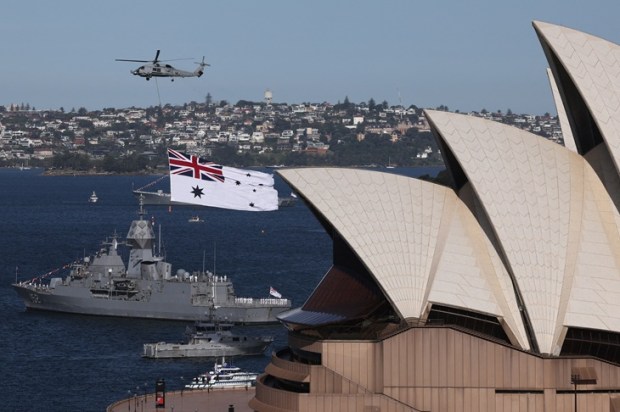
Water is a fundamental issue for this nation. During think tank IPA’s Australia Day cruise, the first two questions from the floor were, perhaps appropriately, about this very subject. As Alan Jones rightly insists (see his formidable Monarchy Australia YouTube lecture), Australia receives all the water it needs. The problem is that too much falls in the wrong places. In other words, it is an engineering problem on which funds should be spent in priority over the vast sums of money massively poured down the – no doubt gender-neutral – drain. But the chance of our having a decent dams program was killed off by a hair’s-breadth 4:3 High Court majority who licensed Bob Hawke, despite the Constitution, to stop Tasmania from building a dam – a decision our great federalist leader, Sir Henry Parkes, would find as baffling as a gender-neutral public toilet.
While the major parties treat the Murray-Darling Basin as an environmental problem, One Nation sensibly treats it as a national security issue. Central to this is the revival of the Bradfield Scheme, a still visionary plan designed to capture the monsoonal floodwaters from major Queensland rivers and direct them into the Murray-Darling, thus drought-proofing the vast agricultural plains of the western interior. Dismissed by earlier bureaucrats as too ambitious, it is today dismissed as ‘uneconomic’ – the standard excuse for any project that involves moving dirt rather than shuffling diversity quotas.
One Nation’s ‘boldness’ is best exemplified by their $90-billion Budget Savings Plan, demonstrating Pauline is prepared to wield the axe where the major parties fear to tread. Apart from allowing the use of gas, coal and nuclear energy and ending renewable subsidies, electricity would be far cheaper under One Nation, which would also abolish the Department of Climate Change – an act which alone would save $30 billion per year.
The National Indigenous Australians Agency would also go, reclaiming $12.5 billion in wasteful, race-based grants to focus assistance strictly on individual economic need. By ending the funding of invented ‘Welcome to Country’ rituals and the ABC’s $600-million ‘inner-city’ bloat, Pauline is calling for a return to a colour-blind, unified Australian base.
The ‘complaint party’ label falls apart further when one examines Project Iron Boomerang. As Will Jefferies, an analyst for the project, explained to me, this nation-building project linking Queensland’s coal with Western Australia’s iron ore via a dedicated transcontinental rail line is projected to create 40,000 jobs, transforming Australia from a mere quarry into a global steel powerhouse.
This industrial strength is the foundation of their Defence Policy. One Nation demands an increase in spending (three to four per cent of GDP) to fund immediate strike capabilities and the compulsory return of the Port of Darwin to Australian control – a pragmatic alignment with a Washington that demands its allies ‘pull their own weight’.
As to the party’s name, recall that the slogan of the Federation architects was ‘One Nation, One Flag, One People, One Destiny’ – a slogan designed to forge a single national identity. Sir Henry Parkes spoke of the ‘crimson thread of kinship’; today, One Nation is alone attempting to re-stitch that thread into a coherent national garment.
Among other policies, there is a courageous total withdrawal from captured international agreements such as the Paris Accord, the United Nations, and the World Health Organisation, a mandate for a 90-day national fuel reserve to ensure we are never held to ransom by global supply chains, the replacement of school indoctrination with education, and a return to the rule of law through banning the use of civil law to create criminal-style penalties, as in the Racial Discrimination Act. Furthermore, the party’s focus on cost-of-living is sharpened by a proposed 20-per-cent cut in electricity bills through a return to baseload coal and a five-year GST moratorium on building materials for new homes. These are joined by a permanent cap on net migration at 130,000 per year and a common-sense public ban on the hijab.
Asking if Pauline is ‘prime ministerial’ suggests some self-evident barrier to her appointment. There’s none. If she heads the largest party in a new governing coalition, she would no longer be just a kingmaker—she’d be a serious contender for the Lodge. After all, the curtains there have seen and heard far worse than a bit of plain speaking from Queensland.
Got something to add? Join the discussion and comment below.
You might disagree with half of it, but you’ll enjoy reading all of it. Try your first month for free, then just $2 a week for the remainder of your first year.