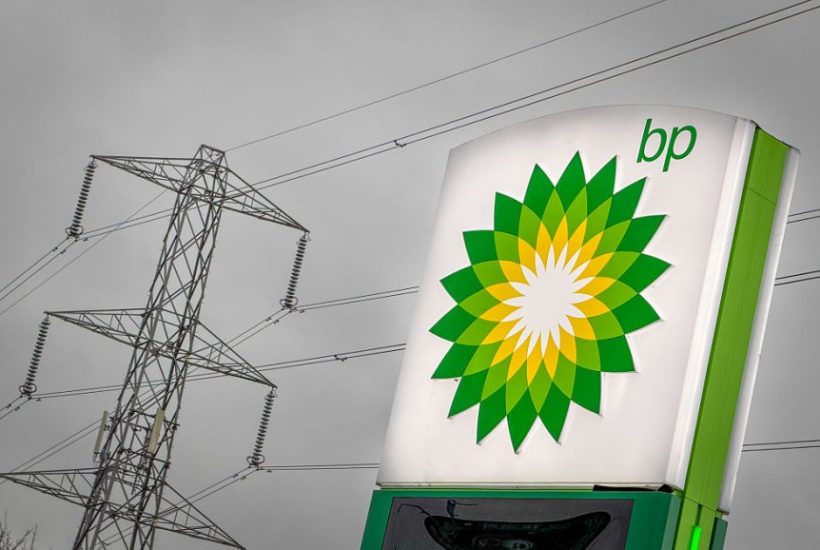
It should have moved ‘Beyond Petroleum’ by now, with wind, solar and hydroelectric power powering its profits. If you rewind twenty years, BP had a clear plan to place itself at the forefront of the green energy transition. It hasn’t worked out as they had hoped. Instead, today the company announced it was suspending share buybacks to shore up its balance sheet, sending its shares tumbling. Its rival Shell is in better shape, but only just. As both of Britain’s oil giants struggle, it is becoming painfully clear that the obsession with net zero has destroyed what was one of our major industries – and it will be very hard for it to recover now.
It has turned into yet another dreadful day for BP’s long-suffering shareholders. The company suspended its share buybacks, a tax-efficient way of returning cash to shareholders, to protect its balance sheet. It has finally started to stabilise its oil and gas production, but it is still suffering from its ill-fated expansion into green energy over 25 years ago. BP’s shares dropped sharply today in response to the announcement, and its share price is still below the highs it reached way back in 2005. A tough new CEO, Meg O’Neill, arrives in April, but she will face a huge task in restoring the company to its former glory.
The obsession with net zero has cost Britain’s oil and gas giants their position
Shell is in better shape, but only by comparison to its weakened rival. It has been forced to abandon green projects such as its investment in wind power in Britain and US , and its new CEO, Wael Sawan, has overseen a strategic shift back to fossil fuels. Even so, its shares have dramatically underperformed against its American rival ExxonMobil over the last five years, rising by only 110 per cent compared to Exxon’s 200 per cent.
Between them, Shell and BP account for around 10 per cent of the entire value of the FTSE-100 index. Of course, if they had managed to grow at the same rate as traditional rivals such as ExxonMobil or Chevron, it would be more like 20 per cent by now. Oil and gas were two of a handful of Britain’s world-leading industries, with the British giants far larger than any European or Asian competitors and the equal of the American conglomerates.
Over two decades, the obsession with net zero, pushed by a deluded Westminster and City establishment, has cost Britain’s oil and gas giants that position. Shell is struggling to hold its own, and BP is sliding into irrelevance.
It is possible that with a focus on finding and distributing oil and gas again, BP and Shell can claw their way back to the top of the industry. But it is going to be a long, hard struggle, and the odds are against them. World leadership in combating climate change may or may not be a worthwhile objective for the UK – but there is no longer any denying that it has taken a huge toll on our industrial base.