Inflation is the most insidious tax of all. It is the tax you pay for bad government. Worse still, it is taxation without legislation.
It requires no bill in parliament and no press conference in the courtyard. There is no vote, no scrutiny, no accountability. It simply happens, quietly draining the purchasing power of wages and savings while governments collect more revenue without ever having to ask permission.
Australians have seen this movie before. We paid for the Whitlam and Fraser years through the high inflation of the 1970s and early-1980s. Fraser learned the hard lesson that inflation and bracket creep are a politician’s best friend. He briefly indexed income tax brackets, then facing the reality of lost revenue abandoned the policy. The unaccountable tax was quickly restored.
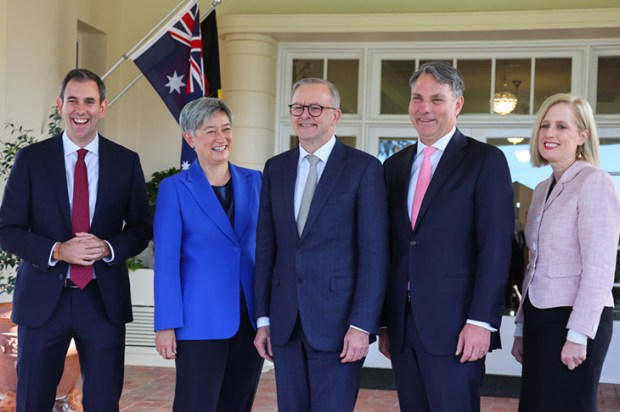
More recently, households absorbed the inflationary hangover of the Morrison government’s Covid-era excesses. And now, with those scars barely healed, we are paying again under the Albanese government. The faces change; the mechanism does not.
So, when the Prime Minister and Treasurer say inflation is their ‘number one priority’, take them at their word. Governments talk tough about inflation, but governments also love it, and this government’s policies are textbook inflationary.
History suggests governments are never in a hurry to kill it. Citizens, taxpayers and savers, on the other hand, despise inflation because they feel it every time they fill the car, pay the mortgage, or glance at their tax return.
Inflation does more than erode purchasing power. It quietly pushes people into higher income tax brackets even when their real incomes have not risen at all. That is bracket creep and it is only the beginning.
Inflation also fattens every other tax base. GST receipts rise automatically. Capital gains tax swells. So do fringe benefits tax, stamp duty, and payroll tax. Name a tax and inflation acts as a force multiplier. Every dollar becomes worth more to government and less to you.
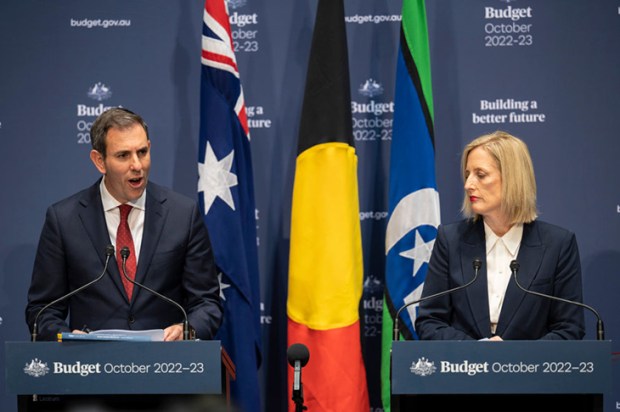
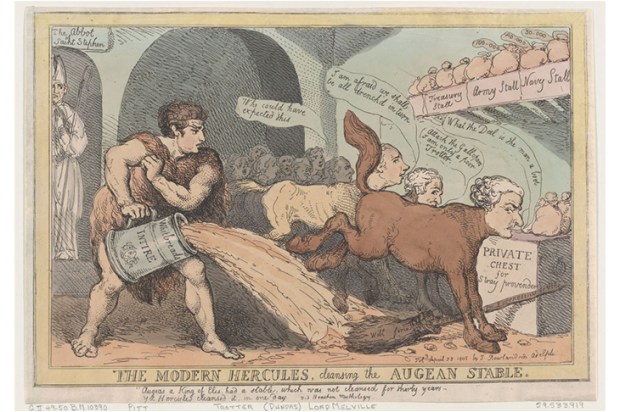
Which brings us to income tax, and to the man who has come to personify this fiscal sleight of hand: Treasurer Jim Chalmers, who might be better known as Dr Jim, the Bracket Creep.
At his urging, the Albanese government deliberately redesigned the Stage 3 tax cuts to resurrect the 37 per cent bracket. This was no accident. It was a feature: a carefully constructed illusion of tax relief for low- and middle-income earners, engineered to be dissolved by inflation faster than the Treasurer can deliver an alliterative three-word slogan.
A government already presiding over the highest tax take in Australian history wanted to ensure it could extract even more from working Australians without ever having to admit it was raising taxes.
The revived 37 per cent bracket now bites at $135,000 a year, only modestly above the average full-time wage of around $105,000. This makes bracket creep a middle-income problem, not a top-end one. Teachers, nurses, tradies and mid-career professionals are the ones being pushed into higher marginal rates simply for keeping up with the cost of living.
Recent analysis from the University of Melbourne shows Australians are now surrendering more of their income to tax than at any time in decades. Not because we are suddenly richer, but because inflation has done the Treasury’s heavy lifting. From a government’s point of view, this is the beauty of bracket creep: maximum revenue, minimum accountability.
Dr Jim, the Bracket Creep, also likes to talk about productivity. It is the fashionable word in Canberra speeches, the rhetorical fig leaf for almost every policy misadventure. And yes, productivity matters. It grows the economy, lifts wages and puts downward pressure on inflation.
But there is a fundamental confusion at the heart of this government’s approach. Only in the Treasurer’s fantasy land of values-based capitalism do heavier regulation, higher taxes, a bloated bureaucracy, expanded middle-class welfare and ever-growing spending somehow deliver higher productivity. In the real world, this is not an economic strategy but sabotage. It is like throwing sand into a racing car’s engine and expecting it to go faster.
Productivity growth comes from incentives, investment and innovation. It comes from rewarding effort, risk and enterprise, not from taxing them harder and redistributing the proceeds according to political fashion. Yet this government’s instinct is always the same: intervene more, regulate more, spend more, and hope productivity will magically follow.
Meanwhile, Commonwealth debt is marching steadily towards the trillion-dollar mark. At this pace, one half expects the Treasurer to announce a petro-dollar loan brokered by a well-connected Pakistani banker, perhaps the grandson of Tirath Khemlani.
The scale of debt matters because it creates a permanent temptation to tolerate inflation. Inflation erodes the real value of debt, while bracket creep quietly boosts revenue. From Canberra’s perspective, it is the perfect arrangement: rising prices do the dirty work, and no one ever has to vote for it.
Some defenders of the government now argue, astonishingly, that because wage growth is easing, bracket creep is less of a problem. That is a strange defence. First, stagnant wages are hardly good news when the price of everything from groceries to insurance keeps rising. A slower squeeze is still a squeeze.
Second, while private-sector wages are moderating under higher costs and mounting regulation, the same cannot be said for the public sector. Public-sector wages have risen above inflation, largely detached from productivity, as a deliberate policy choice. The result is a two-speed economy: a private sector doing the heavy lifting, and a public sector, growing and insulated from the consequences.
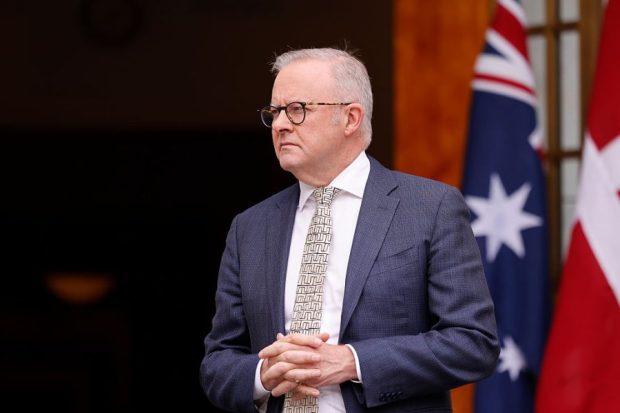
Prime Minister Anthony Albanese often speaks about easing cost-of-living pressures. But relief that gives with one hand while taking more with the other is no relief at all. This is the political economy of bracket creep. Inflation is not an accident. Bracket creep is not a bug. Together, they are the Albanese government’s business model.
Bracket creep may be invisible on the ballot paper, but it is painfully obvious on the pay slip and at the supermarket checkout. Under Dr Jim, the Bracket Creep, Australians can expect this silent tax to keep rising.
Not because it is a policy failure but because it is the plan.
Got something to add? Join the discussion and comment below.
Dimitri Burshtein is a Senior Director at Eminence Advisory. Peter Swan AO is professor of finance at the UNSW-Sydney Business School.
You might disagree with half of it, but you’ll enjoy reading all of it. Try your first month for free, then just $2 a week for the remainder of your first year.