Ian McGuire’s previous historical novels, The North Water (2010) and The Abstainer (2020), tightly plotted literary thrillers with Shakespearean bodycounts, embodied the Schopenhauerian creed that to be human is to suffer. His latest, White River Crossing, is no different.
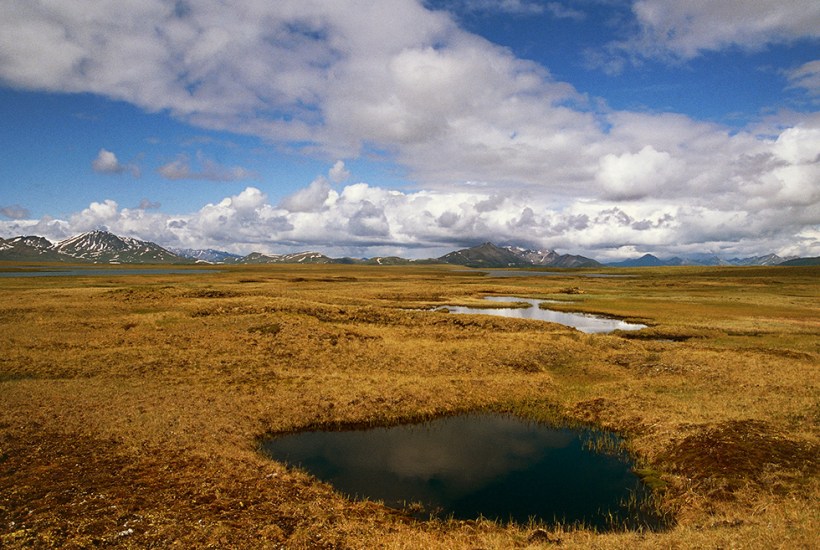
Canada, 1766. A pedlar appears at Prince of Wales Fort, a Hudson Bay Company trading post on the Churchill River, bearing a fistful of gold ore. The chief factor, Magnus Norton, dispatches his deputy, John Shaw, his nephew, Abel Walker, and Tom Hearn, first mate of the fort’s whaling sloop, on a 500-mile expedition to the Barren Grounds, deep in the subarctic tundra, to locate the source of the treasure. They’re guided by a native Indian chieftain, Datsanthi, and his family.
Shaw, a domineering white supremacist, acts on impulse, driven by lust for gold and for Keasik, the ill-treated wife of Datsanthi’s petulant son, Nabayak. For Shaw, white men ‘strive to improve the world’, while the Indian and Esquimaux tribes, ‘only partly human’, eschew progress. Hearn, a brooding outsider, traumatised by his lost faith and the death years earlier of his friend Stephen Cowper, is ‘restless by nature’ and less interested in the gold than ‘the great adventure of searching for it’.
Like Hilary Mantel in her Wolf Hall trilogy, McGuire achieves a cinematic intimacy by writing the past in the present tense. Here, focusing a dispassionate lens on an often savage world, he trades in the Faulkneresque richness of The North Water for a brutal frugality (‘bellies torn open, noses and ears sliced off and the rest of their faces pummelled to a scarlet mash’). Passages of dialogue and interior monologue, rendered in contemporary language, function as soliloquies, revealing the characters’ contrasting natures.
We are granted multiple perspectives – but Hearn is the novel’s tragic hero. Believing reason is just ‘a clever and complicated trick designed to disguise the unfathomable depths of muddlement and confusion that lie all around us’, he acts with care and caution. Until, that is, circumstance presents an opportunity for a new life, and he starts to feel he’s ‘a freed man, self-justified, unchained by fear and fully, astoundingly, alive’. His fate is sealed.
Shelley warned that ‘Gold is a living god, and rules in scorn, /All earthly things but virtue.’ Virtue is on the side of those Indians who remain true to their traditions, such as Ministik, who proves to be Keasik’s salvation. He says to her: ‘Tell me why you suffer.’ Is there a more beautiful, tender question one human can ask another?
Got something to add? Join the discussion and comment below.
You might disagree with half of it, but you’ll enjoy reading all of it. Try your first month for free, then just $2 a week for the remainder of your first year.