In the aftermath of the horrific Bondi massacre and the subsequent nearly-as-horrific political responses to it, every Australian who believes in the values of the Enlightenment has a deeply uncomfortable question to ponder: what do recent events augur for Australian liberalism?
Australia is at a crossroads. We must choose between an economics of prosperity or an economics of managed, Gaia-sanctified decline. We must choose between free speech or government-controlled speech. We must choose between ‘all individuals are equally human and deserve equal treatment under law’ or ‘…but people from certain historically victimised minority groups are more equal than others’. We must choose between a social model that sees productive private enterprise as a noble end, or one that sees the private sector as nothing more than a means to the true ultimate end of funding the bureaucracy. We must choose between an energy policy that delivers an abundance supportive of human endeavour or one which impoverishes and constrains. Liberal principles (equality under law, individualism, property rights, market-based economics, civic nationalism, live-and-let-live social attitudes) provide clear answers for all of these choices, but if one looked at the actions of the Liberal party of Australia, one could be forgiven for thinking otherwise.
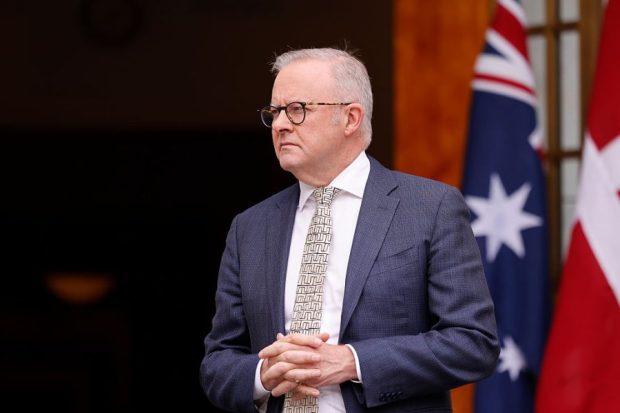
The Liberal-National Coalition has been sundered. The National party dissolved the Coalition agreement in response to the Liberal party’s endorsement of both intensified civilian disarmament measures (euphemised as ‘gun control’) and the passage of ‘hate speech’ laws. The most striking aspect of this dissolution is that the National party is defending liberal principles against the self-proclaimed Liberal party – whatever one thinks about gun safety precautions, the mere ownership of a firearm harms absolutely no one, and the revolutionary history of liberalism and the Albanese government’s festering hostility to civil liberties should make any liberal exceptionally cautious about endorsing stricter measures. In addition, ‘hate speech’ is a subjective category that is easily prone to being opportunistically interpreted by the government to criminalise dissent, just like ‘dis-, mis-, and mal-information’. The protection of speech from government control is not a minor policy question – it is among liberalism’s non-negotiable pillars and proudest achievements.
How have we ended up in a situation where the Nationals are more liberal than the Liberals?
Part of the problem is clearly leadership and the party’s internal culture. When illiberal ‘wets’ like Sussan Ley are repeatedly elevated to leadership by a parliamentary party full of other ‘wets’ willing to capitulate on core issues like free speech, the problem is not a few bad apples spoiling the bunch but rather a systemic one. To extend the metaphor, the apple tree itself is diseased and producing poison fruit. Whatever is fomenting this systematic problem – the social pressures to signal virtue within a privileged eastern suburbs milieu, illiberal indoctrination via the education system, fear of looking bad on the ABC, take your pick – is an important question, but not one for this article.
Thankfully, a new organisation named the Liberal Reform Association (LRA) is standing up for actual liberalism within the Liberal party, by elevating rank-and-file members to overthrow existing party elites. This is valuable because it makes sure actually liberal voices have a place within the mainstream of Australian politics. If the next coalition on the Australian right is between the Nationals and One Nation, there’s a substantial chance that they’ll embrace an anti-market pork-barrelling economic agenda and thus be illiberal. If the Liberal party continues on its current course towards milquetoast moderation, they’ll cement themselves as a milder version of illiberalism than the Labor party. Those trends would leave only the Libertarian party to speak up for liberalism, and whilst the Libertarian party deserves some respect (outside New South Wales – ed.), Australia needs liberalism to retain a foothold in major party politics.
Labor’s misrule of Australia has resulted in the highest inflation in decades (and a resultant collapse in the standard of living), small businesses being strangled with red and green tape, a resurgence in union corruption, hysterically bad pseudo-scholarship from far-left university departments (including a recent study that spent half a million dollars formulating Welcome To Country rituals to take place on Mars), brazen attempts (some successful) to subvert the Australian public’s landslide vote to preserve our Constitution’s racial neutrality, an ever-swelling public sector that both demands and consistently votes for its own continued expansion, and repeated campaigns against free speech and dissenting thought more broadly (ranging from worries about ‘misinformation’ to restrictions on social media platforms which may expose teenagers to ideas that aren’t approved of by the education department). Yet in the face of this, the Liberal party can only bring itself to stand athwart the policy trend and tepidly suggest modestly slowing down.
Why can’t – or won’t – the Liberal party capitalise on the economic weakness and rampant authoritarianism of Labor?
It is undeniable that the Liberal party needs reform. The LRA aims to deliver it by putting the party’s everyday membership in charge. Reform is needed both at the level of party (where the aim should be making sure more liberals hold positions of power within the Liberal party) and at the level of policy (where the goal would be to make sure the Liberal party acts and legislates in accordance with liberal principles).
Hopefully the LRA’s emergence puts the ‘wets’ of the Liberal party on notice: they are no longer welcome to masquerade as liberals. They’re merely a less-bad-on-economics version of Labor. They do not, in principle, stand up for individualism or individual liberty. When the indispensable right – free speech – needed their protection at a critical moment of vulnerability, they betrayed it so that they could look like they were ‘doing something,’ so they could reinforce their electoral performance in Sydney’s eastern suburbs, so they could get kudos on social media. The LRA shouldn’t attempt to talk or negotiate or persuade the ‘wets’. The LRA should simply empower everyday members to remove them from a party in which they clearly don’t belong.
The LRA’s founding should be reassuring to all those Australians who believe in liberalism, whether they are Liberal party supporters or if the Liberals have lost their votes. These Australians don’t want Australia to end up like the UK, where tweets attract the attention of law enforcement but ethnoreligiously motivated organised grooming gangs are overlooked ’because of racism’. Hopefully the LRA can earn their support.
Got something to add? Join the discussion and comment below.
Dr Andrew Russell is an economist and philosopher. His substack can be found at www.drcasino.substack.com
You can contact the Liberal reform Association at https://www.reclaimthedream.com.au
You might disagree with half of it, but you’ll enjoy reading all of it. Try your first month for free, then just $2 a week for the remainder of your first year.