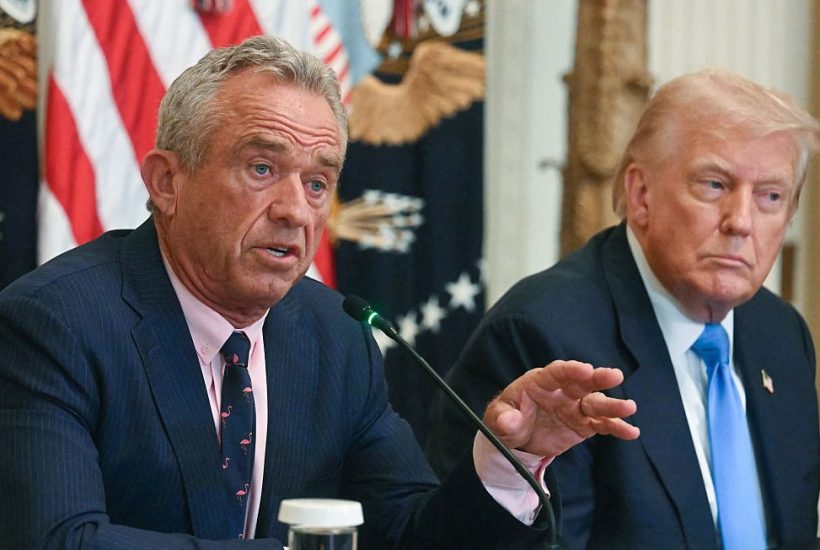
In the unforgiving arena of American politics, few patterns are as reliable as the midterm election bloodbath for the party holding the White House. And this year Democrats are trying to capitalize on the midterm curse by fielding 150 candidates from medical and scientific backgrounds. All have entered the fray since Robert F. Kennedy Jr. was appointed Secretary of Health and Human Services and are putting his Make America Healthy Again (MAHA) on the ballot. In particular, his vaccine reform program.
Yet, a major driver of the rise of MAHA can be directly attributed to the Biden administration’s disastrous handling of Covid, when Democrats in power contorted science to fit political imperatives. Initial claims that vaccines would nearly eliminate infection and transmission soon crumbled, yet officials doubled down with broad mandates for federal workers, contractors and private employers – policies later struck down in court.
Flip-flopping guidance on masks, boosters and virus origins, combined with a “trust the science” rhetoric that dismissed legitimate questions as misinformation, deepened polarization. And set the stage for MAHA’s reformist appeal: a return to patient-centered prevention, informed consent and addressing root causes free from institutional overreach.
So, the Democrats putting MAHA on the ballot is actually good news for Republicans. In fact, MAHA could be their best hope for bucking the midterm curse. Its focus on wellness resonates across the aisle. From curbing ultra-processed foods laden with additives and pesticides, to reforming the medical establishment’s grip on the health economy, with a healthy dose of policy reform on chronic disease prevention, MAHA promises a healthier nation.
Health issues transcend red-blue divides; polls show broad support for tackling obesity, diabetes, and mental health crises, which afflict over 40 percent of Americans with chronic illnesses. MAHA taps into parental struggles about kids’ diets, wellness trends, and distrust of processed food. On top of this, Secretary Kennedy’s own health and political journey has drawn in disaffected Democrats and libertarians who might otherwise sit out or vote blue.
MAHA has a specific focus on chronic disease prevention, mental health and our youth that essentially tried to replicate the Democrats successful messaging on the Affordable Care Act (ACA) – you know, the thing that was supposed to solve these issues originally but instead has become a financial behemoth that props up the insurance industry at the detriment of the American taxpayer.
MAHA is a hugely positive message in an election cycle primed with vitriol. It can motivate the base, gain support from the middle and has a generational appeal that should serve as the foundation of candidates up and down the ticket – from federal to state and local.
Of course, MAHA does carry some political risk. MAHA’s edgier elements, like vaccine reform, could alienate moderates; especially if perceived to be counter to the medical freedom movement. To date, Secretary Kennedy and his team have navigated this topic brilliantly by clearly articulating their concerns, pushing substantial reforms, all while ensuring patients will still have access based on their personal convictions and informed consent.
By mobilizing new coalitions, MAHA could limit losses to single digits or even yield gains in targeted races, preserving Trump’s agenda on borders, trade and energy. It’s a bet on substance over spectacle: in a nation weary of division, health unites. Republicans should go head-to-head with Democrats and lean in to MAHA – spotlight Kennedy’s wins, fund MAHA initiatives and make 2026 a referendum on vitality and optimism, not vitriol.
If they do, history might record 2026 as the exception to the curse.