Women are losing trophies and, in some cases, suffering serious physical harm when male athletes are permitted to compete in female sports categories. What was once viewed as a fringe issue has undoubtedly grown into an internationally recognised matter of public concern. But, finally, the fightback against this infringement of women’s rights might be on.
This week, the United States Supreme Court heard two cases – West Virginia v. B.P.J. and Little v. Hecox – that go to the heart of this debate. Though they arise from American law, the questions they raise are global: can women’s sport continue to be organised around biological sex, or will sex-based categories be legally redefined out of existence?
As someone who spent my life competing in elite sport, I know exactly why women’s categories were created. Opponents of sex-based protections often claim these categories are discriminatory or exclusionary. This could not be further from the truth.
Sex-based sports protections are built around biological reality, not beliefs. And biology matters. Women’s sport exists precisely because men and women are biologically different. Without protected female categories, women do not gain equality – they lose it.
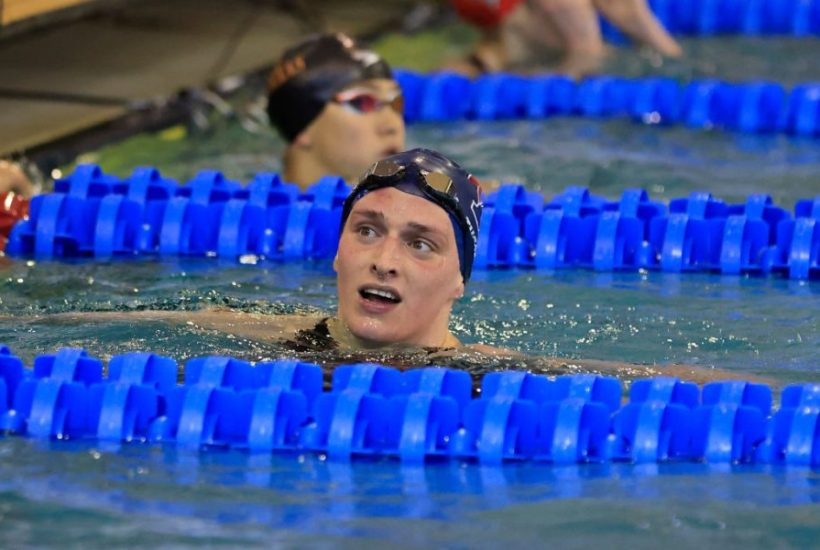
Consistently, we have seen biological men steal wins from female athletes
The creation of women’s sport is what allows us to compete fairly. And, without fairness, sport is meaningless. Yet in the short years in which biological males have increasingly been permitted to enter women’s categories, female athletes have suffered unfair loss and harm. This is not unique to the United States but is happening worldwide.
A 2024 United Nations report examining the protection of women’s sport found that hundreds of female athletes have lost medals, trophies, and missed out on podium placements after being forced to compete against males. Despite repeated claims from activists that transgender athletes have no competitive advantage over women, the evidence tells a different story.
We have seen biological men repeatedly steal wins from female athletes. Rarely, if ever, have we seen biological women outperform in men’s sport categories. These losses represent a profound injustice to women and girls who dedicate countless hours to training, only to find themselves competing against athletes with inherent biological advantages. Worse, it communicates a message to female athletes that their tireless work is not worthy of being recognised.
Athletes and spectators have had enough. The public’s growing concern for the women who have been disadvantaged in their competitions was shown by a petition to the International Olympic Committee in 2024. This demanded that female athletes be given their fair chance to compete only against other female athletes. Over 40,000 people signed it.
With the Cass review into gender identity services for children and the For Women Scotland case on the definition of the word ‘woman’, the UK has made important strides against transgender ideology – the idea that one can choose and change one’s gender. It is this ideology which is at the root of attempts to erase women’s sport.
These developments inspired and catalysed those people around the world who believe the reality of biological sex should be reflected in law. The two cases before the US Supreme Court – the verdict in which should come by June – will hopefully be the next step in the public rejection of gender ideology in athletics. The court is not being asked to referee a culture war. It is being asked far more fundamental questions, which the whole world should be able to emphatically answer in the affirmative: Should the law continue to recognise biological sex as a legitimate basis for organising sport – and are women’s sporting spaces worthy of protection?
As the world’s most powerful country and a global cultural powerhouse, decisions made in the United States will surely affect the gender debate around the world.
For women and girls watching in the US, UK and beyond, the Supreme Court’s verdict matters deeply. After all, once sex-based categories are dismantled in law in one country, they become fragile everywhere else too. The battle for female opportunity in sports is not a new one, but now more than ever is the time to protect the spaces that have been made for women. Doing so will bring safety and hope back for the next generations of female athletes.