If Maduro were to pen an autobiography, surely it would be titled, F- Around and Find out Real F-ing Quick…
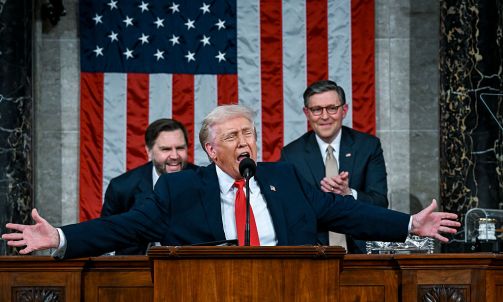
He has become the living embodiment of the MAGA call to arms. A cautionary tale about the new world where America is tired of being exploited by lesser powers and insufferable criminal enterprises that wink at the camera.
If you don’t know, now you know ? pic.twitter.com/XrIps1OzY4
— The White House (@WhiteHouse) January 3, 2026
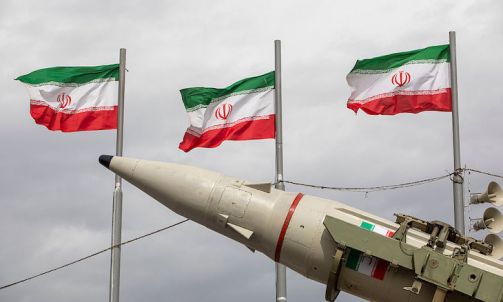
Much to Maduro’s disappointment, his final act was barely a blip in a news cycle which moved on swiftly to a billion-dollar Somali fraud scandal, the potential collapse of Iran’s Islamic Republic, and the acquisition of Greenland.
We’re playing civilisational pin the tail on Schrodinger’s cat.
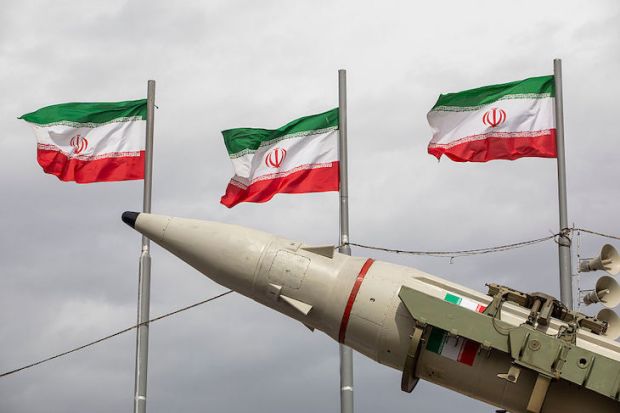
The ‘Flags R Us’ cohort are handing out Venezuelan flags to the pro-Palestine mob, who have completely forgotten about their Ukraine and Trans flags. Speculation abounds for the next trending flag. We asked our readers. So far, we’re in a dead heat between Iran’s flag and Greenland’s flag.
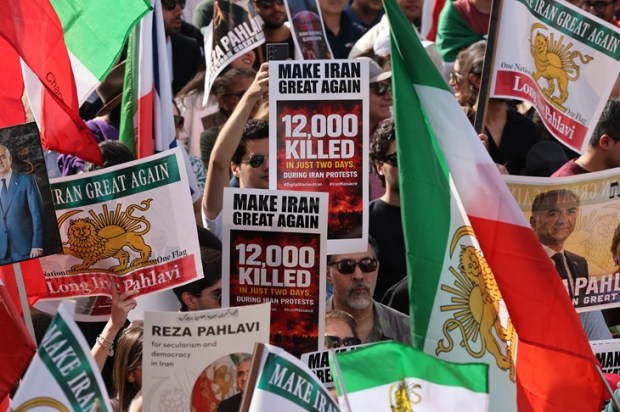
It’s getting increasingly difficult to give these professional protesters credit when they come out on the streets shouting, ‘Stop fascism! Let the communist dictator go! Oh! And protect the Ayatollah!!!’
Remember, these are the university-educated members of society that couldn’t name the river or sea featured on their signs and have no idea what the concentration of CO2 is in the atmosphere despite believing it will kill them imminently.
What’s the message of the left? I doubt they know.
Meanwhile, Venezuelan shopkeepers have put up portraits of Donald Trump surrounded by flowers in honour of their liberty while Western geopolitical experts whinge about oil changing hands from global communist empires to the citizenry via the US.
I don’t want to talk about oil, I want to talk about the failure of China’s defence systems in Venezuela and what it means for Beijing.
This is the critical takeaway.
Consider this report from news.com.au
The surprise raid to snatch President Nicolas Maduro out of Venezuela may have been a much higher-stakes operation than it seemed.
Beijing’s special envoy for Latin American affairs, Qiu Xiaoqui, had just finished meeting with the Venezuelan dictator. And China’s state-controlled media had quietly revealed the People’s Liberation Army had been war-gaming combat with the United States in South America.
The timing of Qiu’s visit was an unusual coincidence.
‘I thank President Xi Jinping for his continued brotherhood, like an older brother,’ Maduro told the Diplomat in a televised address at Miraflores Palace in the capital, Caracas.
Hours later, Maduro was in grey sweatpants, clutching a water bottle on his way to an American courtroom.
Let’s talk about the war games first.
In December of 2025, Xuchang, Henan Province, China played host to televised war game scenarios which involved combat operations. Blue was used to represent the West, and Red for China. These games included scenarios based in the Gulf of Mexico (Gulf of America), Caribbean Sea, Cuba, Taiwan, and the Sea of Okhotsk.
(Not to be confused with Russia’s International Army Games held in Barquisimeto, hosted by Maduro in 2022.)
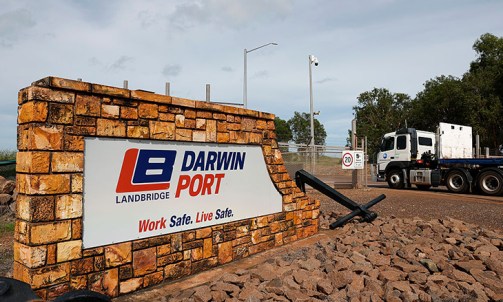
China owns or operates various ports in South America along with space facilities which can be used for satellite tracking and jamming. The regime has access to extensive logistical assets in Venezuela, Bolivia, and Chile.
The Belt and Road project in South America includes almost every nation while the investments are easily worth upwards of a hundred billion, of which Venezuela is the centrepiece. China Global South Project said of the arrangement:
In 2024, total trade between China and Latin America and the Caribbean reached $518 billion, according to China’s Ministry of Commerce.
With this much strategic control, the war games are not purely fantasy, they are both protectionist and expansionist.
As written in the Diplomat:
The screens shown by CCTV from the wargame … illustrate how Beijing is thinking about conducting military activities in the Western Hemisphere in the context of a broader war with the West.
Such evidence lends credence to numerous statements by senior US military officials, including former heads of US Southern Command General Laura Richardson and Admiral Alvan Holsey, regarding the risks of China’s ‘dual-use’ of infrastructure – including ports, space, telecommunications, and other projects – in times of war.
‘Dual-use’ is the concern we have written about many times in regard to the ‘science research’ bases China has been building in Antarctica which many military observers fear will be used as outposts and spying platforms to cover the Southern Hemisphere.
The article goes on to talk about China’s declaration of Latin America as the ‘Zone of Peace’ (for China). Far from being peaceful, China has positioned itself in the region and has the capability to launch attacks on mainland America including coming within range of military facilities which were previously insulated by geography.
Australian political commentators and politicians rarely, if ever, acknowledge this incursion by China, via South America, and instead speak of Beijing as some distant isolationist empire minding its own business. It is not.
The Diplomat further correctly points out the incentive for China to leverage Caribbean governments just as it has done with Pacific Nations above Australia.
During a hypothetical war, China’s access to space from the Western Hemisphere, through facilities it controls or has access to in Argentina, Venezuela, Bolivia, Chile, and elsewhere, could allow it to locate Western satellites in order to blind, jam, or destroy them, gravely impairing global combat operations by the United States and its Nato and Asian allies.
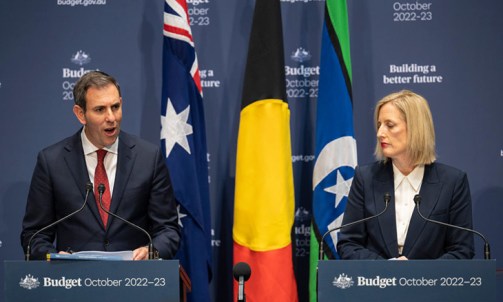
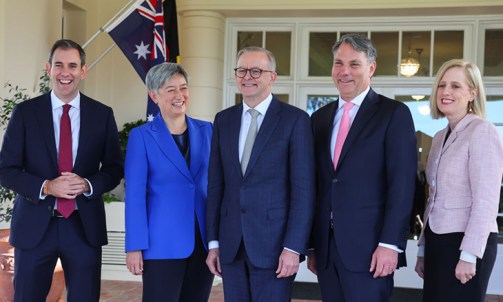
Australia is familiar with this behaviour from China, the difference being that our hapless Labor government is content to watch China’s surveillance ships lap the continent and conduct live-fire exercises in the way of commercial aircraft. Albanese’s team seem to drool every time Xi Jinping offers them a handshake photoshoot. Meanwhile, the Greens have called to kick America out of Pine Gap. This is dangerous idiocy from people with real power.
It is no wonder, given the uncertain security in the south, that Trump is talking about securing Greenland in the north to ensure that the roof of America remains safe. If Canada had any survival instincts, they would be offering some kind of assistance. We are not living in a safe world anymore.
As part of its future conflict strategy, China has become a global leader in arms exports, ensuring its allies can defend Beijing’s interests under the guise of domestic security. The integrity of these pieces of technology matter, and lately, there have been several embarrassing ‘curtain moments’ for China. The failure of Venezuela’s defence is the latest, but India managed to neutralise Chinese-made Pakistani air defence systems during Operation Sindoor.
This is the age of electronic warfare where conventional weapons and craft can only succeed after a silent battle is fought in the air ahead of them.
As reported by the Times of India:
Venezuela’s Chinese JY-27A radar – hyped by Beijing as a stealth-killing powerhouse capable of spotting low-observable jets like the F-35 – suffered a catastrophic flop during the US raid, as reported by the Washington Times. Sold to Caracas as cutting-edge tech, the system proved riddled with flaws, agonisingly slow to react, and utterly blind to American stealth incursions.
The radar’s complete failure has left Beijing red-faced. The system is central to China’s air-defence ambitions, intended to counter advanced US platforms such as the F-35 and F-22 fighter jets, as well as B-2 and next-generation B-21 stealth bombers.
The article also comments on Maduro’s $2 billion spend on Russian S-300 air defence missile systems ‘associated radar and communication networks that were integrated with China’s JY-27A radar’ along with other Russian military hardware.
None of which fired upon the Americans during the Maduro heist.
And look, no one is saying China’s interest in Venezuela wasn’t about oil, it was, but it wasn’t solely about oil.
If anything, the situation in Iran is of more concern to China’s critical oil supply (with the Middle East accounting for 40-45 per cent) than the 8-12 per cent from South America. Although it is certainly useful for China to have access to reserves in this part of the world.
Not only has America answered some questions it had about Chinese military infrastructure, it has sewn seeds of doubt in China’s allies. Given every military failure is a lesson that can be fixed, one can only assume America believes hot contact is close.
And what of South America?
Their nations have been impoverished by socialist dictators. It was easier to take Chinese money than fix the corruption and ideological mistakes crippling them.
(With the notable exception of Argentina, whose libertarian leader has tilted West. Since then, China has sent a city of fishing vessels which have been accused of deliberately over-fishing their region and sending it to the edge of collapse. Environmentalism? China doesn’t care. So why are they selling the West Net Zero technology? Probably because it catastrophically weakens our energy grid making us militarily vulnerable.)
Today, those same dictators are wondering if they were ripped off by China. They gave good quality oil and rare earths and seemingly received useless military crap in return. Will they want a refund? Will there be repercussions for this revelation?
Donald Trump is busy dividing China’s attention and opening up confrontational fronts in all corners of the globe, including Greenland. He is deliberately putting strain on China’s dubious military and economic alliances. Testing the stress points. Exposing white lies in China’s diplomacy. It looks chaotic to panicky Western journalists because they fail to grasp the geopolitical strength of chaos. There is nothing a communist nation fears more than an unpredictable opponent.
If you were to take odds, right now, on America kidnapping Keir Starmer as punishment for threatening X, even China’s top strategic minds wouldn’t be able to rule it out.
This uncertainty has to hold the peace long enough for nations such as Australia to catch up with projects like Aukus.
But something tells me Albanese will be too busy trying to ban X to take this threat seriously.