Last summer, the Labour MP Tonia Antoniazzi introduced a clause to the Crime and Policing Bill that will decriminalise all abortions. Enshrining this ‘right’ into law will mean that a mother could end the life of a baby a week, a day or even an hour before it is due to be born, without facing legal consequences. The bill will go to the House of Lords this month.
If there had been proper debate over the proposal, rather than introducing it alongside 1,482 other amendments, parliamentarians might have spotted the flaw: the proposed legislation will enable sex-selective abortions. The NHS normally delays the point at which parents are entitled to know their child’s sex until the 20-week scan, shortly before abortion currently becomes illegal. As there will no longer be legal penalties for any abortions, there will no longer be any way to prevent parents from terminating a pregnancy once they find out the child is a girl.
Decriminalising abortion will make it impossible to prosecute women who end pregnancies on the grounds of sex
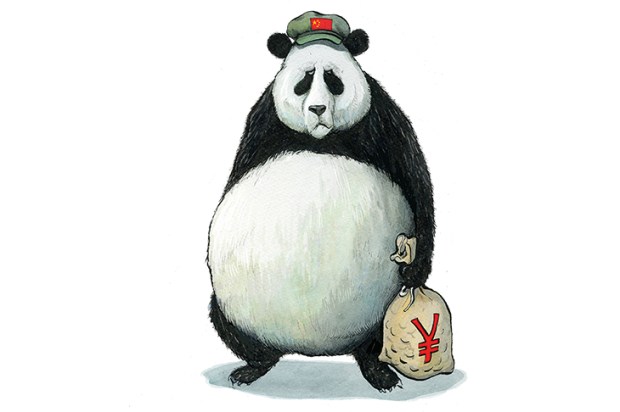
The practice of female infanticide is widespread throughout much of the world, most famously in China – where it dates back more than two millennia – but it also occurs in countries such as India, Pakistan, Bangladesh, Albania, Vietnam and Georgia. While there is some evidence to suggest that rates of female infanticide have begun to drop globally, it is still widespread. There are roughly 140 million fewer women because of sex-selective abortion and infanticide.
Britain has welcomed hundreds of thousands of migrants from these countries in the past 30 years. Some will no doubt have brought such practices with them. However, the long-standing position of pro-abortion figures in Britain has been to deny that it happens here. Stella Creasy has called it a ‘trope’, stating that there is ‘no evidence of this at all’. Britain’s largest abortion provider, the British Pregnancy Advisory Service, has described it as one of the ‘abortion myths’. Both the British Medical Association and the Royal College of Obstetricians and Gynaecologists have in the past denied there is statistical evidence that sex-selective abortions are happening in Britain.
This is no longer the case. According to analysis by the Department of Health and Social Care, there were approximately 400 sex-selective abortions of female foetuses of Indian ethnicity in England and Wales between 2017 and 2021. In the words of the report itself, this is the ‘first evidence of sex-selective abortions since these statistics were first published’.
There are reasons for believing that official statisticians are missing many more instances. Sex selection only becomes detectable when sex ratios exceed strict statistical thresholds. For smaller national groups, the number of births is often too low for abortions to be distinguished from random fluctuation. Nationalities with fewer than 100 recorded births over a five-year period were excluded from the analysis altogether.
There is also wider evidence that sex selection occurs in the UK, even if it is difficult to count. Some parents already bypass the NHS restriction by using private tests – which can tell them the sex of a child as early as seven weeks into gestation. These private tests cost around £200. A 2018 BBC investigation found that they were being used to inform sex-selective abortions.
A 2015 Department of Health report recorded testimonies from women who had been coerced by partners or family members into terminating female foetuses. One woman from Pakistan, who was living in the UK, named ‘C’ in the report, was knocked unconscious by her husband. He kicked and punched her in the abdomen once he found out from a scan that she was expecting a daughter. He later divorced her. Another woman, ‘G’, terminated three consecutive pregnancies, in each incidence because scans revealed that the foetuses were female.
In 2012, Telegraph reporters filmed doctors in British clinics agreeing to terminate foetuses on the basis of sex, even stating that they were prepared to fake paperwork to enable it with ‘no questions asked’. In response, the CPS, then led by Keir Starmer, said it was not in the public interest to prosecute such doctors.
It is clear at least some sex-selective abortion is taking place in Britain. This should therefore be part of the discussion. Lords must be aware that further liberalising access to abortion will mean more girls being terminated in the womb because of their sex.
Should this amendment pass unchanged, there would be nothing legally to prevent parents aborting a female child after the current 24-week limit, either through pills ordered by post or some other method. Decriminalisation will also make it impossible to prosecute women who terminate their own pregnancies on the grounds of sex, or to prosecute their husbands and boyfriends who pressure them to terminate. A legal opinion from Stephen Rose KC, commissioned by Sir Edward Leigh, supports the view that this change to the law will indeed legalise sex-selective abortion.
Baroness Eaton has tabled an amendment to prevent this outcome, making clear that nothing in the legislation should apply to a termination based on the sex of a child capable of being born alive. This is obviously a necessary addition to the law.
Failure to pass this amendment will lead not only to the moral horror of murdered unborn girls but will also store up further social problems. There is strong evidence that the incidence of violent and sexual crimes is worsened when male to female ratios are higher. It would be a serious failure to worsen the problem further.
Foetal femicide occurs at the confluence of many failed progressive orthodoxies: a belief that minority groups automatically magically transform their cultural practices once they arrive in Britain; that there is something called ‘rights’ which are transgressed if individuals are held to account for breaking laws; and that any restrictions to the actions of adult women are inherently sexist and patriarchal.
However we have ended up here, the first step is to recognise that a problem actually exists. Britons should not think of foetal femicide as something that only happens abroad. This barbaric, anti-human practice is taking place in our own country.
Got something to add? Join the discussion and comment below.
You might disagree with half of it, but you’ll enjoy reading all of it. Try your first month for free, then just $2 a week for the remainder of your first year.