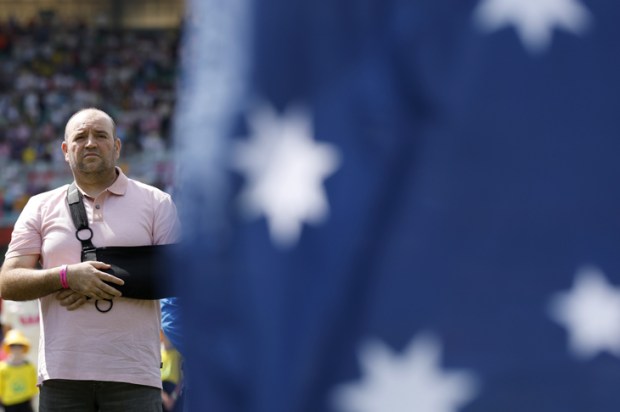
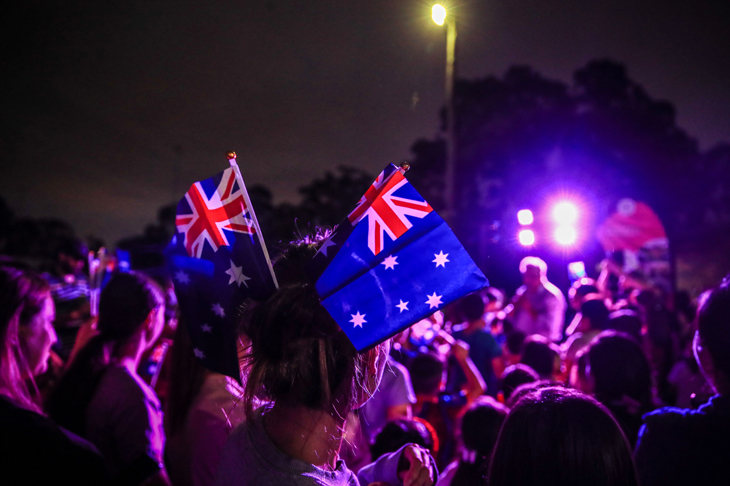
The good news is that support for Australia Day is surging. A poll commissioned by the Institute of Public Affairs shows that 76 per cent of Australians support celebrating Australia Day on 26 January, while just one in ten oppose it – down from 17 per cent in 2024 and 14 per cent last year. The even better news is that, for the second year in a row, support for our national day has surged among those aged 18 to 24, reaching 83 per cent, an increase of 31 per cent over the last 12 months and an increase of 42 per cent over the last two years. This is mirrored by a fall in the same age group, with just four per cent opposed to celebrating Australia Day on 26 January, down from 23 per cent in 2025 and 30 per cent in 2024.
The last three years have been bitter and polarising for Australian society. The referendum on the Voice sought to divide Australians as never before on race. The defeat of the Voice in October 2023 coincided with the invasion of Israel by Hamas the week before the referendum. Suddenly, Australians were confronted with angry antisemitic mobs celebrating not just in suburbs with large Muslim populations but descending on the forecourt of the Sydney Opera House. For most Australians, what was most shocking about that dark day was that the police stood by with arms folded, allowing the mob to launch flares, burn flags, and chant threats to Jews. It set the scene for more than two years in which Marxists and Islamists took over the main thoroughfares of our major cities, including the Sydney Harbour Bridge, vandalised Jewish businesses, schools and synagogues, and culminated in the shocking slaughter of 15 people who had gathered to celebrate Hanukkah at Bondi Beach.
These events have profoundly altered how many Australians see their nation, its institutions, and the political class meant to protect them. What has emerged from this crucible is a strengthened love of our country. This is reflected not just in the surge of support for Australia Day but in support for One Nation, which has risen seven points over the last two months in Newspoll, shaving four points from Labor, which has fallen to 32 per cent, and three points from the Coalition, reaching a record low of 21 per cent, and trailing One Nation for the first time ever. The appeal of One Nation probably starts with its name – Australians do not want to be divided into multicultural tribes – and with the consistency, clarity and authenticity of its message over decades. On key issues such as energy, immigration and woke culture, it has taken common-sense positions, rejecting unreliable renewables, unattainable and exorbitantly expensive net-zero ambitions, massive immigration intakes, reckless tolerance of Islamist culture, and medicalised gender ideology imposed on children.
This constitutes a clear wake-up call for the mainstream parties, but particularly for the Opposition. We have witnessed the destruction of established parties in Europe and the UK, and now the Liberals and Nationals are tearing their parties apart. As James Allan put it in his column last week, unless the Opposition gets their house in order, uniting their parliamentarians behind sensible policies and a leader who can sell them, this could be the long or indeed the not so long goodbye.
Meanwhile, the need for a strong, competent federal government has never been more urgent. This week, the Albanese government’s pusillanimous kowtowing to China has been rewarded with another round of bullying, this time over Taiwan. Beijing has threatened that Australia’s trade would be hit if we resisted a move by China to bring Taiwan under its direct control. As Ramesh Thakur pointed out in his column last week, Trump’s move on Nicolas Maduro has provided a template for China to intervene in Taiwan, and install a puppet government. With Trump focused on Greenland rather than Taiwan, Ukraine or the uprising in Iran, it is hard to know how events would play out, but given Taiwanese domination of the strategically vital semiconductor industry, the US would be unlikely to do nothing. We could be facing the largest conflict in East Asia since the Korean war, with dire impacts on the region and Australia and on global trade through the Taiwan Strait.
What we do know is that Australia is as woefully unprepared for a major war as it was in 1939. So, it’s just as well that young Australians are rallying around the flag. Love of country – and a preparedness to defend our way of life – will be crucial in responding to the challenges ahead.
Got something to add? Join the discussion and comment below.
You might disagree with half of it, but you’ll enjoy reading all of it. Try your first month for free, then just $2 a week for the remainder of your first year.