Most dads will settle for their kids growing up happy, healthy and (reaches for nearest wooden surface) tattoo-free. It’s a bonus if your son or daughter develops an interest in something you also care about. In an era when technology is doing its best to exacerbate generational divides, having the same hobby, playing the same sport, or even just watching the same Netflix series as your teenage son or daughter are shared experiences whose cumulative value should not be underestimated. For they can make the difference between communication and conversations. Conversations that give an attentive dad some access to his progeny’s developing character and nurture continuity in a relationship that adolescence will inevitably subject to considerable stress tests. It helps enormously, of course, if your son or daughter then chooses a career which you can relate to, and I am doubly blessed in this respect. Having spent most of my adult life trying to be funny with words, I was very chuffed when my son decided to make a living writing and performing comedy. As a writer who has always moonlighted as a cartoonist, I was equally delighted by my daughter’s decision to do a fine art degree. A decision which, I like to think, is at least partly due to me making faces with her food and dragging her around art galleries.
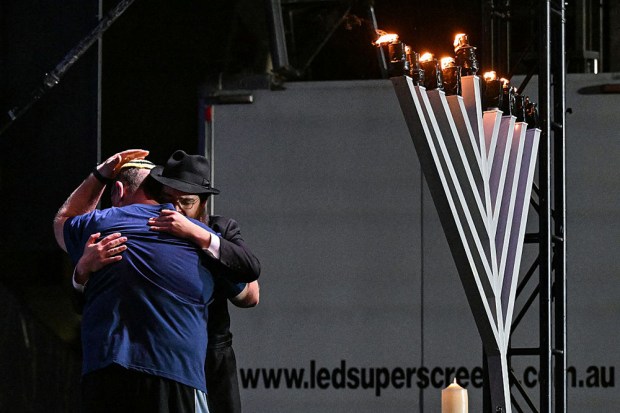
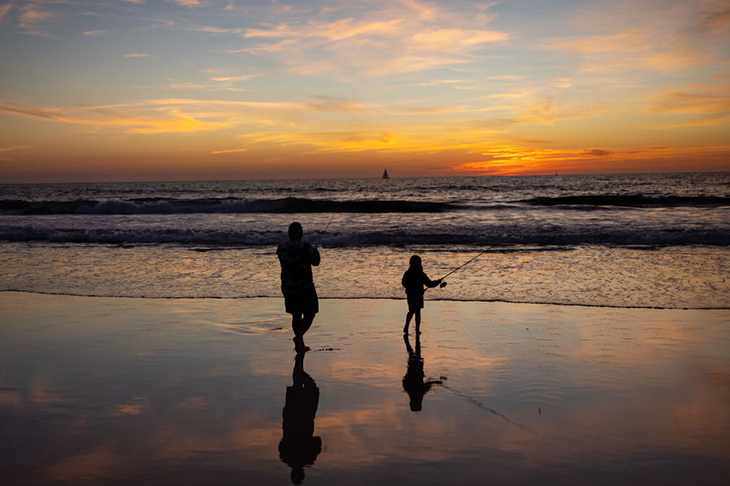
Such experiences have made me wistful about the relationship I had with my own father. He never said as much, but as a physicist, it must have disappointed him that I never showed the slightest interest in or aptitude for any STEM subject. The only thing we had in common, in fact, was a passion for fishing, so the childhood conversations I remember most fondly were all fishing-related. When, standing together at the workbench in our garage, he would show me how to make a float out of a swan’s quill. Or when, standing beside a lake we had never previously fished, he would ask me what species I thought it might contain, and what bait might prove most effective. I remember the pride I felt that my father took my opinion in such matters seriously. But due to my parents’ marriage ending when I was 13, I saw my father only sporadically during what might be called my formative years, and by the time I entered the workforce, we lived in such different worlds that neither of us would have been comfortable having a conversation about anything of consequence. So, my father died not knowing where my political sympathies lay or if I believe in anything beyond the laws of nature. Which cannot be said about Sajid Ikram. Whatever we learn from the royal commission that the Prime Minister has finally agreed to, it cannot be more disturbing than what we already know about this man. Which is that he ran a respectable business, provided for his family, and, until a few weeks ago, was no less a good Australian Muslim than the man who tried to stop his murderous rampage. A key objection to the initial enquiry the PM wanted was that it might only concern itself with the events immediately preceding the crime, and measures the security services might have taken to prevent it. It might not have involved asking Naveed Akram what he and his father talked about prior to buying the materials for their pipe bombs, booking their Philippines trip, or driving around the Southern Tablelands. It would not have confronted the disturbing reality that the Australia we now live in is one in which, in some otherwise respectable communities, the hatred of Jews is no less an intergenerational bond than a love of cricket or fishing.
It will not surprise me if Virginia Bell concludes that not all those communities are in the so-called Muslim suburbs of modern Sydney and Melbourne. My first experience of it was in the early-2000s, not long after I had moved to Sydney’s leafy eastern suburbs to be closer to the posh schools where my children were enrolled. Their classmates’ parents had made my wife and me very welcome, and we responded by hosting several lunches at which Stephen Shaul, a well-known Sydney restaurateur, and his lovely wife, Yvette, were regulars. We assumed that our other guests enjoyed their company as much as we did until the day when one of the other school mums – the daughter of an old NSW farming family, and an executive at a major investment bank – turned to me after the Shauls had left and said, in a voice she might have used to tell me that a wine I had served was corked, ‘You do know they’re Jewish, don’t you?’
Got something to add? Join the discussion and comment below.
You might disagree with half of it, but you’ll enjoy reading all of it. Try your first month for free, then just $2 a week for the remainder of your first year.