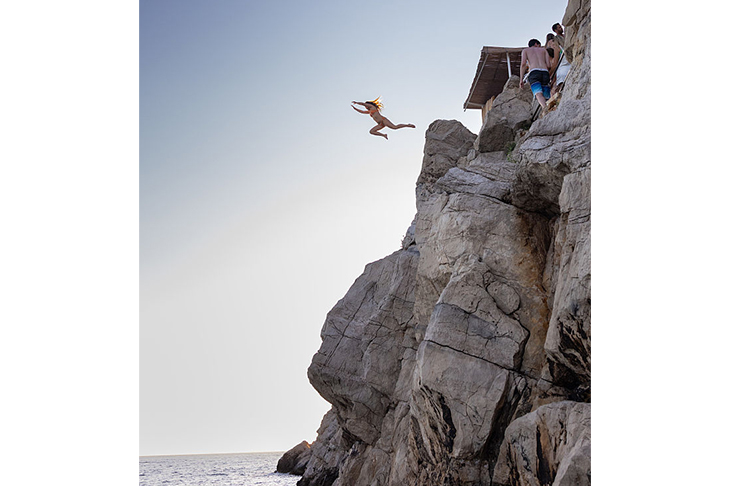
I’ve been an actor and satirist for forty years, and suddenly I’m told my words might be violent, requiring institutional intervention before someone gets hurt. This comes as our government scrambles to define hate speech while carefully avoiding obvious examples of it. My mother taught me that you don’t have to jump off a cliff just because someone tells you to. This simple truth contains everything you need to know about personal responsibility and human agency. Yet we’ve built an entire legal framework on the opposite assumption, that adults are programmable automatons who helplessly act on words they hear. So, they argue, just as we prevent workplace accidents by addressing loose scaffolding or exposed wires, we prevent speech harm by restricting dangerous words. Here’s the flaw. When debris falls from scaffolding, it has to obey the laws of physics. When someone hears a joke about Islamists they have a choice about what they do. Conflating these two denies human agency.
Charles Manson didn’t tell jokes; he ordered murders. If we can’t distinguish between incitement and satire, we’ve lost the ability to think.
When comedians mock extremists, we’re not commanding anything except perhaps thought. When a religious leader tells followers that murdering Jews is divinely mandated, that’s closer to Manson. One speaks to followers sworn to obedience, the other to audiences free to heckle. We must not use religious incitement to violence to restrict legitimate speech.
Some claim Australia has a binding obligation under Article 20 (2) of the International Covenant on Civil and Political Rights to prohibit advocacy of hatred where violence or hostility is a foreseeable consequence. Yet the same institutions that demand the power to prevent harmful speech, celebrate doctors who tell confused children they’re ‘born in the wrong body’, creating a pathway to sterilisation for troubled, gay and/or autistic kids. They claim children will commit suicide without the intervention (the evidence says otherwise), ignoring those who commit suicide after realising what was done.
We don’t need new ‘foreseeability’ laws to deport non-citizens who incite religious murder; we need to enforce the laws we already have. The government wants more powers not to stop threats they’ve proven they’ll ignore, but to police our opinions. The selective application reveals everything. Some people can call for murder with barely a rebuke. Others face prosecution for mild criticism. The principle isn’t safety, it’s control. We’ve inverted moral responsibility. Violent criminals are the victims, triggered by ‘hate’ speech. The comedian, whose only crime is cracking a joke, is guilty.
This inversion serves power brilliantly. If words are violence, offence is assault, discomfort is trauma, questioning authority is abuse, controlling speech is public safety, censorship is care. This isn’t liberal democracy. It’s therapeutic totalitarianism.
Even if police know speech isn’t responsible for violence, bad laws force prosecution. The justice system becomes an unwilling enforcer of ideological conformity, pursuing cases everyone knows are absurd because legislation demands it.
We don’t ban jokes about scaffolding because they might make someone careless. Physical safety requires physical measures, not speech codes. Yet we don’t address ideological incitement by examining why certain ideologies lead to violence, or investigating the institutions that propagate them. Instead, police monitor everyone’s speech on the theory that any word might trigger ideological violence.
This doesn’t just fail; it makes things worse. When you can’t name problems, you can’t solve them. When you criminalise accurate descriptions, you incentivise dishonesty. The pressure builds until the explosion is worse than whatever the censorship was supposedly trying to prevent.
Satire is civilisation’s pressure valve. When jesters mocked kings, they weren’t inciting regicide but preventing it, letting people laugh at power rather than overthrow it.
After Bondi, I wrestled with whether to continue performing satire. At 55, and after four decades mocking politicians, I wondered if the social temperature was too high to speak truth to power. I decided that was why I had to continue. The jokes that make politicians uncomfortable are the ones society needs to hear. If we stop laughing at absurdity, we normalise it. If we stop questioning authority, we surrender to it.
My mother was right about cliffs. But when a committee determines that not jumping off one would be offensive, jumping becomes mandatory. That’s the world we’re building, one where bureaucratic sensitivity trumps personal responsibility. The greatest joke? The people demanding speech restrictions to prevent violence are the same ones who failed to prevent a massacre despite years of warning signs. They want to determine which words are dangerous, but they’re fine with foreseeable, physical harm to children, as long as it’s ideologically approved.
The difference between a satirist and a hate preacher isn’t hard to spot if you’re honest. One makes you laugh, the other makes you kill. One questions authority, the other claims to have it. One opens minds, the other closes them. Yet if we let bureaucrats define the difference, hate preachers will be the only ones allowed to speak, because they’ll be on the committee.
Got something to add? Join the discussion and comment below.
Rupert Degas is a voice actor and satirist. His videos have millions of views on Instagram.
You might disagree with half of it, but you’ll enjoy reading all of it. Try your first month for free, then just $2 a week for the remainder of your first year.