Of all the heavyweight books I’ve ever been asked to review, one that most influenced my view of how the world works was Why Nations Fail (2012) by two American academics, Daron Acemoglu and James A. Robinson. Their theory, drawn from a broad sweep of history, is that all state regimes fit patterns that are either ‘extractive’ or ‘inclusive’. To be inclusive is to be egalitarian in access to resources and rewards, and responsive to the will of the people. To be extractive is to rule despotically in the interest of corrupt elites, often profiting from ruthless extraction of natural resources. Inclusive economies are prone to occasional crisis but capable of self-renewal;
extractive economies are destined to fail.
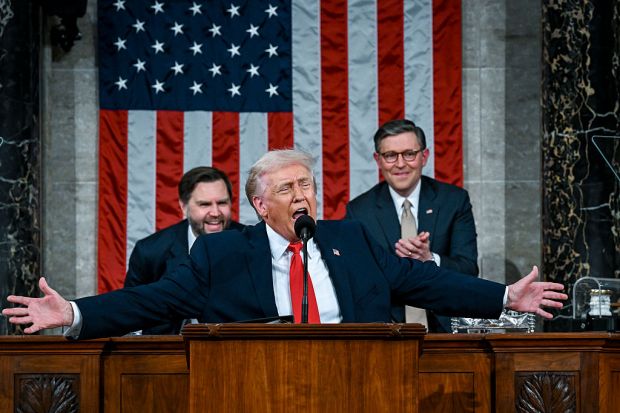
Venezuela under Nicolas Maduro and Hugo Chavez, who brought their country to ruin despite huge oil wealth, perfectly illustrated an ‘extractive’ paradigm. Donald Trump’s declaration that US companies will take charge of Venezuela’s oil industry under military protection, combined with headlines such as ‘Hedge funds prepare to pile in to Trump’s Venezuela’, suggest another wave of extraction to come, with domestic economic revival as a mere side-effect.
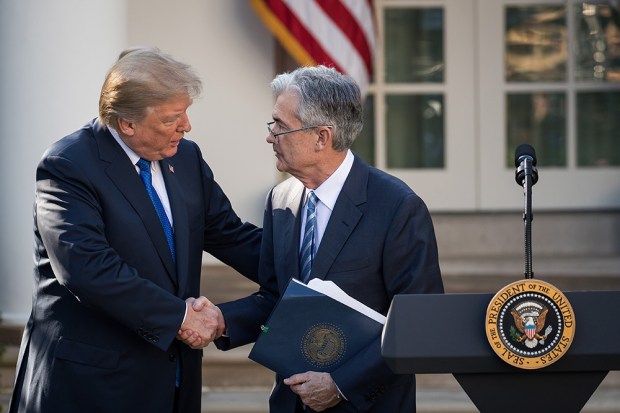
Meanwhile, the President’s renewed claim on Greenland, rich in minerals but happening to belong to Denmark, was another despotic thrust. Anywhere else on the planet that has rare metal deposits needed for batteries is also in his sights: Congo, for example, where a peace deal with Rwanda brokered by a Trump family member was swiftly followed by talk of US investment in local mines. In simple terms, Trump has shifted the US ruling mindset from a globally admired inclusive tradition to the darker end of the Acemoglu-Robinson spectrum.
The authors’ primary test case, as it happens, was none of the above but the Korean peninsula, with its tech-rich democracy to the south and its brutalised populace under a mad dynasty to the north. Americans are never going to starve or shiver as North Koreans do, but if their puffed-up President increasingly resembles any other current leader, it is surely his extractive former friend Kim Jong-un.
Jobs apocalypse
Here’s another theme for 2026 to add to last week’s list: jobs. UK unemployment was already at a post-Covid high of 5.1 per cent at the end of 2025, up from 4.3 per cent a year earlier. Most pundits expect it to climb this year to levels not seen since the mid-2010s – and to become a refrain of Kemi Badenoch’s parliamentary assaults on the Prime Minister and the Chancellor.
Young people will bear the brunt of a jobs drought because minimum wage rises and the notorious national insurance hike have made them more expensive than basic AI software that can do much of the same work. Graduate recruitment and apprenticeship programmes have shrunk or been scrapped, while any company hoping to boost its share price must wax lyrical like Nvidia, the US chipmaker, about robot factories building robots – and not about investment in people.
But many firms that still rely on people, particularly in retailing and hospitality, will simply go bust, as the government fails to relieve energy and other business costs. One thinktanker, Ruth Curtice of the Resolution Foundation, describes this trend, rather startlingly, as ‘encouraging signs of a mild zombie apocalypse’, in which struggling firms will die but more productive ones will replace them. She’s right in the sense that the best hope is for large numbers of innovative micro-businesses each to find the confidence and resources to take on and train a handful of new employees. But do you really see that happening under the dead hand of Rachel Reeves? Sadly, neither do I.
Who’s the tightwad?
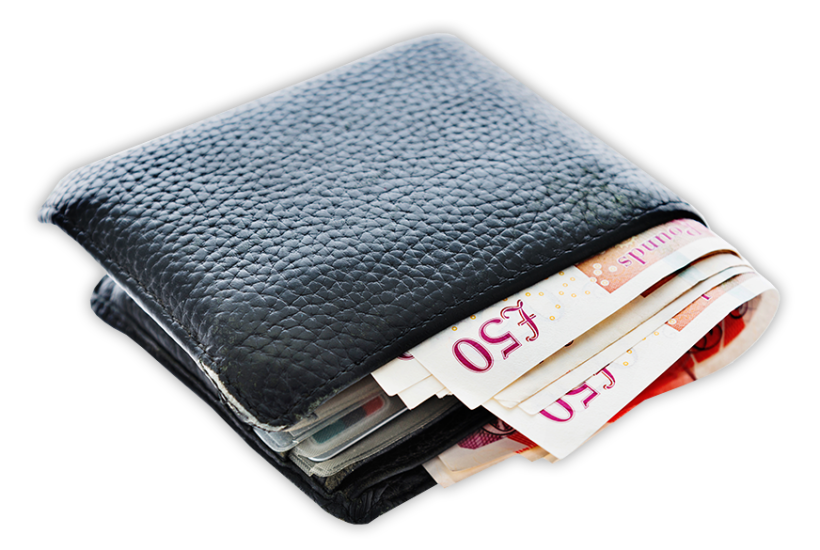
Last week I was introduced by Rory Sutherland’s always-illuminating Wiki Man column to another useful way of dividing the world: between ‘tightwads’ who depress prosperity because they can’t bring themselves to buy things that add to their wellbeing, and ‘spendthrifts’ who splash the cash and run up debts but patriotically keep ‘the whole economic show on the road’. That’s an aperçu I might sometimes borrow, I thought, until I realised that the ‘Yorkshire-born Spectator writer’ cited as an archetypal tightwad was almost certainly me. The allegation was that I had been heard to complain, many years after the event, about Rory’s failure to contribute to the cost of a shared taxi, in which the diversion to drop him off ‘would have added two quid to the overall fare’.
Recollections may vary, as Her Majesty said. I quibble only with ‘two quid’ – his lunch destination was far from mine, in heavy traffic – and the suggestion that my complaint began with ‘’Appen…’ as though I were a character from Last of the Summer Wine. All trivia, perhaps, but here’s my point, dear colleague: you jumped out with a cheery wave, I paid for our journey. Which of us was the tightwad?
The glow of Bardot
In a cold hotel room in Normandy, I’m warmed by the golden glow – even in black and white – of the young Brigitte Bardot. The Arte television channel was showing La Vérité (1960), a tale of Parisian passion regarded by many critics as her finest performance. Other writers have expatiated on her role as a symbol of female emancipation, but my New Year’s Eve host a day’s drive further south, a historian of modern France, throws a different light on her economic significance.
The three postwar decades known to the French as Les Trente Glorieuses, he explains, were an era of high growth (4.5 per cent throughout the 1950s, compared with 2.4 per cent in the UK), rapid social change, embrace of modernity and above all, optimism; BB stood for all that too. To be young was to be joyfully open to future possibilities, in material progress as well as sexual freedom. How unlike the anxious, self-obsessed, victimhood-claiming pessimism of today’s youth: où sont les Bardots de nos jours?
Got something to add? Join the discussion and comment below.
You might disagree with half of it, but you’ll enjoy reading all of it. Try your first month for free, then just $2 a week for the remainder of your first year.