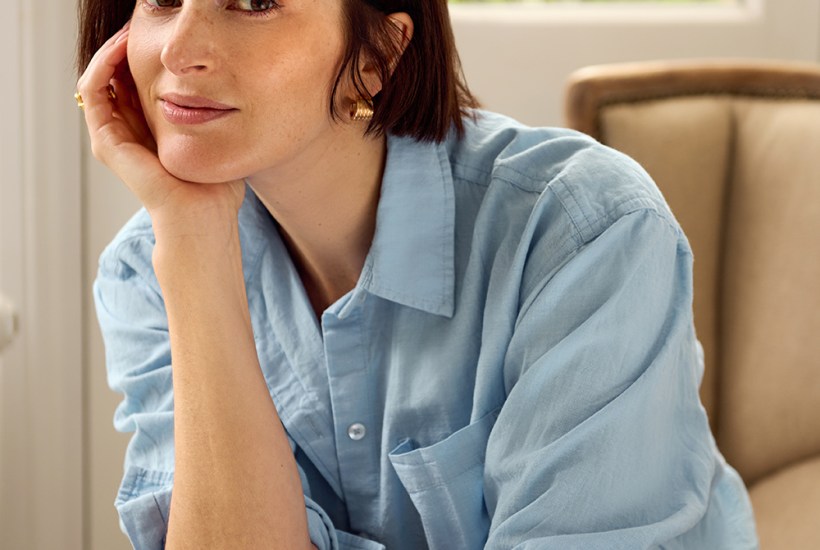
This is the sixth novel and tenth book overall by the highly successful journalist and podcaster Elizabeth Day. She hit her stride as an author with her third novel Paradise City (2015), which was leaps and bounds ahead of her first two in terms of narrative propulsion. Her next was what might be considered her breakout book, The Party (2017), after which came Magpie (2021).
One of Us returns to the characters and story of The Party, but it can easily be read as a standalone. Day has said that the earlier novel was partly inspired by reading The Great Gatsby at the age of 12; and while she has conceded that no one can write like F. Scott Fitzgerald, it is true that she does have an insight into wealth and ambition – not least because she has interviewed so many of the great and the good on her behemoth of a podcast How to Fail (from Malala to Jon Bon Jovi).
In One of Us, the protagonist is the outsider Martin Gilmour, a former scholarship boy at boarding school who becomes an ‘art history lecturer’ at the fictional University of South Anglia. In The Party, he became friends at school with the rich, good-looking Ben Fitzmaurice and developed a Talented Mr Ripley-esque fixation with him. He even covered up for him when Ben killed a woman when drunk driving. At the eponymous party, Ben then dumped Martin as a friend.
All of this backstory is explained in the first chapter of One of Us, whose characters are drawn with broad strokes – which is not to my taste. Part of the charm of the late, beloved Jilly Cooper’s novels, however, was that they dealt in exactly the same kind of stereotypes Day dishes up here – even if there were considerably fewer evil Tories to be found in Cooper’s Rutshire.
Day has never been afraid of taking on big themes in her fiction. The climate crisis, child abuse, drug addiction, drink spiking and rape, police cover-ups, party politics, class and the ‘wellness’ industry all feature in this novel, as does a magazine that sounds like it’s supposed to be a parody of The Spectator: ‘The Witness is a capital-C Conservative weekly periodical with pen-and-ink cartoons on the front cover and much intellectual preening from vituperative columnists on the inside pages.’
There is one scene of less than consensual sex between adults and one of definite rape – the character who is raped as an adult having been abused as a child by her grandfather and disbelieved. This is sadly all too realistic and horrible to read about in detail. Day has said she felt liberated writing One of Us, and it is the least tentative novel I can remember reading. But it is curious to me that very little of the nuanced skill she displays as an interviewer – and she is among the very best at drawing celebrities out – appears to have been brought to bear in her fiction.
Got something to add? Join the discussion and comment below.
You might disagree with half of it, but you’ll enjoy reading all of it. Try your first month for free, then just $2 a week for the remainder of your first year.