There is a persistent habit in British and international commentary of treating Nigel Farage and Donald Trump as interchangeable expressions of a common populist upheaval – as though both men were merely in the same global rebellion against elites and institutions. It is baffling, really, that nearly all commentators and journalists place them in the same populist milieu, when a closer examination reveals fundamentally different instincts, languages and constitutional orientations.
Trump’s political manner has always been that of the defiant outsider attacking the political infrastructure of the United States itself, portraying the machinery of government and the ‘swamp’ as something fundamentally obstructive, self-protecting and illegitimate. Farage, by contrast, directs his energy not toward dismantling the British constitutional order, but toward restoring it to proper operation. His style suggests a conviction that the British parliamentary tradition is worth preserving rather than replacing – that the nation’s constitutional inheritance remains defensible, and precious, even if recent stewardship has undermined it.
Farage understood earlier than most that British politics was undergoing a slow estrangement between the governors and the governed. His twenty years in the European parliament were not those of a theatrical vandal, but of a constitutional advocate. He participated within the legislative forum, using the rules of debate and the procedural mechanisms available to him to press a central argument: that a sovereign nation must be governed by those whom its citizens can dismiss at an election. Farage worked within the institutional setting – not as a sulking outsider, but as an engaged participant exploiting the system’s own procedures to interrogate its legitimacy. This is recognisably in the Diceyan tradition of parliamentary authority. Farage’s critique has consistently been grounded not in ideological rage or cultural antagonism, but in reason and love of country. This is not the posture of an arsonist; it is the posture of someone arguing that governments must again take seriously the democratic principle from which their authority is drawn.
Immigration was the issue that exposed the depth of the disconnect. Farage did not conjure public concern from nowhere; he named a concern that already existed but was deemed unspeakable by the SW1s – those in living in the bubble of the posher London post codes. For years, a significant portion of the British public felt that immigration was being conducted at a scale and pace that had outrun social consent, and that Westminster ignored their wishes. The Conservative party, fearful of metropolitan condemnation, had lost the ability to give voice to older instincts about the sovereign right of the nation to define its borders, and had therefore abandoned one of the most traditional pillars of conservatism itself. Nigel Farage stepped into this vacuum not so much a wrecking ball, but with a compelling argument about democratic legitimacy.
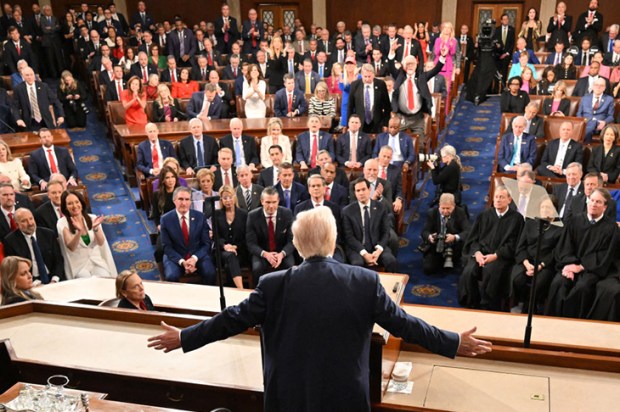
The contrast with Donald Trump is clear, in both rhetorical form and moral orientation. Trump’s language is personal, transactional and self-referential. His sentences turn inward; events revolve around him; politics becomes a theatre in which he is the protagonist. Farage, by contrast, rarely speaks about himself. His rhetoric consistently redirects attention toward the British public, toward their voice, their sovereignty, their inheritance. Trump says ‘I’ with striking frequency; Farage says ‘we’. Trump centres his own experiences; Farage focuses on the community’s disenfranchisement. This reveals a true difference in self-conception.
This difference is reinforced by their respective constitutional settings. The American presidency creates a direct relationship between the president and the electorate, elevating the president as an embodiment of popular will. Within that model it is easier for a president to rail against the other branches of government as though they were impediments to his personal mission. The Westminster model, by contrast, makes the prime minister first among equals – reliant upon, and answerable to, a party room, a cabinet and ultimately to the parliament. It is a system that requires political leaders to work within the institutional culture rather than posture against it. In this sense Farage’s style – as a procedural actor working through established channels – aligns with a Westminster logic of leadership and parliamentary discipline. Farage’s economic language has evolved, growing more conservative, more fiscally grounded, and less populist over time – another indication that he is positioning himself as a serious player, alongside the conservative party’s former tradition of prudent economic stewardship rather than American-style economic nationalism.
It is also significant that Trump rarely references the philosophical architecture of the American republic. There is little engagement with the founders, with federalism or separation of powers, beyond the incidental. Just attacks from time to time hurled at judges. Farage, by contrast, frequently invokes Britain’s constitutional heritage – the unwritten but deeply felt lineage of authority that runs from Magna Carta through the Glorious Revolution, to this day. His rhetoric is mostly Burkean: institutions are fragile and should be tended, repaired, and handed on. As Roger Scruton observed, conservatism is ‘the philosophy of attachment’ – to which I would add, inheritance. And Farage’s politics are characterised by an attachment to England’s historical continuity.
But it is the arrival of irregular migrants from across the Channel that has crystallised Farage as a soothsayer in the public mind. The visual impact – boats crossing the Channel every day – is political manna from heaven. The public’s response is not driven by racial hostility, but by common sense: a country which cannot control its borders has lost control of its self-government. The Australian parallel is instructive. Howard’s Pacific Solution and Tony Abbott’s determination to stop the boats was not born of cruelty but of constitutional clarity. It was not really even populist, just popular. Farage’s stance, similarly, is less of a populist inflamer, but more of a constitutionalist reminding Britain of its responsibilities.
There exists a plausible counter-history in which Farage entered the Tory party in the 1990s and rose within it, perhaps even to high office. His instincts – sceptical of supranational bureaucracy, protective of national identity, attuned to ordinary public sentiment – are recognisably conservative in the classical sense. Yet the Conservatives allowed themselves to be paralysed by the social anxieties of elite approval, and thus surrendered ground that Farage has reclaimed.
Farage and Trump emerge, then, as distinctly different political products, of different political cultures and constitutional frameworks. Trump is a disruptor of American presidentialism – an individual force trying to a strong institutional system. Farage is a figure of parliamentary democracy – a constitutional revivalist operating within a system whose unwritten norms and conventions are unwritten and more fragile.
Whether or not Farage ever becomes prime minister is no longer the essential question. His imprint upon modern British politics is already indelible. He forced a national reckoning on Europe and won it. He forced a national reckoning on immigration and shifted the political centre. He has, in effect, compelled the political establishment to hear the electorate. If his legacy is understood clearly, it should be as less of a British Trump, than a constitutional restorationist: a politician who simply says that it is the people who should define what Britain is – and it should be governed accordingly. In this day and age this is a monumental achievement. Let’s drink to that.
Got something to add? Join the discussion and comment below.
You might disagree with half of it, but you’ll enjoy reading all of it. Try your first month for free, then just $2 a week for the remainder of your first year.