It comes as a surprise for anyone assuming that ghosthunters are easily fooled scaredy cats to learn that there was once a Society for Psychical Research based at Cambridge University. Undergraduate members would gather on Sunday evenings to hear the latest reports of investigations into supernatural phenomena. It sounds quaint; but to judge from Ben Machell’s account of the group’s charismatic leader Tony Cornell, there must have been many enthralling moments.
Machell uses the figure of Cornell to prise open the SPR, founded in 1882 in London. Members included Arthur Balfour, William Gladstone and Arthur Conan Doyle. Cornell became a member after encountering a hermit in India when on active service during the second world war. Acknowledging the young naval officer’s scepticism, the hermit performed an inexplicable feat that birthed a lifelong desire in Cornell to put the occult to the test. He became one of the Society’s leading investigators, combining an unflappable scientific approach with psychological acuity.
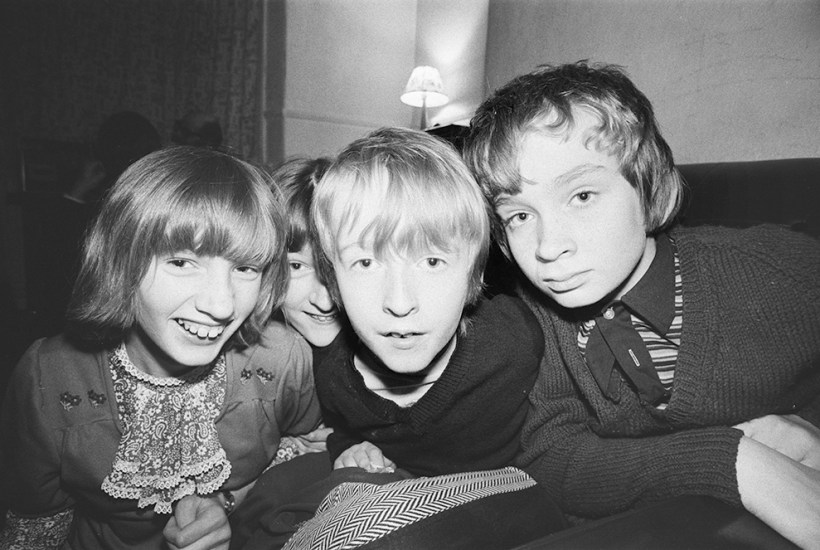
Mischievous children found that rapping and throwing things around were excellent ways to gain attention
More interesting than the obvious frauds, entertaining as they are (I liked the medium who crawled around a darkened room during seances, presenting her bare arms as the legs of a spectral child), were the subjects who truly believed they were being haunted. Even when he had proved to his own satisfaction that ghosts were not involved, Cornell was often unable to reassure terrified sufferers that they would never be troubled again.
He could deal wisely with mischievous or troubled children who found shrieking, rapping and throwing items around an excellent way to gain attention. Arriving at a house after two other SPR investigators had spent days authenticating paranormal activity, Cornell was astonished to find that much of the disturbance reported by the children – furniture moving about, being flung out of bed by invisible entities – had not been witnessed by anyone else. He gently gave them a way out of the mounting deception without unmasking them.
Working from the mass of notes and recordings in Cornell’s archive in the Cambridge University library, Machell recounts many of his more florid cases, some of which reached the national press, and reading about them is decidedly unsettling. He aims to be as rigorous and open-minded as Cornell, pointing out, for example, that a fraudulent medium may once have been genuine, forced by expectation to manufacture phenomena formerly occurring naturally. Some psychic gifts appear to decline with age. There is also fruitful discussion of the fallibility of our senses, and how the latest scientific insights shed light on much that appears uncanny – for example, the notion that there is not really any such thing as ‘the present moment’, only a rapidly shifting mosaic of sense data marshalled into something like coherence by the brain.
There is some overlap between Chasing the Dark and How to Build a Haunted House – the case of ‘the most haunted house in England’, Borley Rectory, in Essex, being one instance. Caitlin Blackwell Baines’s method is very different from Machell’s, exhibiting a chatty chumminess in contrast to his more forensic style. She examines the history of the haunted house as cultural trope, proposing Horace Walpole’s Gothic pastiche, Strawberry Hill House, as the prototype. It doesn’t help with establishing an academic tone that she calls him ‘Horace’, or that Swedenborg appears as ‘Swedenberg’ and the architect William Burges as ‘Burgess’. (Baines is, as you might expect, also a podcaster.) But gradually an elegant and persuasive argument emerges.
There are fascinating observations along the way. Baines points out that the story of a screaming Catherine Howard running to intercept Henry VIII down the Haunted Gallery at Hampton Court is of relatively recent date, appearing first in print in 1882. Ghosts in Japan apparently haunt people rather than locations. Individual hauntings in different places fall into templates; Château de Brissac on the Loire has a ‘Green Lady’, who sounds remarkably like the ‘Brown Lady’ of Raynham Hall in Norfolk, down to the detail of hollows instead of eyes.
Venturing to various haunted locations, now visitor attractions, Baines probes ghosts as a feature of modern tourism. They often memorialise historical horrors that we can’t shake off. The most interesting, and unexpected, chapters concern American hauntings. Baines argues that the legend of a ghostly black woman in a green turban in a plantation house in the Deep South is a manifestation of the fearful stain of slavery. That ‘Chloe’ has no verifiable historical existence is immaterial. Baines also probes the ‘Indian burial ground’ trope of horror films, novels and ‘true story’ accounts as a reflection of the pervasive guilt of white settlers bent on the genocide of indigenous peoples. The living are always far more terrifying than the dead.
Got something to add? Join the discussion and comment below.
You might disagree with half of it, but you’ll enjoy reading all of it. Try your first month for free, then just $2 a week for the remainder of your first year.