On several occasions this year, US President Donald Trump has suggested that, thanks to his dealmaking prowess, long-coveted ‘peace in the Middle East’ may well be nigh. Yet 2026 is more likely to witness ‘unpeace’ in the region, as the long tail of the Iran-Israel conflict creates further instability and impedes the construction of a more stable order.
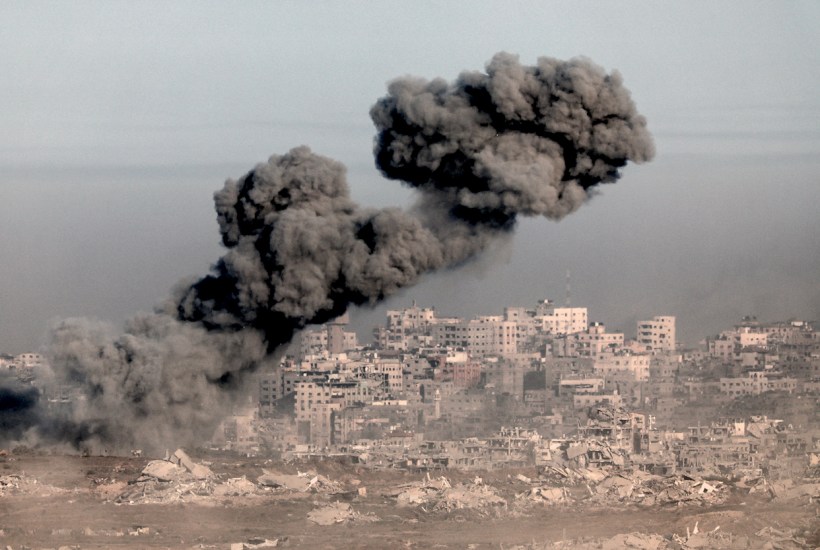
‘Unpeace’ is an Anglo-Saxon concept which describes the liminal point between open conflict and stability. The perennial cycle of war and peace that characterised the Early Medieval period would certainly be familiar to those living in the Middle East today. Equally, the Anglo-Saxons would recognise the persistent violence – in Gaza, the West Bank, Lebanon, Syria, Yemen and Iraq – that currently plagues Trump’s Middle Eastern objectives.
Indeed, the Middle East – with its transnational social structures, disputed national boundaries, charged sectarian relations and intimate relationship between economic and political power – has long evaded the stability that an order buttressed by widespread legitimacy provides. Its modern history is in fact littered with unsuccessful bids to bring conflicts to an end.
Twenty-seven years of skirmishes between Arabs and Jews preceded the eventual eruption of civil war in 1947. No sooner had that conflict ended than the new Israeli state’s Arab neighbours launched the 1948 Palestine War. So, too, was the Six-Day War of 1967 followed immediately by the War of Attrition, and then, three years later, by the Yom Kippur War. In Gaza, the end of the Second Intifada and Israel’s withdrawal in 2005 did not usher in the stability many hoped for, but ten bouts of fighting in 17 years between Israel and Hamas.
A key historical takeaway overhangs Trump’s diplomatic agenda like the sword of Damocles: Middle Eastern conflict is doomed to repeat itself until the root cause is addressed.
According to the annals, the question that matters most is whether the Iran-Israel conflict has been sufficiently resolved to allow a new political order to emerge.
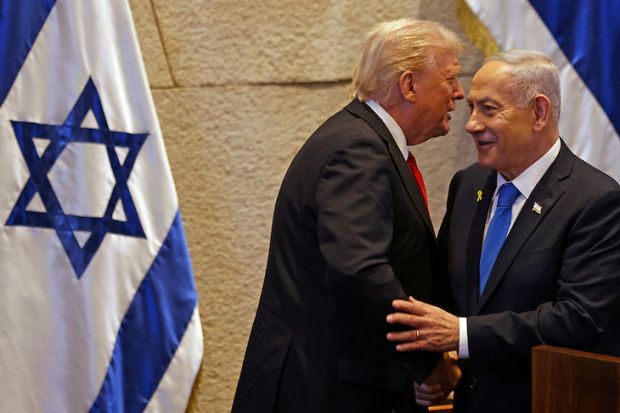
Increasingly, you will hear different answers in Washington and Jerusalem. The instinct of President Trump – shared by key members of his negotiating entourage – is that the gains offered by military action have essentially been exhausted. Critically, he believes that Iran, which was once a ‘very big, strong bully’, has been sufficiently degraded such that it can be sidelined in the formation of a new political reality. What the region needs now, Trump reasoned in Riyadh last May, is for its ‘responsible nations…[to] put aside [their] differences and focus on interests that unite’. In this vision, he is the broker-in-chief, leveraging the magnetism of American political and economic heft to persuade regional actors to swap their guns for business cards.
Yet Israel views the moment differently. From its perspective, such initiatives are peripheral at best, harmful at worst, so long as decisive victory over Iran remains elusive. The root cause of conflict has not been met, so there cannot be a major political reset.
A cursory survey of goings-on across the Middle East makes it difficult to refute this argument. Hamas refuses to disarm and will seek to embed in Gaza’s next local governing body. Hezbollah has adjusted its strategic doctrine for a future guerrilla conflict with Israel and received over $1 billion in reconstitution funds from Tehran this year. Iran is helping its Iraqi affiliates weather American pressure and is searching for a political arrangement with Syrian President Ahmed al-Sharaa to smooth over its smuggling operations.
Neither do Iran’s domestic activities reveal a reformed mind.
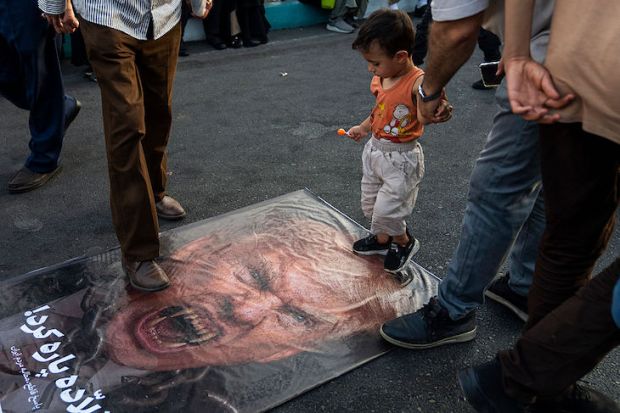
Nuclear activities continue, including at a facility that may be an undisclosed enrichment facility. Regime strategists concluded after the 12-Day War that future survival rests on missile-centric deterrence by punishment. Ballistic missile production is being ramped up and stockpiles buried deeper, while mobile launchers replace static missile silos. This week, the government conducted a nationwide missile exercise drill.
Meanwhile, Supreme Leader Ali Khamenei has surrounded himself with a new, younger military top brass that views the conflict with Israel as its Iran-Iraq War moment – a generational episode of national humiliation that sharpens the mind. Hardline factions are queueing up to dominate next May’s local elections. They hope to influence the all-important appointment of four new members of the 88-seat Assembly of Experts, which will select Khamenei’s eventual successor.
White House will consent to further Israeli action against Iran
Rather than showing signs of petering out, the Iran-Israel conflict therefore appears likely to enter the ‘new phase’ referenced by IDF Chief of staff Eyal Zamir on the 24 June – the same day Trump imposed a ceasefire deemed premature by Israeli officials in private. Over the past month, Israeli messaging about Iran’s surging missile production capacity has grown louder, and Prime Minister Benjamin Netanyahu will reportedly present military options to Trump next week in Miami. Social media channels linked to the Islamic Revolutionary Guard Corps talk frequently of the ‘coming round’.
Trump envisages the establishment of a new Middle Eastern order propped up by political and economic accords. Yet Israel’s concerns about the reversibility of its recent victories breeds resistance to what it sees as premature efforts to realise this vision. The paradox, of course, is that Trump’s grand plan may hinge on further action to arrest Tehran’s military reconstitution.
That 2026 will be a year of ‘unpeace’ in the Middle East is therefore clear. What is less so is just how ‘unpeaceful’ it will be. If one were to guess, Israeli military operations in the Levant will be moderated but not halt completely.
Meanwhile, the White House will consent to further Israeli action against Iran, convinced that this will not scupper its overall peace-making agenda. Beyond that, all bets are off.