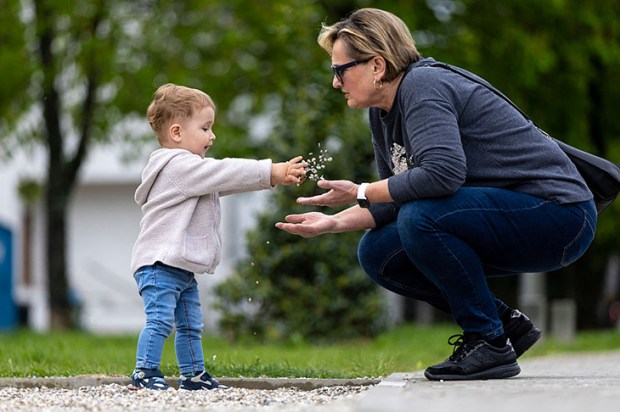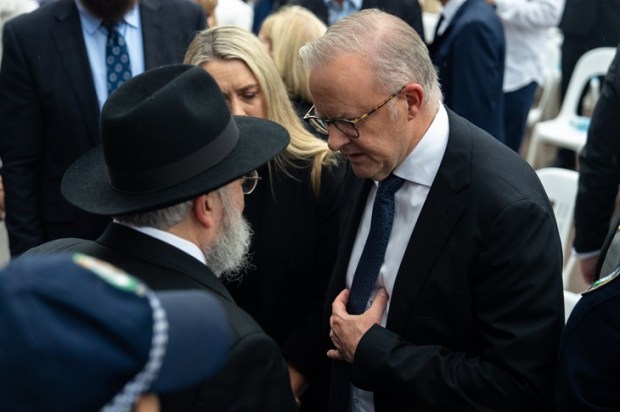
In the NSW parliament Premier Minns referred to another member as ‘mate’. Then an opposition member got up and took issue and (to my astonishment) the Speaker ruled that ‘mate’ was unparliamentary language. What rot! Of course, ‘mate’ (meaning friend) is used in Britain as well as here. In fact, it turns up around 1380 – long before anyone in England had heard about Australia. But we’ve made it our own. The reason is because we, and we alone, developed the concept of ‘mateship’. ‘Mate’ is first recorded here from 1834, but in 1857 ‘mateship’ appeared in print for the first time. ‘Mateship’ was invented in the bush, grew strong on the goldfields, and was what held together the Anzacs in the trenches of Gallipoli and France. The great John O’Grady in his little book on Aussie English says, ‘When your mate is in trouble you go to his assistance, no matter what he’s done. A man must stick by his mates.’ That’s mateship. That’s why ‘mate’ is a more important word here than elsewhere. So, what about the Premier? Clearly, he was being friendly, informal, relaxed and entirely proper in his use of ‘mate’. That said, I worry that ‘mate’ is not always used these days as it once was by the Diggers. Depending on the inflection it can be an expression of disbelief: ‘maaaaaate’ – which means ‘come on, that can’t be right.’ If delivered with an upward inflection (‘mate?’) it can mean ‘what do you think you’re up to?’ It can even be a protest ‘Come on, mate!’ But it remains a rich, colourful, and valuable word in the Aussie lexicon. At least for blokes. Sheilas are not mates. Mind you I said that to Ben Fordham and he immediately corrected me: ‘Kel, these days a sheila can be a mate!!’ And, upon reflection I remember that Jon Cleary in his 1952 novel The Sundowners portrayed a husband and wife as each other’s best mates.
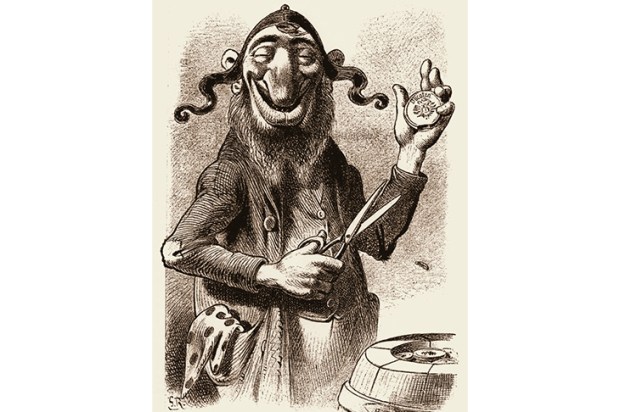
To give someone ‘short shrift’ means ‘to make short work of; to dismiss rapidly and unsympathetically’ (Oxford). The Collins Dictionary says that if someone is given ‘short shrift’ it means that very little attention is paid to them, while the Cambridge says it means they are treated without sympathy. Merriam-Webster says that ‘short shrift’ means ‘summary treatment: little consideration’. All of which, I suppose, are pointing in pretty much the same direction. But where does this come from? And what is a ‘shrift’? Well, a thousand years ago, in the days of Old English, ‘shrift’ meant a penance imposed by a priest following confession. It might originally have meant a ‘prescribed penalty (or penance)’ in the sense of something that is written down – perhaps influenced by the structural similarity between ‘shrift’ and ‘script’ (‘written down’). ‘Short shrift’ is recorded from 1597 when it originally meant ‘a brief space of time allowed for a criminal to make his or her confession before execution’ (Oxford again). And it’s not hard to see how, from that beginning, ‘short shrift’ could come to have the meaning it has to today (getting very little time and even less attention). The noun ‘shrift’ seems to come from the verb ‘to shrive’, an old Germanic word – and that source word had the meaning of ‘to adjudge; to impose a penalty or a penance’. In Chaucer’s Canterbury Tales there is a character, The Pardoner, who does exactly this – he ‘shrives’ people. He is a travelling friar who is licensed to sell papal pardons or indulgences. Apparently in those days it was a profitable business to offer people ‘shrift’ (short or otherwise).
Got something to add? Join the discussion and comment below.
Contact Kel at ozwords.com.au
You might disagree with half of it, but you’ll enjoy reading all of it. Try your first month for free, then just $2 a week for the remainder of your first year.