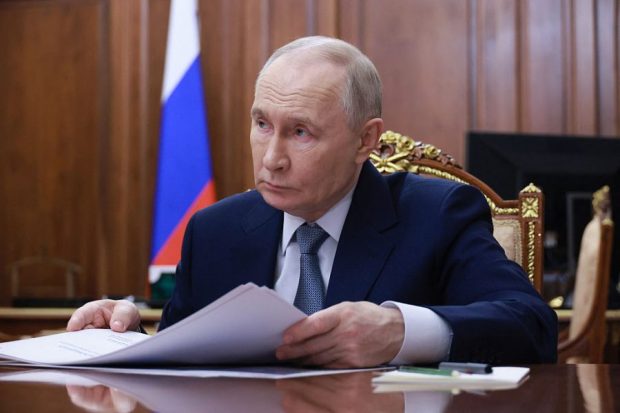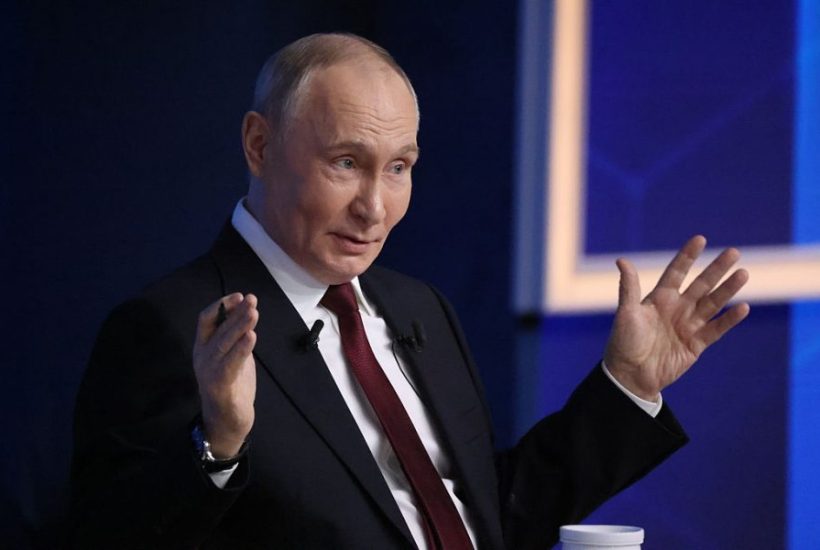
Ukraine – not Russia – is ‘refusing to end this conflict using peaceful means’, Vladimir Putin claimed this morning. The Russian President chose to open his traditional end-of-year press conference in Moscow with the subject of Ukraine, rehashing lines Kremlin-watchers have heard many times since he launched his full-scale invasion almost four years ago. The strength of feeling with which he answered prompts the question of whether Putin truly believes what he is saying?
Asked by NBC – one of the few foreign outlets granted a question during the marathon press conference – if he would feel responsible for more deaths if he didn’t agree to a peace plan, Putin replied: ‘We do not consider ourselves responsible for the loss of life because we did not start this war.’
Sitting in front of a huge projected map of Russia (which, tellingly, included Crimea and the four eastern Ukrainian regions Moscow illegally annexed in 2022), Putin brazenly reiterated the myth that Nato broke its promises to Russia on expanding into Eastern Europe. The ball on resolving the war sits ‘entirely in the court of our so-called Western adversaries,’ he added.
Putin reserved a great deal of ire for Kyiv’s European allies, who agreed to provide a £79 billion loan to support Ukraine overnight. Branding EU countries ‘robbers’ for their initial proposals to use frozen Russian assets for the loan (a plan they abandoned during the late-night talks), the Russian President warned there would be ‘serious consequences’ for those involved.
Putin’s defensive bunker mentality is holding strong
Despite his sabre-rattling, though, Putin dismissed recent fears he was plotting to attack Europe as ‘nonsense’. Nevertheless, any attempt to blockade Kaliningrad – Russia’s enclave in eastern Europe – would lead to ‘unseen escalation of the conflict’ and could trigger a ‘large-scale international conflict’. Kaliningrad is believed by Western security experts to be a potential springboard for any future aggression by Moscow on the continent – although European governments have never discussed any desire to blockade the territory.
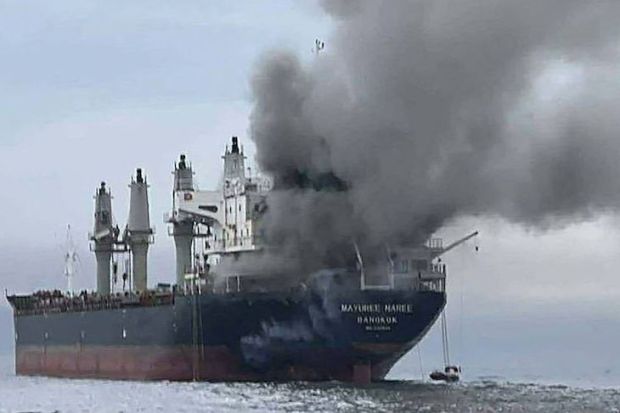
As Putin answered questions, Ukrainian intelligence sources claimed they had struck a Russian oil tanker – part of Putin’s ‘shadow fleet’ – in the Mediterranean Sea for the first time. Footage purportedly showed aerial drones striking the Qendil vessel off the coast of Greece, causing critical damage. When the strike took place is not clear, although the timing of Ukraine’s announcement seems tellingly coordinated.
Putin’s press conference lasted four and a half hours in total – long enough for the news that the attack had been made public to filter back to the Moscow hall where it was taking place. Predictably enough, the President warned that Russia would retaliate with ‘much stronger strikes’ against Ukraine.
While broadly a carefully curated exercise (most of the questions put to him by press and the members of the public chosen to attend are screened beforehand), Putin’s annual press conference provides a helpful opportunity for the President to vent his thoughts on the matters of the day. This year was no exception, reinforcing the degree to which his defensive bunker mentality – that it is he and Russia who are under threat, and not the other wary round – is holding strong.