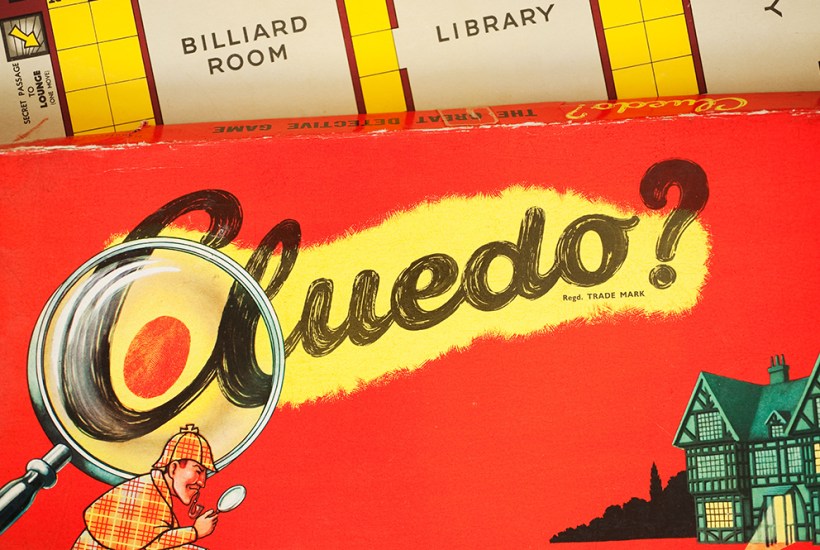
Christmas is prime time for cosy crime and the excellent thriller writer Nicola Upson offers a short, pleasing contribution with The Christmas Clue (Faber, £10). As in her longer novels, where she uses the real-life figure of Josephine Tey as her heroine, here she fronts a couple – Anthony and Elva Pratt – who also existed, and who invented the classic boardgame Cluedo.
It is 1943, and the Pratts decide to return to the resort hotel, Tudor Close, where they used to work, Anthony as the house pianist and the two together as creators of whodunnit entertainments for the guests. The idea is that it should be a respite from Anthony’s war work at an engineering factory.
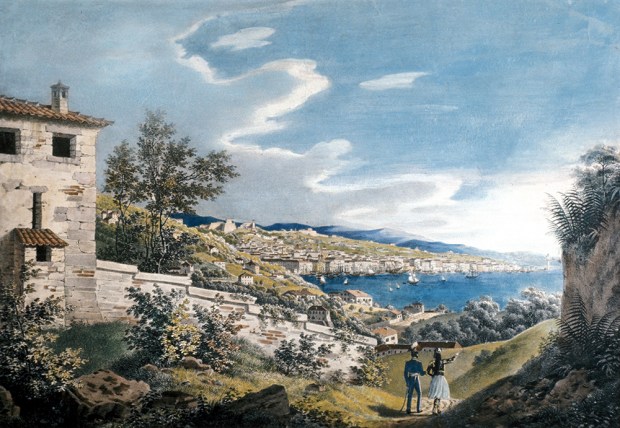
The largely unpeopled landscape of Benbecula is unrelentingly stark but also curiously beautiful
Stopping at a shop en route to pick up Elva’s gift of a box of cigars for her husband, the pair discover the owner on the floor of her kitchen, apparently battered to death. At Tudor Close, they soon find a handful of suspects, including the local vicar, a colonel from the Canadian RAF and a mystery woman who has commandeered the hotel’s finest suite. They also unearth links between the victim and the living. With wartime pressures restricting the availability of actors, the Pratts combine their theatrical skills with new ones as amateur sleuths. Soon there is another murder for them to investigate.
The tone, light throughout, is never cloying, thanks to the book’s charm. There is little of the rich settings and history of Upson’s longer novels, and the effects of wartime are really only illustrated by rationing and the shortage of hotel staff. But this spareness serves to reinforce the isolation characteristic of rural whodunnits – like the snowed-in Fens village of Dorothy Sayers’s The Nine Tailors, if with less sense of menace. The Christmas Clue is an entertaining piece, with enough twists to keep one reading eagerly. Perfect as a stocking-filler.
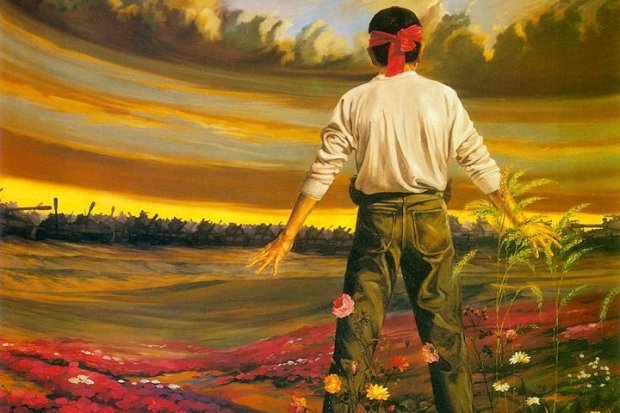
There is nothing remotely festive about Benbecula (Polygon, £12), Graeme Macrae Burnet’s contribution to the ‘Darkland Tales’ series of Scottish stories. (Other contributors include Alan Warner and Val McDermid.) Burnet is one of our oddest and most gifted fiction writers. His latest novel is set on the eponymous Hebridean island and is based on a series of murders committed there in 1857.
The mystery is not what happened, or who did what, but why. Angus MacPhee was a young labourer living on Benbencula when he murdered, in quick succession, his mother, aunt and father. The story is told some years later by his older brother, Malcolm, who has remained on the island, ostracised by the other inhabitants as a result of the murders.
Malcolm describes, with deceptive diffidence, his brother’s descent into madness, and how the authorities grow concerned by his increasingly weird behaviour. When Angus rings the chapel bell for no obvious reason – ‘not in a regular fashion but in the lopsided manner of a drunk’ – it attracts a visit from the local policeman and an Inspector of the Poor, who suggest that the family pay to have Angus sent to an asylum. Since the MacPhees barely scratch a living from their back-breaking labour harvesting kelp, this is not practicable advice.
The Benbecula community is tiny and isolated. Malcolm has never travelled further than neighbouring Uist, while Skye might just as well be Paris. There is little conventional sense of time on the island: Malcolm gauges his age only after being told that at the time of the murders he was 30. The largely unpeopled landscape is unrelentingly stark but also curiously beautiful.
As Angus grows more and more disturbed, the impact on his family becomes clear: ‘The potato blight, as people round here are wont to say, does not affect a single plant. The whole crop is destroyed.’ The tension builds and eventually explodes. In the aftermath of the tragedy, two other surviving family members leave the island to start afresh. But Malcolm decides to stay, and is visited once a week by a neighbour who serves as his housekeeper. The story is made all the more haunting by the stoic simplicity of the prose. The writing is compelling and this is an unusual and affecting read.
Jake Arnott’s The Long Firm (1999) was a stunning debut that mixed real-life characters – the Kray twins in particular – with plausible inventions. As with that novel and others that followed it, Blood Rival (Datura Books, £9.99) explores London’s violent underworld. The book opens with a notorious criminal, Lee Royle, being murdered in a road rage incident reminiscent of the one involving Kenneth Noye in 1996. The story swiftly gathers pace, focusing on Jo, Royle’s widow, her young lover Eddie (who has ambitions to run the Royle operation) and a bent policeman. The characters are persuasively drawn. A crooked lawyer’s descent into wrongdoing is neatly summarised:
He was now tainted and in the control of bad forces. And he had yet further to fall, a long, slow, vertiginous descent. He found his services retained by organised crime figures as his practice and principles became ever more compromised.
But the frisson of the parallel with Noye soon wanes, to be replaced by the larger mythological framework Arnott imposes on his story. The fundamentals are taken from Oedipus Rex, even down to a Tiresias figure who functions as a gifted savant. Much of this transfer of myth to a modern setting works perfectly well; but replicating so much of Sophocles’s play makes the climax predictable and not entirely credible. Arnott’s explorations of characters immersed in organised crime are quite vivid enough to feature on their own.
Got something to add? Join the discussion and comment below.
You might disagree with half of it, but you’ll enjoy reading all of it. Try your first month for free, then just $2 a week for the remainder of your first year.