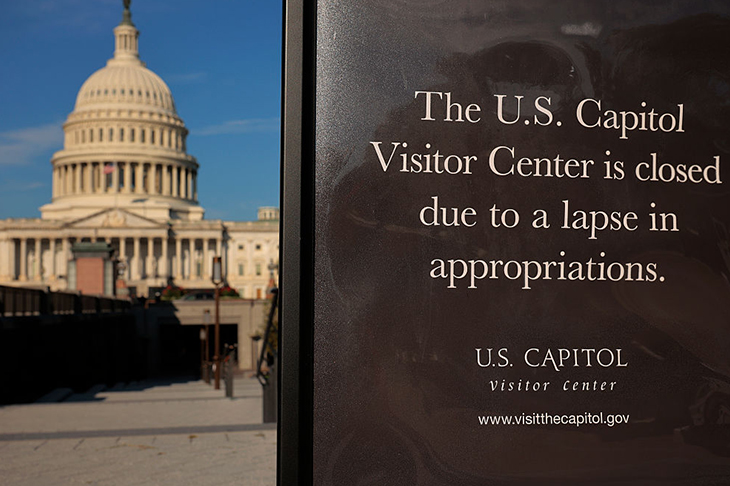
Fifty years ago, Australia was saved from that evil plague, the one which does so much pointless damage in the US, government shutdowns by delinquent politicians.
This was stopped by one courageous man, Sir John Kerr, doing his duty.
Yet after fifty years, he was attacked by Prime Minister Albanese for ‘paranoia’ and wanting to be the ‘centre of attention’.
On that, we have to ask the question whether – as was suggested by John Spooner’s perceptive cartoon in the Australian – endlessly ‘maintaining the rage’ is simply a cover for the government’s growing, curious and questionable special relationship with Beijing.
Rejecting the clear terms of the Constitution, Albanese refers to a non-existent rule that deciding on an election is the sole prerogative of a prime minister with majority support in the lower house.
Meanwhile Governor-General Mostyn not only confides that she wouldn’t have done what Kerr did, she claims something which would surprise her predecessors: that governors-generals exist to protect the nation from ‘irresponsible government’.
Albanese clearly endorses all of the delinquencies Gough Whitlam engaged in to cling to power.
This is despite Whitlam being reported in Hansard arguing strongly that when the Senate rejects a money bill, the prime minister must advise an election.
Labor’s purpose on the 170 occasions since 1951 when they tried to defeat a money bill in the Senate was, he said, to ‘destroy’ the government.
What surprised Whitlam was not that Kerr had both the power and duty to dismiss him. It was that despite the certain retribution, Kerr had the courage to sack him.
As Kerr later told an unsympathetic Geoffrey Robertson, ‘I know what price I paid for what I did, but I have no regrets for that because it was right.’
That’s courage, courage that saved Australians from disaster including the likelihood that shutdowns would become part of the delinquent politician’s arsenal.
Ignoring both the law and propriety, Whitlam first proposed to skip the Senate and submit the supply bill direct to Yarralumla for Royal Assent.
When Kerr would not be associated with such infantile delinquency, Whitlam, who later actually asked Iraqi dictator Saddam Hussein to fund his electoral campaign, proposed the government take out a massive bank loan.
When no bank would agree, and with Australia’s first-ever government shutdown fast approaching, he decided on a distraction of such inutility that even his strongest supporters admitted no governor-general could possibly accept it – a half-Senate election in late January at the very earliest.
Not only would more than seven months elapse before new state senators could take their seats (Territory senators would not change the balance), several state governors were likely to decline to issue the required writs.
Worse, no governor-general could possibly agree to an election without supply.
What has been almost totally ignored by the mainstream media is that Whitlam was effectively asking the governor-general to allow, indeed enable, an indefinite government shutdown to start well before Christmas. In a little over a week, supply would run out and payments stop.
This could include welfare, health, the defence forces, universities and schools and under contracts to businesses who themselves would be unable to pay their staff.
Such an extremely damaging shutdown could, as in the United States, become part of the armoury of delinquent politicians more concerned with clinging to power than caring for people.
As mentioned recently in this column, we know from an impeccable source that of the three principal players, Whitlam, Fraser and Kerr, only Kerr gave any evidence of being seriously and personally concerned about the impact on ordinary Australians of the Christmas-New Year shutdown.
This is a much more important issue than Whitlam being surprised by Kerr’s courage.
Whitlam was indifferent to any suffering, as was Fraser. Fraser was a disappointment especially after he lost his second election and moved to the left. He never reversed one of Whitlam’s vices still with us today, taxpayer funding being used to make work for the healthy optional.
In 1999, he joined with Whitlam in a TV advertisement for the Yes case in the republic referendum. This delighted us at Australians for Constitutional Monarchy.
Whenever it was shown, it increased support for the No case.
In 1987, Fraser invented a story that he had been tipped off by Kerr just before the dismissal, an invention Gerard Henderson (in his new book, Malcolm Fraser –A Personal Reflection) explodes.
This is corroborated by Sir David Smith, a witness of such integrity, he was made official secretary to five governors-general.
The only witness to the commissioning of Fraser, he told me he had the ‘clear impression’ that this was the first time Fraser had heard the conditions of appointment. (You can see the interview at: youtube.com/watch?v=7Bq8XmFqmN8)
What is extraordinary is that those in the media and in politics both at the time of the dismissal, and especially those who are maintaining their rage fifty years after, do not refer to the devastation of the government shutdown which was becoming unavoidable unless Sir John acted.
Nor do they consider this in the soi-disant republican debate.
I say this because Australia, formed by the people as a ‘Federal Commonwealth under the Crown.. and under the Constitution’ is already a republic, a crowned republic. The republican debate functions principally as a misleading distraction, a distraction for political forces wanting illegitimate power over the people.
The model offered is of course crucial, but the official republicans discourage attention to detail. Kim Beasley even suggested once that Australians should not worry about defects in the model, because these could be fixed up subsequently!
When the referendum model finally emerged, ACM alone argued that it neutralised the reserve powers. We said it would have been the only republic in the world and in history where the PM could dismiss the president without notice, grounds or right of appeal. Almost all of the mainstream media and most politicians still campaigned for it.
The republican movement’s current model provides that in the 1975 situation, the prime minister cannot be dismissed, no matter how improper his behaviour.
As we said in 1999, Vote No to the politicians’ republic.
Got something to add? Join the discussion and comment below.
You might disagree with half of it, but you’ll enjoy reading all of it. Try your first month for free, then just $2 a week for the remainder of your first year.