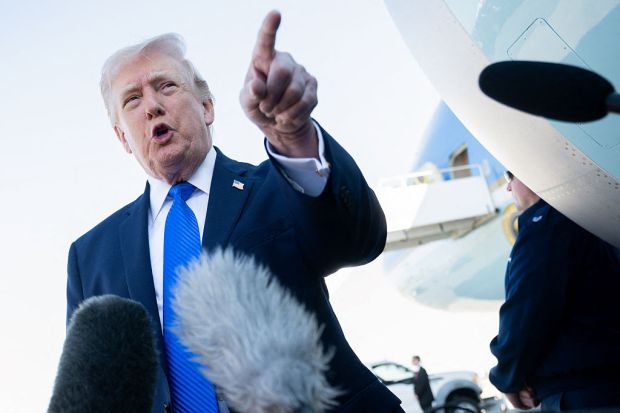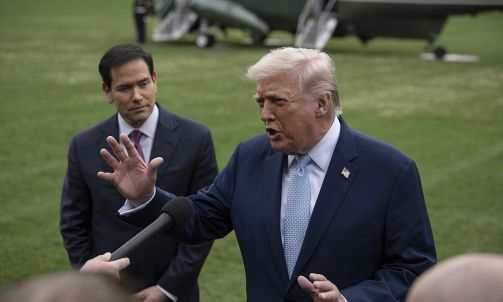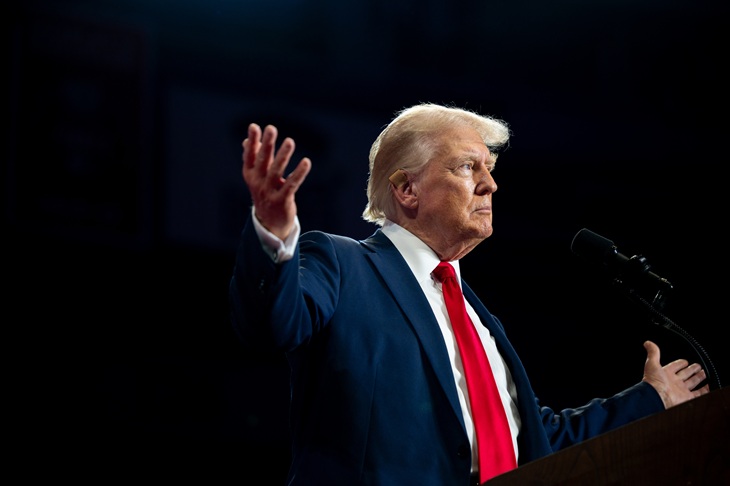
An audio file taken from Air Force One appears to feature President Donald Trump confirming his intention to sue the BBC for ‘anywhere between $1-5 billion probably sometime next week’ over allegations that the President’s speech on January 6 was misleadingly edited.
#BREAKING: President Trump announces plans to sue UK’s BBC for up to $5 billion ‘probably sometime next week’ pic.twitter.com/bHstk5HumI
— Rapid Report (@RapidReport2025) November 15, 2025
The BBC has already apologised to the President and admitted that their edit gave ‘the mistaken impression that President Trump had made a direct call for violent action’ but the BBC has since refused requests for compensation.
Their statement read:
‘We accept that our edit unintentionally created the impression that we were showing a single continuous section of the speech, rather than excerpts from different points in the speech, and that this gave the mistaken impression that President Trump had made a direct call for violent action.’
According to the BBC, its lawyers wrote to the Trump legal team in response to a letter it received last Sunday.
‘BBC Chair Samir Shah has separately sent a personal letter to the White House making clear to President Trump that he and the corporation are sorry for the edit of the President’s speech on 6 January 2021, which featured in the program … while the BBC sincerely regrets the manner in which the clip was edited, we strongly disagree there is a basis for a defamation claim.’
A recent BBC article details what they call ‘a fresh claim of misleading edit’ featuring a second edit of the same ‘we fight like hell’ clip which the BBC article says, ‘A spokesman for Trump’s legal team told the Telegraph it was “now clear that BBC engaged in a pattern of defamation against President Trump”.’ An allegation which the BBC has rigorously contested.
Given high profile resignations from the BBC over the issue, including the BBC director general and head of news, there have been many urging Prime Minister Keir Starmer to pick up the phone to Trump.
According to the ABC:
‘A spokesperson for British Prime Minister Sir Keir Starmer defended the broadcaster on Monday, saying Downing Street did not believe the organisation was “institutionally biased”.’
They added:
‘On the question of, is the BBC corrupt? No. The BBC has a vital role in the age of disinformation … where there’s a clear argument for a robust, impartial British news service to deliver, and that case is stronger than ever. I think I’ve already addressed some of the comments that have been made over the last 24 hours, but we are of the view that it’s important that the BBC acts swiftly to maintain trust and correct mistakes quickly when they occur.’
Further:
‘We’re preparing for the upcoming [BBC] charter review, which we expect to launch in due course, and it will consider a range of issues including how the BBC can continue to prosper supported by a sustainable funding model.’
Donald Trump has been critical of the ‘mainstream’ and ‘state media’ across Europe and taken particular offence at current and proposed laws to infest social media with political censorship under the guise of ‘protecting children’ and fighting ‘misinformation and disinformation’.
Such accusations of potentially ‘misleading’ edits of high-profile news events could not come at a worse time for the UK or the BBC which is fighting public calls to remove the licence fee. Currently, the fee drags in £3.8 billion or 65 per cent of the BBC’s budget.
Failing to pay a BBC licence fee can land you in court with 25,550 convictions for ‘licence fee evasion’ last year alone.
Defending their decision to step down, the former BBC head of news said, ‘I stepped down over the weekend because the buck stops with me. But I’d like to make one thing very clear, BBC News is not institutionally biased. That’s why it’s the world’s most trusted news provider.’
With households detaching themselves from the fee in protest against what they perceive to be a drop in quality and left-leaning tone, the government is looking at other ways to make up the revenue such as a tax on broadband connections, advertising, subscription, and public funding assigned by the government. In other words, cancel culture won’t work on the BBC because the government will step in and save it.
This saga is not only a disaster for the BBC, it has already become a political bargaining chip for Nigel Farage and his immensely powerful Reform Party which would win a general election in a landslide if held today.
Farage claimed the BBC would have ‘no future’ if it didn’t return to reporting ‘straight news’. He expressed a desire to see the broadcaster stripped down to a competitive format.
‘If the BBC doesn’t now get a grip, get someone in from the outside, somebody who has got a history and a culture of changing organisations, of turning them around, then I think what you would see in the next couple of years are many many millions just refusing…’
The fallout from the January 6 Capital Hill protest, and the election that preceded it, continues…