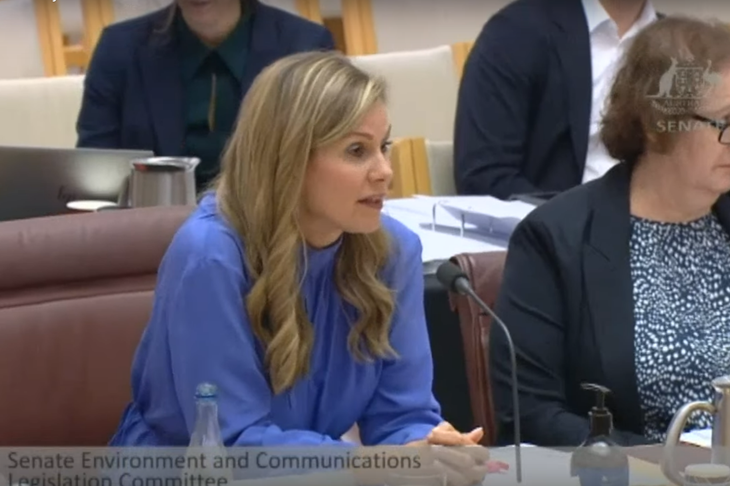
Did you know the Australian Financial Review named Julie Inman Grant, Australia’s eSafety Commissioner, as the third most culturally powerful person in Australia?
I missed it too, but if you were wondering who beat her to the top spot, it was Nagi Maehashi followed by Oscar Piastri.
The selection panel described Julie Inman Grant as ‘the tip of Australia’s spear in world-first laws lifting the minimum age to have a social media account’. To this they praised her ability to ‘wield direct power like few others on this list’.
Speaking of that power…
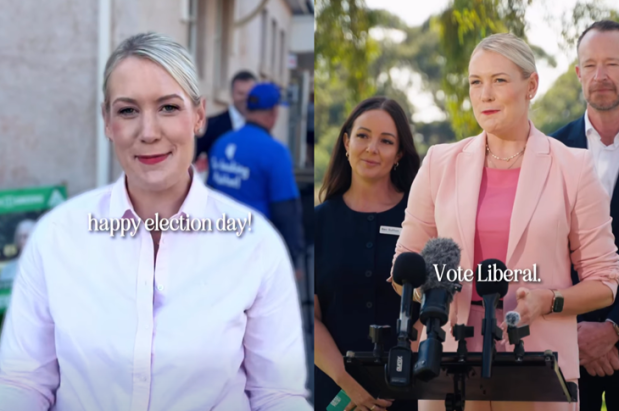
The Federal Shadow Communications Minister, Melissa McIntosh, has called for an inquiry into the eSafety Commissioner’s powers after a previous bid put forward by Malcolm Roberts and Ralph Babet was blocked by the Labor-Greens alliance.
In a refreshing turn, McIntosh called out the power established in the eSafety Commissioner’s role.
‘[The eSafety Commissioner] has the power to compel people to use Digital ID, which I know so many Australians hate the idea of that. Right now, the eSafety Commissioner has extraordinary powers should she want to execute those.’
To this, she added:
‘I still stand my ground on this calling for an investigation into the powers that the eSafety Commissioner has. She said in her letter to me, and reminded me, that the Coalition established the eSafety Commissioner, but that was 10 years ago.’
Sky News Australia has the full letter sent by the eSafety Commissioner attached here.
Part of it references the origin of the eSafety Commissioner:
‘As you know, the eSafety Commissioner was first created by the Abbott Coalition government in July 2015 as the Children’s eSafety Commissioner. The related Act (the Enhancing Online Safety for Children Act 2014) established the Commissioner as an independent statutory office. In 2017, the Commissioner’s functions were expanded to broaden the general functions of the Children’s eSafety Commissioner to cover online safety for all Australians, not just Australian children.’
This is an important bit of history which continues to haunt the Liberal Party. It is undeniable that the small-government Liberals have a history of big-government censorship justified by safety.
Senator Alex Antic called this out during his speech at CPAC.
The key line being: The government does not care about your kids.
All too often, the conservative side of politics falls for the old line, "It's for your safety."
It's a convenient way to shut down contrary views, as we've repeatedly seen in recent years – notably with the mis and dis information Bill and now the U16 social media ban.
Watch… pic.twitter.com/7yfZ5EoRk1
— Senator Alex Antic (@SenatorAntic) October 23, 2025
At the time of the original bill, Paul Fletcher described it proudly as making good on an election promise. That said, you would be hard-pressed to find anyone who remembers voting for that policy in particular. It would be more accurate to say the Liberals had it tucked in their pocket.
Given what has transpired since, many conservatives are seeking an apology from the Liberal Party for creating, empowering, and expanding the role of the eSafety Commissioner.
Our nation has been embarrassed on the world stage and mocked for a uniquely heavy-handed approach to social media.
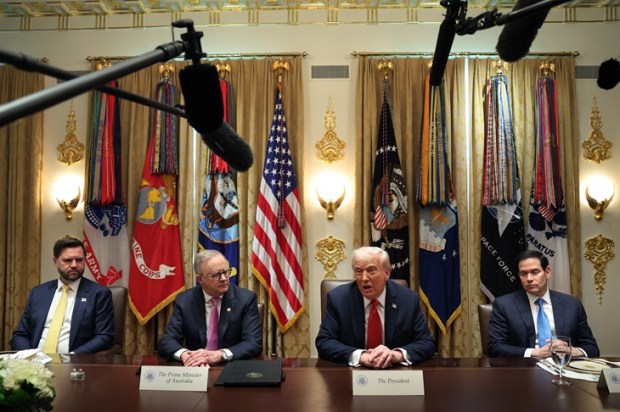
There have been lawsuits and even threats from the US Administration that anti-free speech policy could impact geopolitical relations with our most important ally.
McIntosh’s welcome calls to regulate the regulator have come as a surprise considering Liberal Leader Sussan Ley failed to raise the alarm in a recent National Press Club meeting when the Under 16 ban was brought up.
‘I understand and appreciate that Australians value their privacy and online freedoms,’ writes the eSafety Commissioner.
Really?
Any mandatory link between identity and browsing rights represents a privacy violation and a security risk to users.
The opportunity for this escalation in data collection to harm citizens is frightening. Attaching identity to browsing history in this formalised way creates a Pandora’s Box for hackers and future government busybodies.
It is the data equivalent of accumulating $4 trillion in super and expecting Chalmers not to tax it.
This conversation is taking place in an environment of decreasing trust in digital systems. It was only last week that a data leak using AI saw the phone numbers of the Prime Minister and Opposition Leader shared online.
As McIntosh correctly said of the new rules coming into place in December:
‘Requiring adults to log into an account to browse the internet is taking the eSafety Commissioner’s power to a new level which needs to be scrutinised. The voices against the code cannot be ignored and whilst the intent is to protect young people from harms, it is essential that this is balanced with a person’s right to privacy.’
As we have seen, the eSafety Commissioner interfered with news items such as video footage showing the stabbing of two individuals, one Australian and one in the US, which is not the expectation of the role, especially when the same interference is not applied to graphic imagery coming out of Palestine.
In the UK, a similar digital child safety law led to patriotic flags being hidden and a political speech about the alleged police handling of Grooming Gangs being put behind an age restriction message.
The immediate political slant on child safety censorship is a pressing concern that many argue makes the legislation dangerous.
Then we have some very serious questions about which platforms are included in the new social media age restrictions and which are exempted. The inclusion of YouTube and the exclusion of gaming chat forums is bewildering when based on child safety.
Where McIntosh and conservative voters may differ is her belief that the role can be constrained and saved: ‘I’m not saying [scrap] the eSafety Commissioner, I am saying let’s have a look at whether her powers in today’s world … [are] fit for purpose.’
However, she is correct to add:
‘The Australian public didn’t vote for her powers … many adult Australians have concerns about the use of those powers.’
As December rolls around, it will be interesting to see how the perception of the eSafety Commissioner’s powers change when children approach the holiday season without digital access to their friends or entertainment sites.
Parents who could not control their children previously are about to discover that government tyranny is not a solution to personal responsibility.
My prediction? Julie Inman Grant will step down shortly after the December implementation of the Under 16 bill and leave Albanese to weather the storm.