Energy: it’s the weapon used to great effect by the Chinese Communist party (and its useful idiots in the United Nations) to undermine the economies of Western democracies. And you ‘ain’t seen nothin’ yet’. Recent revelations of epoch-changing Chinese advances in nuclear energy point to a far greater threat to the West than China’s current cheap-energy-fuelled domination of the high-cost renewable energy world into which so much of the West (bar the Trump-led USA and an enthusiastic fossil-fuel-burning India) has, in the name of saving the planet, chosen to enjoy self-righteous economic self-harm.
In a fundamental change to the nuclear order that leaves the West far behind, China has just produced a triple whammy that the Harvard Technology Review describes as ‘having immense potential impacts ranging from environmental rejuvenation, economic transformation, and geopolitical reconfiguration’.
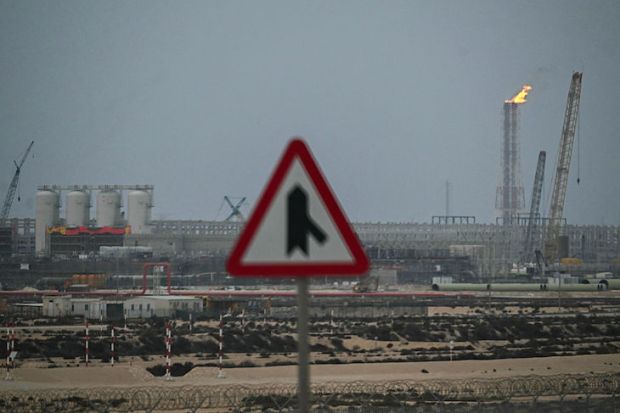
After two years of secrecy, China has unveiled the world’s largest reserve of thorium to coincide with its successfully development of a revolutionary waterless environmentally pure thorium-fuelled molten salt test-reactor tucked away in the middle of the Gobi Desert. Concurrently, in another nuclear breakthrough that is leaving the West’s fragmented efforts in its wake, China is in mid-construction of an equally pure (no greenhouse gas emissions, no waste problem and no possible military use) nuclear fusion reactor by progressing a revolutionary concept the US abandoned 60-odd years ago (then preferring fission with its cold-war military applications) before belatedly returning relatively recently to try to match China’s rapidly developing fusion technology.
China’s discovery of one million tons of thorium (enough to supply many thousands of years of world energy demand) is described by analysts at Elnion as not just a mineral deposit but ‘a potential cornerstone of future global energy infrastructure that blends the promise of abundant, cleaner nuclear power with groundbreaking technological progress in reactor design and fuel cycles’.
On their own, these thorium developments are seen as putting China at the forefront of a transformative shift in clean energy technology. By replacing uranium as the nuclear fuel, ‘thorium offers up to 200 times more energy per kilogram than uranium-232, alongside a drastically reduced nuclear waste footprint. This means less environmental hazard, reduced storage concerns and enhanced safety by operating at lower pressures and with minimal risks of meltdown, thereby providing the additional potential benefit of lowering public resistance to nuclear expansion’. The recent successful powering-up of the world’s first thorium reactor and reloading it mid-run creates the likely prospect of commercial thorium energy production in China by the early-2030s.
But another element of the China-led energy revolution, nuclear fusion, may have even greater potential. Described in Fortune magazine as ‘the holy grail of energy, a clean, no-carbon, unlimited fuel source….It’s the hope for our generation and future generations to come’.
Whereas traditional nuclear fission energy creates power by splitting atoms, fusion uses intense heat to create energy by melding them together. As well as meeting the ‘no carbon emissions’ requirements of the net zero world, fusion technology, (which still has to resolve some technical problems arising from the intense heat required) is claimed to produce no long-lived radioactive waste, to need little land and water, to plug directly into the existing grid, to deliver baseload power 24/7 or flex up and down – and tiny amounts of fuel can power the world endlessly.
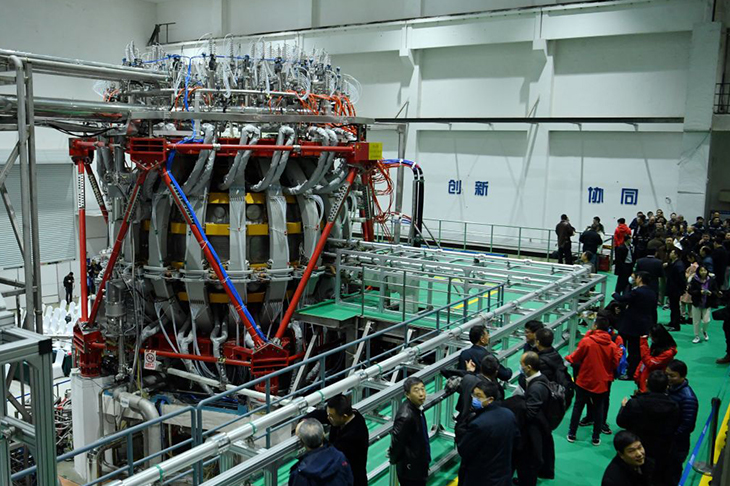
China confirmed how far it is ahead of the field on fusion by officially announcing last week that the engineering assembly of its next-generation nuclear fusion research device, the Hefei Burning Plasma Experimental Superconducting Tokamak (BEST) had entered a new construction phase with the successful installation of its main machine, the Dewar base. Representing a key step in China’s ambition to dominate clean energy, BEST is planned to generate electricity from fusion as soon as 2030, with commercial applications a few years later.
Under the heading ‘America’s nightmare: China is moving at lightning speed to control the future’, The UK Telegraph recently warned of China’s rapid progress in its plan ‘to secure a stranglehold over the industrial supply chain of nuclear fusion, as technology advances from theoretical science to actual power for the grid…. [and] starts sweeping away the existing energy order’. It quoted a US expert’s warning to a US congressional committee that ‘China’s ambitions are becoming a clear and present danger to US economic and national security’.
And Professor Zhang Jie, from the Chinese Academy of Sciences, is reported to have claimed that China is fast developing a form of inertial laser fusion at its vast new facility in Sichuan that is 30 times more efficient than its US rival and promises to deliver baseload power at about $US25 a megawatt hour’ – a level that, if achieved, would likely ‘obliterate all competition in global energy and establish China as the hegemonic electro-superpower’. That fits with the claim by Dr Zhang (labelled China’s Dr Fusion) that the technology will ‘drastically change the international order and lead to an economic upheaval that surpasses all three industrial revolutions seen so far – mechanical, electrical and digital’.
The Telegraph report ends with the gloomy note that ‘a world in which the Communist party’s totalitarian regime owns global energy is not going to be a pleasant one for Western democracies, if there are any left by then’. Forbes magazine joins those worrying about the outcome: behind fusion’s potential lies ‘a notable geopolitical contest that cannot be understated, where those scaling fusion first will gain massive leverage in both energy security and global influence’.So Forbes welcomed, as heading in the right direction, the US federal funding commitment for fusion at $1.48 billion last year. But America nevertheless remains far behind China.
As Australia’s Alan Kohler wrote a week or so ago under the heading ‘If China beats the US on fusion energy, its supremacy will be assured’, ‘fusion energy looks to be another way in which America is yielding global supremacy to China’.
This is echoed in an Asia Times’ report quoting a leading US start-up executive lamenting that, ‘This could become another example like the solar or electric vehicle industry, where we basically just let one country run ahead, and we end up situating the whole supply chain and all the power that comes with it in a single country. I think this dynamic could be even more significant with fusion than it was with solar… as China drives through barriers we set for ourselves around regulation and planning…. There is a real geopolitical race underway that is not just about the technology itself but its significant implications for the future of power and geopolitics’.
And it has the potential to render redundant much of the world-wide trillions of dollar climate-change investment in the intermittent and economically disastrous costly renewables that may turn out to have been the wrong answer to what is probably the wrong problem anyway.
Got something to add? Join the discussion and comment below.
You might disagree with half of it, but you’ll enjoy reading all of it. Try your first month for free, then just $2 a week for the remainder of your first year.