The Gaza war has dominated headlines, but it obscures a more enduring peril: the rise of Sunni and Shia radical Islamists and their convergence, bolstered by radical left movements.
Hamas embodies this convergence. Though rooted in the Muslim Brotherhood – a transnational Sunni organisation – Hamas enjoys the backing of Shia Iran, undermining the notion of an immutable Sunni-Shia enmity. Iran sponsors Hamas as one of their network of Shia militias, while Qatar, steeped in Brotherhood ideology, has become Hamas’s largest financial patron. The result is a movement at once Sunni and Shia, Islamist and radical leftist, united above all by hostility to the West.
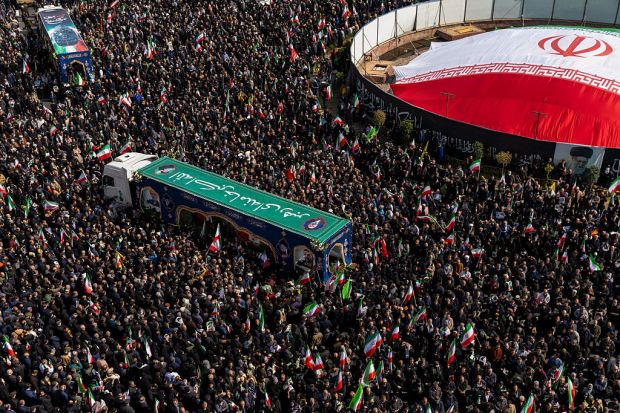
Coupled in a ‘red-green alliance,’ Islamist groups – particularly the Muslim Brotherhood, Iran and Qatar – together with radical leftist currents such as Marxists, communists and anarchists, have opportunistically mobilised in rallies. These factions and their followers have remained largely unchallenged by the mainstream media.
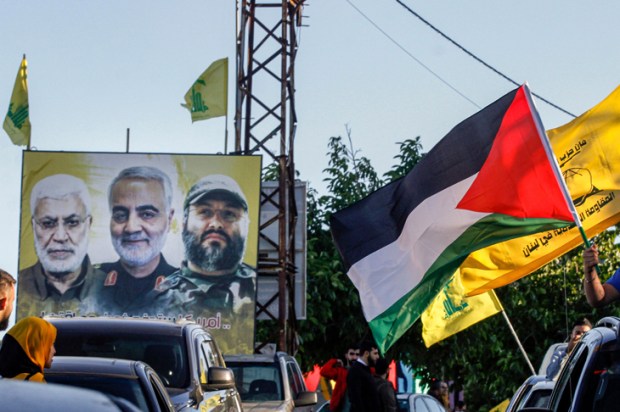
A Capital Research Center report, Marching Towards Violence, warns that, ‘the backbone of the current protest movement is Hamas.’ The campaign is steadily becoming more violent and criminal, often demanding America’s destruction. More than 150 ‘pro-terrorist’ groups have joined rallies in the United States. Many support Hamas while also endorsing Hezbollah, Yemen’s Houthis, and Shia militias in Iraq and Syria – all part of Iran’s proxy network. Directed by the Revolutionary Guard and its extraterritorial Quds Force, Iran’s proxies have caused havoc regionally and worldwide, including antisemitic terror attacks in Australia.
At the forefront of the protests is Students for Justice in Palestine, boasting more than 250 campus chapters across the US and Canada. In Britain, Palestine Action became notorious after members broke into RAF Brize Norton, sprayed red paint into the engines of military aircraft and damaged infrastructure, causing more than £30 million in damage. The group has been designated a terrorist organisation by the UK.
A network of organisations is affiliated with the Brotherhood’s ideology. These include the Muslim Students Association and SJP, with links to the Council on American-Islamic Relations (Cair). The largest Muslim advocacy organisation in the US, Cair grew out of the Islamic Association for Palestine, itself grounded in the Muslim Brotherhood. Cair has been proscribed by the UAE.
Founded in 1928 by Hassan al-Banna after the fall of the Ottoman Empire, the Brotherhood seeks to revive a global caliphate to unify Muslims under sharia law. Al-Banna argued that the greatest threat to Islamic society came from contact with Western culture and secularism. Initially, he emphasised grassroots preaching and welfare work, but later some ideologues embraced violence.
Sayyid Qutb, the Brotherhood’s leading thinker in the 1960s, maintained that secular, decadent Muslim governments and societies must be destroyed by offensive jihad. His writings inspired al-Qaeda and Isis.
The late Yusuf al-Qaradawi, one of the Brotherhood’s most prominent modern scholars, predicted that Islam would triumph over the West ‘not by the sword but by preaching and ideology.’
Today, despite being banned in Egypt, Jordan, Saudi Arabia, Bahrain, the UAE and Russia, the Muslim Brotherhood remains the most influential Islamist movement. Funded by Qatar and Erdogan’s Türkiye, it maintains worldwide reach through political parties, NGOs, charities, universities and student networks. Qatar was the largest foreign donor to US universities well before the Gaza war, and its state media platform, Al Jazeera, has become a global megaphone for Brotherhood ideology.
At first glance, Islamist radicals and Marxists are ideological opposites. One seeks theocracy, the other atheism. Yet they share hostility to liberal democracy, free markets and Western culture. This explains why Western activists march beside groups that call for sharia punishments, oppression of women, persecution of minorities and execution of dissidents and gay people.
There is little outrage on campuses when Iran jails women for refusing the veil, or when Hamas glorifies suicide bombings. Universities enriched by Qatari money rarely teach the triumphalist and supersessionist doctrines of Islamist thought, or the dhimma laws that imposed second-class status and special taxes on Christians and Jews. Nor do they revisit the history of Nazi and Soviet influence on Islamist ideology, or the imperialist expansion of Iran’s revolution, rooted in jihad, clerical rule, and the aspiration for an apocalypse to induce the return of the Hidden Imam.
At the same time, the massacres by Hamas in Israel on 7 October 2023, and by other jihadis in Syria against Druze, Christians and Alawites, and across Africa, are ignored or erased.
Some on the left even celebrate the current moment as the culmination of their ‘long march through the institutions,’ begun against the West in the 1960s, and now bearing fruit with the prospect of creating a new world order.
Hamas, meanwhile, has reaped symbolic victories. Recent pledges by Western governments to recognise a Palestinian state are presented as triumphs for ‘resistance’. Each diplomatic gain strengthens its brand, encourages recruitment, and could elevate Hamas to being the pre-eminent jihadist organisation. Terror, instead of being punished, appears rewarded.
Western governments have too often chosen appeasement over confrontation. Instead of strengthening moderate Muslims at home and abroad, they empower extremists. Such weakness emboldens radicals to press for concessions and increases long-term risks of jihadist violence.
Affluent Western activists, intoxicated by virtue signalling, imagine themselves partners in a shared project. In reality, they are boosting the political strategies of extremists for whom Gaza is an expedient battleground. Essentially, Western activists are sleepwalking through Islamist tunnels towards an illusory vision of power their allies will never share.
They might remember Ayatollah Khomeini’s idealistic and devoted leftist allies, who were slaughtered in mass executions once they had helped him seize power and served their purpose.
The spectre of Islamist extremism already looms over Europe. Reports suggest police have lost control of some 900 no-go zones, where parallel societies enforce their own codes of conduct, and authorities are reluctant to confront the ideology behind them. Internationally, state-sponsored terrorism from Iran remains a scourge.
Both radical Sunni and Shia Islamist ideology and activism are spilling into the public square with formidable support from the Muslim Brotherhood, Iran, Qatar, and the radical left.
Unless this nexus, which aims to reshape Western politics is firmly confronted, the threat could swell into a militant torrent – one that will not end with Gaza.
Got something to add? Join the discussion and comment below.
You might disagree with half of it, but you’ll enjoy reading all of it. Try your first month for free, then just $2 a week for the remainder of your first year.