Is it too Panglossian? Is it possible that Senator Jacinta Nampijinpa Price’s Indian immigration blunder will end up being all for the best by forcing the Liberal party to focus on a coherent immigration policy rather than relying on the sloganeering line that ‘It’s too high and must be cut’? Jacinta’s sin was not only to misinterpret and misapply as universal a dodgy poll that related only to a few seats and in only one election, but also to then not recognise the political implications. A harsh lesson in politics 1.01 as she really did offend the million or so Indian diaspora by saying their coming here was due to their voting Labor.
The Australian’s Paul Kelly, who reckons Price should be ‘an invaluable asset for the Liberals’ and commended her for ‘making a sound case about the demise of social cohesion’ under recent immigration policy, then berated her for the subsequent ‘disastrous remarks’ that, apart from being incorrect, ‘revealed her as stubborn, inexperienced and politically immature’.
While the focus of the Canberra media bubble has inevitably been on the internal implications of the Price problem for the Liberal party after her being sacked from the shadow ministry, the real issue – the level of immigration – has come a bad second. There is a solid basis for Price’s strongly expressed concerns about the unannounced un-mandated governmental remaking of the very nature of Australia. According to the Australian Bureau of Statistics (ABS), over the past 20 years the proportion of Australia’s population born overseas has increased from under a quarter to almost one-third in 2024, with 2023’s 30.7 per cent being the first time 30 per cent has been reached since 1893.
Indians are leading the charge. The ABS shows the India intake more than doubling by half a million over the ten years to 2024 to total just under one million (with China up 234,000, the Philippines up 164,000 and Nepal up 153,000 even before the current political upheaval). And while the ABS considers India, China, and Nepal will remain dominant source countries, it expects a growing contribution from emerging economies like Vietnam, Indonesia and Bangladesh as regional migration is set to take centre stage, with programs like the Skilled Regional Visa addressing workforce shortages in rural areas.
This continuing immigration explosion is confirmed not only by the latest ABS details for 2024, but also by last month’s landmark study of Indian immigration by the University of Queensland commissioned by the Department of Foreign Affairs and Trade. It relies heavily on the 2021 census figures (acknowledging that the numbers have soared by a quarter of a million since then) and the 2022 election study surveys, to establish the basic facts on Indian immigration – and it provides a challenge on the political consequences
The study projects the Indian-born Australian population to grow from around 700,000 in 2021 (and 916,000 on the latest ABS figures for 2024) to reach one million next year and 1.7 million in 2041, mainly in Sydney and Melbourne, of which 1.3 million will be citizens with the right to vote. This follows their strong trend to citizenship, with more than half of the 673,352 Indian-born residents of Australia at the 2021 census having become Australian citizens. ‘The combination of their population size and geographic concentration gives the Indian diaspora a meaningful potential to influence electoral outcomes’.
Although Hindu-voting statistics understate the total Indian vote (by omitting the 22-per-cent Sikh population, as well as the secular no-religion, the Catholic and Muslim voters), of the top ten federal seats with Hindu voters, only one, Mitchell in NSW, with 8.6 per cent, is held by a Liberal, which may explain the level of self-interest that prompted its MP, Alex Hawke, to lead the charge in demanding Senator Price apologise for her Indian migration blunder.
Parramatta, with 20.6 per cent of its residents identifying as Hindu, is clearly where Indians have the greatest potential to determine who will win the seat, followed by Greenway with 17.7 per cent (dominating the six per cent of Islamic voters), Lalor with 13 per cent exceeding Islam’s 10.2 per cent, Chifley’s 10.9 per cent just beating Islam’s 9.6 per cent and Gellibrand with 9.7 per cent (as is Reid) well above Islam’s 7 per cent. The remaining four, Mitchell, Holt, Werriwa and Chisholm, are all below 10 per cent.
According to the UQ study, (and contrary to the Price assertion) Indian migrants demonstrate fluid partisan attachments; unlike longer-established migrant communities, they are slow to form entrenched political loyalties. So their voting behaviour ‘reveals a sophisticated and pragmatic approach to electoral participation’. While actual voting had shown a slight preference for the Liberal party over the Labor party (subsequently significantly altered pro-Labor), half of them cite policy issues as their primary consideration in voting decisions, rather than party loyalty or leadership. With 46.1 per cent reporting that they have switched their vote between parties, suggesting a willingness to evaluate each election on its merits and engage on policy substance rather than maintaining rigid party loyalty… this could reflect their higher educational levels and professional backgrounds, enabling them to process political information without heavy reliance on partisan cues.
This flexibility demonstrates that, apart from being political poison, Jacinta’s ‘facts’ were fake. This is reinforced by polling by the Indian Link Media which shows a collapse in Indian support for the Coalition between the 2019 and 2022 elections from the 38 per cent for both to only 27 per cent Coalition and 43 per cent Labor
While renowned psephologist and my former Senate colleague Labor’s John Black is quoted in an excellent SMH article by Parnell McGuinness as confirming the observation (to which Price was referring) that Indian voters – along with Chinese and Filipinos – are more likely to vote left, the Coalition missed the point that these migrants tend to be younger, on average, than the broader Australian population. As they age, these hard-working and aspirational migrants tend to accumulate wealth, making them, according to Black ‘a natural constituency for the Liberal party as they get older’. But only if – and Black is sceptical on this front – the Liberals get their act together.
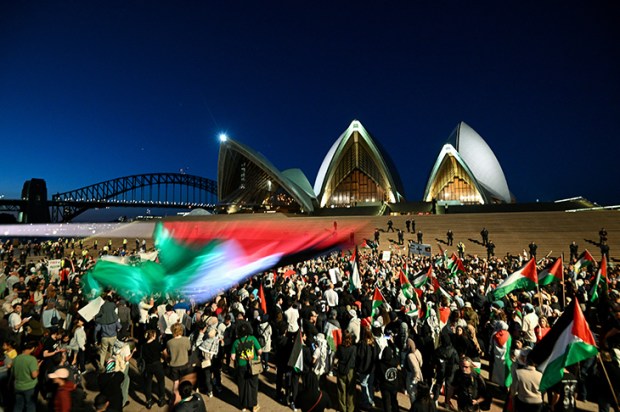
So, as a result of Price’s error, Paul Kelly says that now, ‘The task for the Liberals is to argue the case for more modest immigration without blaming migrants and without singling out ethnic communities…. Its claim that recent numbers are too high is justified, but below the surface it has a deeper worry: namely that many migrants, notably those in pro-Palestinian protests spilling into anti-Semitism, don’t subscribe to Australian values’. In alienating Indian immigrants who, coming from the world’s biggest democracy, do share Australian democratic values, Price could not have picked a worse community to offend.
This cultural issue is a worry shared by many in the Indian diaspora that had largely abandoned the Liberals even before the Price blunder and which must now be won back. Philosophically it is possible; an editorial in Australia Today, a diaspora media outlet, described as ‘deeply troubling’ that ‘instead of confronting the Islamist-leftist nexus’ involved in the pro-Palestinian rallies in Australia post-7 October 2023,‘effectively rewarding terrorism…[by the] significant number of Muslims who continue to support violence in the name of religion, some Australians chose to vent their anger against migrants, especially Indians. Let them no longer be Liberals!
Got something to add? Join the discussion and comment below.
You might disagree with half of it, but you’ll enjoy reading all of it. Try your first month for free, then just $2 a week for the remainder of your first year.