Not a week goes by without various social media videos, memes and posts crossing my desk and hammering home the point that youth are in despair at ever being able to make a life for themselves. I speak as the mother of two Millennials and one Gen Z and the message is always the same: no matter what we do we have no hope, we’ll never own houses or be able to have families, we can’t even find an affordable place to rent. Attitudes of why bother, and live for the day are emerging, as the young give up on their lives. This feeling is widespread, crushing and will shape the politics of the next decade.
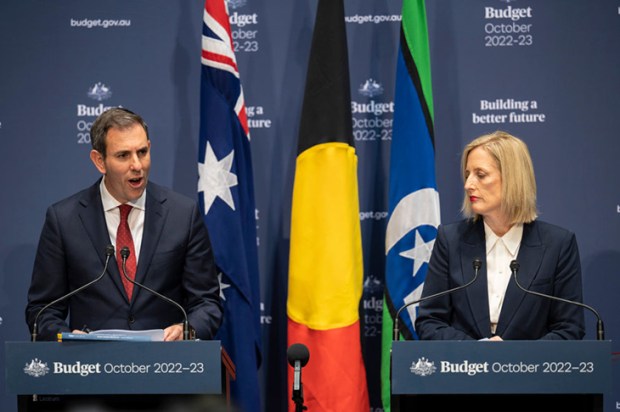
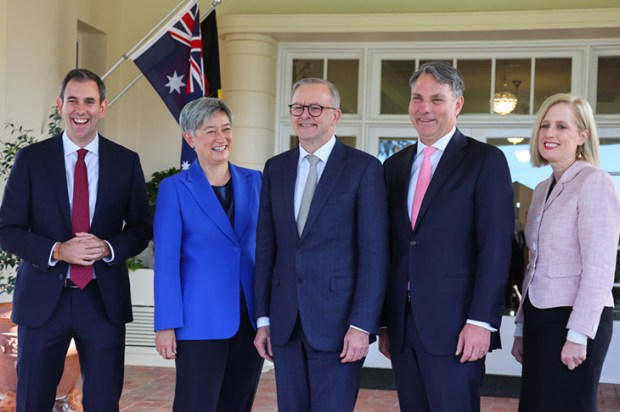
Even if our young have good jobs, they’re coping with crazy high rents, ever more unattainable houses, stagnant wages, endless high and implausible new taxes, HECS repayments – and that’s before anyone starts thinking about family formation and child raising. So when Treasurer Jim Chalmers chilled Boomers by raising ‘intergenerational inequality’ at Labor’s economic talkfest last week, it felt as if a ship long seen on the horizon had finally hove into port. Kudos to Labor’s sharp political antennae for picking up on this issue.
Nor is it only Australia where this problem is occurring. A viral video this week showed a distraught young US college grad who’d paid $1,500 a month into her student debt for two years, and the debt was now, thanks to 17 per cent interest rates, bigger than ever. ‘I’ll be in debt my whole life,’ she wept. That was on top of an amusing Aussie video about young suits workshopping new taxes, and one where a young man suddenly earning $100,000 thinks he’ll be rich in Sydney, and gets put right by an older, wiser and equally ‘rich’ friend. You get the drift.
The Bank of Mum and Dad exists because that’s where, after all the Boomer-driven super, housing, welfare and other economic policies of the last few decades, all the money is. Entrenched quantitative easing and loose money turned into enormous asset price inflation and delivered big bucks to those who had already bought assets, in particular Boomers and their homes. We could hardly believe our luck when house prices soared and soared. Meanwhile mass immigration kept wages down, in the US, Australia and elsewhere.
Firstlink, part of financial services group Morningstar, reported this year that Australia was one of the world’s most unaffordable housing markets. Sydney, Adelaide, Brisbane and Melbourne were ‘impossibly unaffordable’ with a chart-leading house price to household income ratio. Sydney will beat Hong Kong to become the world’s most expensive housing city next year, the Demographia report predicts. Quite the government achievement for such an enormous and sparsely settled country! Boomers are sitting on a pile of unearned cash while their kids scrounge for shelter. No wonder the Bank of Mum and Dad is now one of the biggest home lenders in Australia, helping 60 per cent of first home buyers, amid an estimated $35bn total contribution annually.
Last week a tax on spare bedrooms was mooted, a sign of the unprecedented solutions in play. You can almost hear the Utopia TV team workshopping that one: ‘I know we should be taxing the family home, but they’ll crucify us. What else can we do?’ ‘What about taxing individual rooms then?’ ‘Hmm, let’s put that out, see what the blowback is…’
Tax ’n’ spend is in Labor’s DNA, even to the point of self-harming schemes like the proposed tax on unrealised capital gains. As this move to youth equity gathers strength, inheritance taxes, death taxes, increased super taxes, and ever more ‘creative’ solutions will be on Labor’s agenda. If Labor can cloak initiatives in the guise of helping young people get a life, they will capture the coming generations of voters, who are too young to realise that our high and sweeping taxes are largely Labor’s wasteful welfare and green policies at work, and that Labor’s tax ’n’ spend will never deliver the affordable life they crave.
Some examples to prove the point: Labor’s ruinous National Disability Insurance Scheme cost $130 million in 2013 and a decade later has exploded to $48 billion –and rising. An unprecedented flood of immigrants, reportedly 1,500 a day and around half a million a year, is straining every bit of infrastructure, from roads to hospitals to schools. Neither party has met this challenge. And a bipartisan commitment to net zero emissions has shattered our critical economic advantage of cheap power, with household electricity bills rising relentlessly and near-weekly reports of big companies pulling out of investment deals here. Little wonder Australian living standards have suffered the greatest falls globally since 2022.
This is no time for the Coalition to be slaves to economic and green pieties. Any conservative party that fails to address this area of acute social need will suffer the consequences. Trump has come to power promising to redistribute wealth towards America’s forgotten people, and already the US has experienced a 1.7-per-cent rise in real wages under his policies, which include mass deportation of wage-suppressing illegal migrants, reshoring manufacturing, raising tariff barriers and much more. Forget economic purity; there is no greater conservative value than helping young people create families and develop a stake in a stable society through steps to home ownership.
Housing, family support and education are the rub points. House prices have slumped recently in Canada and New Zealand, thanks to lowered immigration, foreign buyer bans and other changed policy settings; New Zealand house prices are down 16 per cent from their peaks, so it can be done. Australia’s fertility rate has reached a record low of 1.5 births per woman, well below replacement; more favourable family tax treatments and Hungarian-style benefits, such as no income tax for life for mothers with four children, would help. Then there’s HECS. I’d suggest more generous taxpayer subsidies for vocational courses, but not for soft, basket weaver-type studies. How can 30-year-olds save for an apartment or a house when they are still paying their HECS debt, now at an average of $27,000 – and, ominously, rising? It’s iniquitous.
Moreover, a sea change is coming with the passing of the Boomers. The New York Times had a significant piece last week portraying a profound four-year collapse in Democrats’ voter registrations across the 30 states that tracked this metric. Democrats lost ground in every state, with a 4.5 million voter registration turnaround towards the GOP. Some of the steepest declines were among younger voters and men. The Times described this as ‘a potential death spiral’ for Democrats. Clearly a new political era is forming.
As the swing right continues across the West, the financial imbalance between generations will come increasingly into play as younger voters flex their power. Labor will promise ‘gifts’ entailing bruising wealth transfers, and the Coalition will want to cut taxes and axe wasteful spending. Let us hope the Right remembers that government is there for the people, and not for the GDP results.
Got something to add? Join the discussion and comment below.
You might disagree with half of it, but you’ll enjoy reading all of it. Try your first month for free, then just $2 a week for the remainder of your first year.