The word ‘woke’ is to the right what the word ‘bigot’ is to the left. It is a word that is overused and under-defined – a catch-all label for views one considers unpalatable. Yet, although imperfect, woke is the best term we have to capture the modern left’s weaponisation of perceived identity-based injustices.
In the wake of President Trump’s election in the United States, there has been a lot of talk about a ‘vibe shift’, the idea that the cultural tide is turning against wokeism. The Institute of Public Affairs’ new research report, Peak Woke: The Declining Popularity of Social Justice Ideas in Australia, tests whether this alleged correction is real.
The good news is the research indicates that woke in Australia has reached its peak and has begun to decline.
The report tracks the frequency of Google searches for 20 words that denote aspects of this ideology – words like ‘white privilege,’ ‘DEI’, and ‘decolonisation’. Because Google holds a 90-per-cent share of all internet searches in Australia, this provides a reliable indicator of what is in the public consciousness. Using this methodology, Australia hit peak woke in March 2023 – the month when the highest average frequency of the 20 woke terms was recorded. Since then, the popularity of these words has been waning – indicating there is, in fact, a shift in the zeitgeist.
That said, terms such as First Nations, DEI, and decolonisation are still on an upward trajectory. Perhaps this is because Australia’s institutions – schools, universities, the media, sporting codes, and government – remain captured by proponents of these values.
These terms are more deeply used in established corporate and educational institutions and their use, therefore, is less sensitive to the ‘vibe shift’. If school curricula and university courses still use these terms, and corporate entities are invested in DEI and ESG, then it is easier to see why these terms have remained in use despite the broader vibe shift.
There appears to be a divide between mainstream Australians and our elite class of activists, academics, lawyers and politicians. This research shows public sentiment is broadly against woke ideology, but it’s clear that those who hold the levers of power in this country are resisting this change.
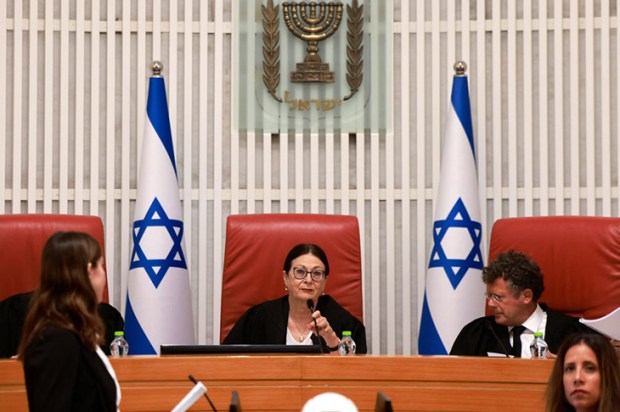
The 2023 Voice to parliament referendum underscored this cultural tension. Despite elite backing, over 60 per cent of Australians rejected the proposal, with some electorates recording a No vote above 80 per cent. This sharp contrast between public opinion and elite advocacy highlights the growing disconnect in Australia’s cultural and political life.
But let’s rewind to where this all started.
The term woke originated in the African American civil rights movement in the early-20th century and gained widespread popularity during the Black Lives Matter movement in the 2010s.
To be woke is to be ‘acutely aware of social and political inequities’, according to the Oxford Dictionary.
A clearer definition is captured in the assertion that disparate outcomes in society are not attributable to chance, or a lack of effort or merit, but the result of Western societal structures that inherently privilege white men.
Therefore, being woke is not just being aware of social inequities. It involves a broader commitment to overhaul the existing system. According to the book Stay Woke: A People’s Guide to Making All Black Lives Matter, ‘you have to put your knowledge to use in order to eradicate the problems of racial injustice’, authors Bunyasi and Smith assert.
Recently, we have seen a critical mass of people taking their commitment to overhauling the system seriously, with woke ideas reaching their most extreme and illogical conclusions.
The creation of legal rights or benefits based on identity, such as gender quotas in the workforce, university admissions criteria based on race, and alternative justice systems based on ethnicity, are a few recent examples.
In education, literature curricula have been overhauled with books chosen on the basis of the gender or race of the author rather than the content of the text. In public spaces, historical monuments of old white men who don’t fit the DEI agenda have been torn down, graffitied or replaced.
This has triggered a backlash.
Signs of the shift are evident, from the overwhelming rejection of the proposed Voice, to the rising support for Australia Day, and the rise of populist, anti-establishment parties in the United Kingdom and throughout Europe.
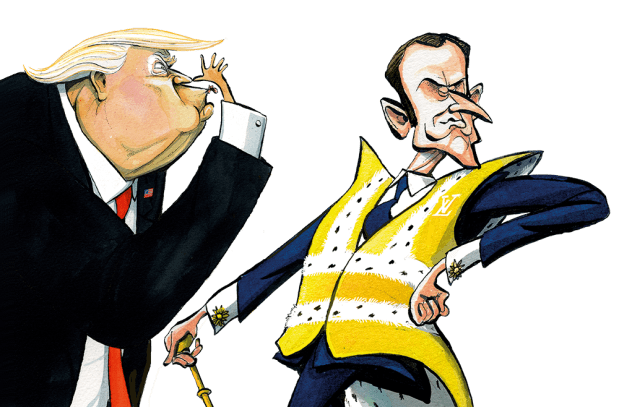
Most significantly, the IPA’s report is set against the backdrop of Donald Trump’s victory in the 2024 US Presidential election. The Trump administration, although not always embracing traditionally conservative values, has overseen an aggressive undoing of what is usually considered woke.
Once in office, Trump signed a flurry of executive orders. He cut back DEI programs across federal agencies, stopped biological men from competing in women’s sports, and withdrew from the Paris Climate Agreement.
Trump turned off the tap that funded woke programs – highlighting how much of the woke world-view is propped up by the government in schools, universities and the public service.
The US provides an imperfect but effective model from which Australia can learn. Australia, like the US, has witnessed a shift in public sentiment against wokeism. However, unlike the US, those in positions of influence in Australia refuse to acknowledge this shift.
Moving beyond woke requires a commitment by political leaders to not only drive out this divisive view of the world but to ensure those values are replaced by ones that are consistent with time-tested principles.
Ultimately, this research is a reminder that cultural change is possible. Societies are shaped by ideas; these ideas give meaning to existence, define moral frameworks, and guide public and private behaviour.
Language matters, and trends shift. Ideas once seen as untouchable can lose their hold on the public imagination. The challenge now is to keep pushing the conversation towards truth, common sense, and values that strengthen rather than divide society.
Got something to add? Join the discussion and comment below.
Brianna McKee is a Research Fellow and the National Manager of Generation Liberty at the Institute of Public Affairs
You might disagree with half of it, but you’ll enjoy reading all of it. Try your first month for free, then just $2 a week for the remainder of your first year.