On a Tuesday 140 million years ago, the western part of the giant southern supercontinent of Gondwana comprising Africa and South America separated from the eastern part (Australia, Antarctica, and India). Later, the South Atlantic Ocean formed as South Africa and South America drifted apart. India separated from Australia and raced northwards until it hit Asia and pushed up the Tibetan plateau at the collision boundary. Australia drifted away from Antarctica 100 million years ago at up to 7 centimetres a year. The cargo on this drifting continental ark was tropical rainforest with its adapted fauna. Australia then was blessed with an inland sea, rivers, lakes and associated wildlife in areas that are now desert.
Once isolated and further north from Antarctica, Australia enjoyed a long period of tropical weathering and erosion. Rocks were decomposed to soils which were leached of nutrients over tens of millions of years. Most of Australia is now covered by the nutrient-poor residual soils and endemic flora which has adapted to survive on these soils.
The long weathering period left a flattened stable land surface with meandering watercourses and rivers. Remnants of this old flat land surface can even be seen in uplifted parts of the country such as the Darling Ranges, Great Divide, Barrier Ranges and Flinders Ranges. Aridity over the last few million years led to inland sand dunes, salt lakes and concrete-hard precipitates of soils rich in limestone, silica and iron.
Unlike Europe and North America, mainland Australia was not scoured by advancing and retreating glaciers that removed old soils and allowed fresh new fertile soils to form after glacier melting started 14,400 years ago. This gave little time for leaching of nutrients. Only six per cent of the Australian landmass has arable soils and a very small part of this six per cent has soils as fertile as those of the Northern Hemisphere. Our best soils have formed in higher rainfall areas by the weathering of geologically young basalts such as in Tasmania, western Victoria, New England, the Darling Downs and the Atherton Tableland and on alluvial flats where exposed rock has been decomposed to soil and transported downslope onto flood plains. These soils have only been slightly leached. We are not a fertile green land because of our old soils and low rainfall.
Even on our best fertile soils, crops still need added essential elements such as phosphorus, potassium, nitrogen and sulphur from fertilisers. Traces of magnesium, iron, zinc, copper, manganese, molybdenum, boron, chlorine, cobalt and sodium are also used by plants, and grazing animals require minute traces of chromium, iodine, selenium and fluorine.
Phosphate rock reacted with acid makes superphosphate. In former times bat guano phosphate rock was mined from caves. Surface bird guano was once mined on Christmas Island. Australia’s only domestic source of phosphate is Phosphate Hill, 135 kilometres south of Mount Isa. The mine is struggling due to high costs. Australia imports phosphate rock from Morocco and superphosphate from the USA, India and Vietnam. Massive resources of phosphate rock have been found at Wonarah and Ammaroo in the Northern Territory but they are a long way from nowhere with no infrastructure.
All potassium fertilisers are imported. We have large tonnages of potassium in salt lakes in Western Australia and a couple of companies are attempting to build solution mining operations. Australia has no rock salt MOP (muriate of potash) or SOP (sulphate of potash) deposits. SOP is imported from China and MOP is imported from Canada, Russia and Belarus.
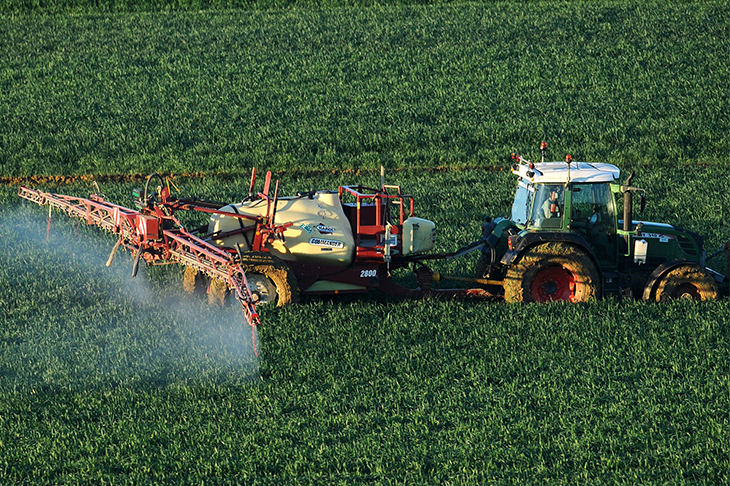
Nitrogen fertilisers were once produced from human urine and cow dung. European farmers house cattle over winter and mix the accumulated dung with water for spraying on fields in spring giving the typical rural pong ironically called Landluft. Farmers have been known to use the dung-water mixture to spray on anti-farming protestors, gypsy squatters and houses of parliament.
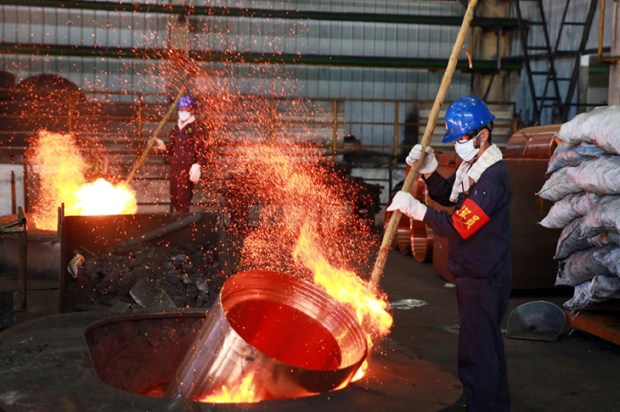
Nitrates such as saltpetre were mined from the Atacama Desert in Chile and Peru for explosives and fertiliser. These deposits are now exhausted. There are no nitrate deposits in Australia and nitrogen fertilisers such as urea, ammonium nitrate and ammonium sulphate need to be synthesised using air, ammonia, natural gas and energy. Australia produces 2.4 million tonnes per annum (Mt pa) of urea at Karratha and imports four Mt pa from the Middle East, SE Asia and China. More than one Mt pa of ammonium nitrate is made at Kwinana and Newcastle, mainly for the mining industry. There is a domestic supply shortage requiring imports of almost 150,000 tonnes per annum (tpa) of ammonium nitrate from Indonesia, Vietnam, Thailand, Lithuania and South Korea. Some five per cent of the world’s ammonia production is made at Dampier, much of which is exported. About half of Australia’s 250,000 tpa of ammonium sulphate is imported, the rest is made by reacting ammonia with sulphuric acid.
Australia does not have enough base metal smelters to produce by-product sulphuric acid and imports sulphuric acid from South Korea, Japan, Taiwan, China, USA, India and Malaysia. It is used for making superphosphate, SOP and sulphate of ammonia fertilisers.
In the 1980s, there was a flood of peer reviewed scientific papers from Chinese authors claiming that if rare earth elements are added to fertilisers, then crop yields increase. It was later shown that crop yields did not increase and in many cases crop yields decreased, rare earth elements were phytotoxic and entered the food chain, and rare earth elements in soils and waterways created environmental damage. This was a crude fraudulent attempt by the Chinese to sell rare earth elements mined at Bayan Obo (Inner Mongolia) which, at that time, had a very small market as there was no miniaturised electronics industry.
Australia is not self-sufficient in phosphate, potassium and nitrogen fertilisers which are essential for food production. We import fertilisers and acid so that we can eat. To become self-sufficient, it would take time, huge amounts of capital and a decade or so battling regulators for approvals with incessant lawfare about the mythical vadose songlines of the Krakatinnie tribe.
More than 70 per cent of food produced in Australia is exported with most production in areas of rainfall above 600 millimetres per annum. Fertiliser costs keep rising. Fertilisers require ship transport from abroad or around our coast followed by long-distance truck haulage.
The delusional Chris Bowen claims that expensive intermittent energy using components from countries hostile to Australia will drive an industrial revolution. Pull the other one. An industrial revolution to enable energy, mineral and food security is well overdue. Why is it that Sweden, a country of 10.5 million people with six nuclear reactors and a GDP of $US585 billion, can build cars, guns, military and commercial aircraft, naval vessels, submarines and intelligent ammunition yet Australia with a GDP of $US 1.73 trillion cannot? It was the crisis of the second world war that accelerated industrialisation in Australia driven by Essington Lewis.
Where is our Hercules to clean the Augean stables and industrialise Australia before the inevitable next crisis?
Got something to add? Join the discussion and comment below.
You might disagree with half of it, but you’ll enjoy reading all of it. Try your first month for free, then just $2 a week for the remainder of your first year.