In the 1970s, I entered Finland at the Lappeenranta border crossing in Karelia after two months of road travel through the Soviet Union through what is now Ukraine, Belarus and Russia. This was my political education. I celebrated my 31st birthday in the Soviet Union and didn’t even get a card from Leonid Brezhnev whose security people must have known of my birthday and whereabouts.
All of a sudden when across the Finnish border, there were colours besides funereal grey and red; people were friendly, made eye contact and didn’t appear frightened; and the young were not in uniform carrying automatic weapons. They were free. The Finns really looked after us at the Outukumpu mines where it was very unusual to have folk from the Broken Hill mines visit.
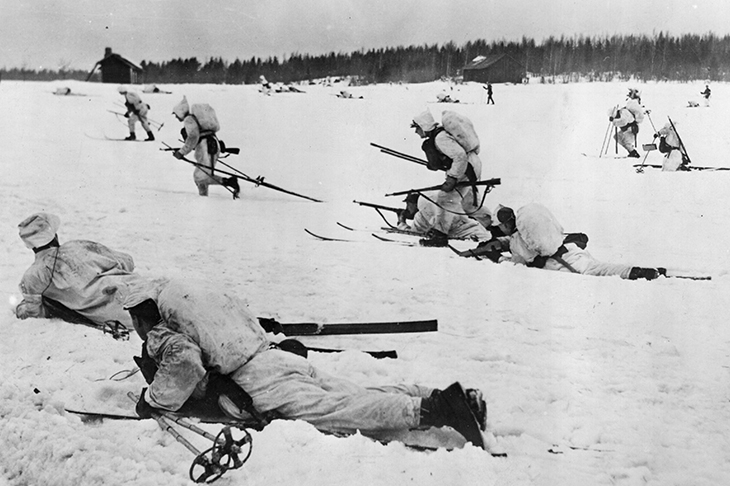
Ever since that time, I have had a really soft spot for the Finns. They are dour, quiet, heavy-drinking, practical, rugged, determined folk. In his tone poems, the Finnish composer Sibelius well described the landscape and people of his country. Finland lost parts of Karelia, Sall and Rybachy to the USSR which were never returned despite Finland winning the three-month-long winter war against the Soviet Union in 1939 to 1940. Does anyone really think that lands captured by the Russians will ever be returned to the Ukraine? The Red Army suffered five times the casualties of the Finns and lost thousands of tanks in temperatures as low as minus 43C. This inspired Hitler to think that he could invade and beat the Red Army.
The Finnish Geological Survey has just given us a touch of reality with their recent report entitled Estimation of the quantity of metals to phase out fossil fuels in a full system replacement, compared to mineral resources. If you thought the title was comprehensive, try the 296-page report.
The study looks at the physical requirements to completely phase out fossil fuels and yet maintain the current industrial ecosystems. This study looked at global transport (passenger cars, buses, commercial vans, heavy trucks, etc); rail networks; international maritime shipping and the aviation industry. For each class of transport, the distance travelled was calculated and compared with the non-fossil fuel alternative such as EVs, hydrogen vehicles, alcohol biofuel vehicles and manufactured ammonia for internal combustion engines as well as the amount of energy to charge vehicles, make hydrogen and manufacture ammonia.
Construction of buildings, heating and cooling of buildings, new vehicle manufacture, petrochemicals, fertilisers, plastics and steel and concrete were all considered in calculations. The study emphasised a transition to a hydrogen economy and looked at the minimum and maximum capacity of global electrical power stations using coal, gas, hydroelectric, wind, solar PV, solar thermal, geothermal, biowaste and diesel. Coal, gas and nuclear continue to dominate efficient global electricity generation. It was stressed that the technology for an energy system with a high proportion of wind and solar cannot handle diurnal and seasonal fluctuations of power demand.
Pie in the sky future energy ideology such as Germany’s Energieperspektiven 2050+ plan cannot deliver net zero by 2050, cannot improve energy efficiency in all sectors and cannot replace petroleum-powered transport with electric vehicles, cannot replace oil and gas heating, cannot replace nuclear power and cannot smooth intermittency with battery storage.
The Finnish report also examines Spain’s power system in summer and winter and showed that it was destined to fail. It did, as the report predicted. The Texas wind generation system was looked at and the repeated power crises occurred when oil-rich Texas had no wind. After examination of systems of compressed air, pumped hydro, flywheels, capacitors, superconducting magnetic energy storage, batteries, fuel cells, thermochemical fuels and sensible and latent heat storage, it was shown that energy storage just did not cut the mustard, especially in terms of the size of the system required.
And then there is just the little problem of sourcing all the copper, cobalt, nickel, graphite, manganese, rare earth elements and other metals required for the great and glorious ideological energy transition. Deposits of the required amounts of commodities have not yet been found and, if exploration started today, they could come on stream in 2050. Perhaps!
Only 29 times the existing solar capacity and 14 times the current wind capacity need to be added to global electricity generation to replace coal and oil. However, there would be huge transport systems without energy. To date intermittent power systems such as wind have been effectively balanced with power from external power grids and power generation is balanced against demand which in the past had been done using fossil fuels, especially gas. Once fossil fuels are removed by net zero, the grid cannot be balanced. Not many greenish politicians realise that when we need to use electricity, it must be generated exactly at the moment of use.
The proposed storage systems of four to eight hours are just not big enough as wind droughts can continue for a fortnight hence storage must be for a few months. This is technically not possible at present and maybe never will be possible. If large-scale storage is not possible, there will be blackouts. The solar and wind systems would have to be so large that they would need to be self-sufficient to balance supply and demand. This is a logistical and engineering challenge that society has not yet conquered. Furthermore, there are just not enough printing presses to print the money to fund new remote solar and wind generating systems and high-voltage grid lines.
Nothing is impossible but the Finnish report shows that replacement of existing coal, gas, nuclear and liquid fuel energy systems is as close to impossible as one can get. No wonder the Finns built the Loviisa and recently the 1,400 MW Olkiluoto nuclear power plants. Although Olkiluoto cost over $4 billion to build, the price of electricity to the consumer was reduced and the power supply became more reliable and will be so for almost 100 years.
Finland’s population is less than that of Victoria and yet they can build nuclear reactors and prosper. Each year, Victoria’s interest bill could build two Olkiluoto reactors and, together with the 6,000-year reserve of Victorian brown coal which used to generate the cheapest electricity in the world, Victoria could be the energy powerhouse of the world. Victoria refuses to drill gas-rich onshore sequences. The claim about Australia potentially being the renewable energy powerhouse of the world is laughable, dangerous, delusional ideology blended with ignorance of the practical reality. While the rest of the world is abandoning net zero, Australia goes in harder and, as a result, collapses into deeper and deeper debt.
Kel Richards might care to give a phrase in English showing the meaning of the Finnish word sisu. The Liberal party in Australia needs sisu more than at any other time in their history and, without sisu, Australia will wither on the vine and will suffer a self-imposed recession, energy shortage, crippling energy prices and increased sovereign risk.
Got something to add? Join the discussion and comment below.
You might disagree with half of it, but you’ll enjoy reading all of it. Try your first month for free, then just $2 a week for the remainder of your first year.