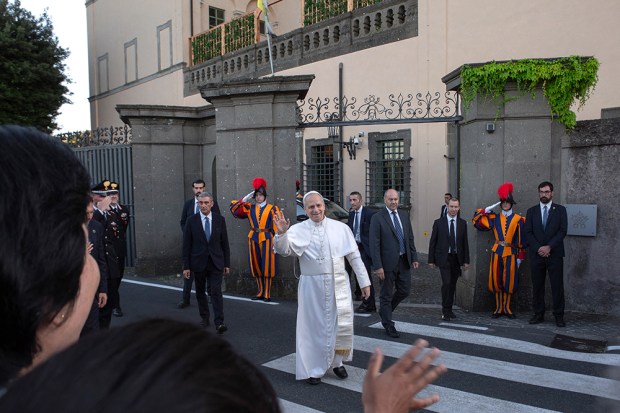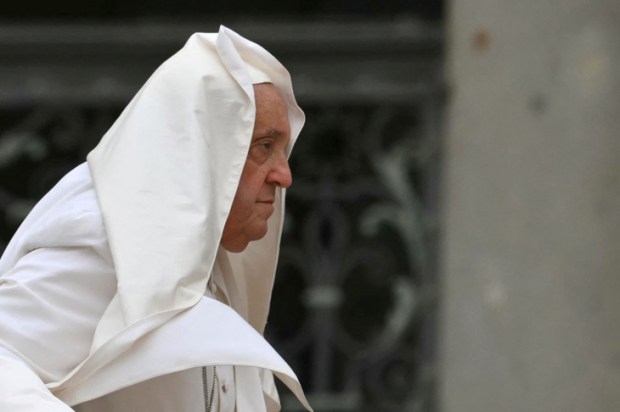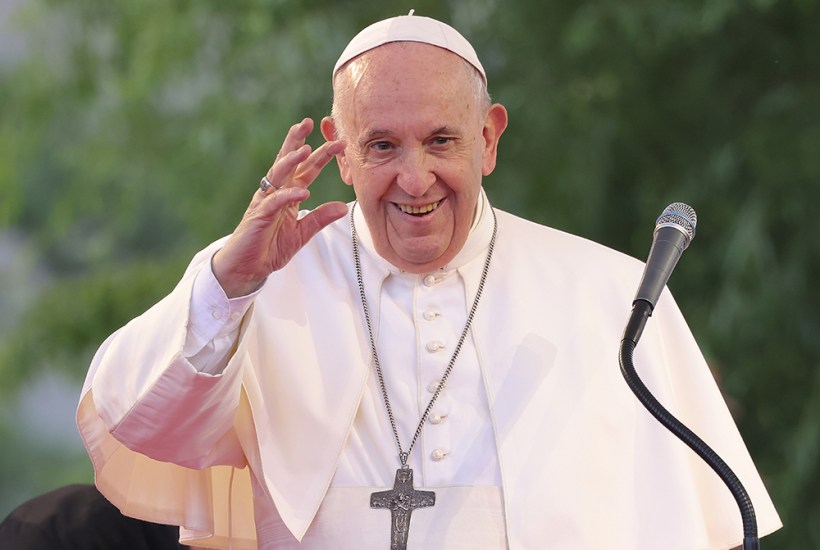
Pope Francis, who died on Easter Monday morning at 88 years of age, has been described repeatedly as ‘a pope for the people, for the marginalised’. However, it is important to give an account of the pontificate of the 266th pope that balances up the fawning ‘eulogies’ all of us have no doubt heard and read.
The late Cardinal George Pell, in the Demos document attributed to him, described Francis’ papacy as ‘catastrophic’.
It seems the makings of this were present in Jorge Maria Bergoglio’s youth. As reported by George Neumayr in the American Spectator a few years ago, Antonio Caponnetto, the Argentinian author of several books on Pope Francis, informed him that, ‘At the seminary, Bergoglio’s classmates called him “Machiavelli”.’
Indeed, it is during his time as Archbishop of Buenos Aires, during which he was elevated to the College of Cardinals by Pope John Paul II, that Bergoglio became known as a master of manipulation.
When appointed Archbishop, he dispensed with his driver and used public transport to get around the city. The citizens of Buenos Aires were made aware of this many times since Bergoglio often was accompanied on the bus by a photographer. He was the virtue-signaller par excellence before it became fashionable. So much for Jesus’ exhortation that ‘when you give alms, the left hand must not know what your right is doing’ (St Matthew vi 3).
On 13 March, 2013, Bergoglio was elected pope on just the second day of the conclave. Many have argued that his election was a result of a longstanding and coordinated plan by the secretive St Gallen mafia, named after the Swiss town in which they often met. Several of their number had publicly declared that after John Paul II and Benedict XVI, the Church needed ‘a change in direction to bring it into the modern world’.
However, Francis was anything but a positive reformer. While he claimed he wanted to decentralise Church decision-making through his ‘Synod on Synodality’, he continuously issued decrees cementing his authority, including removing heads of religious orders – traditionalist ones in particular. Further, Cardinal Pell’s scathing Spectator Australia article, published a day after his passing, spoke of the ‘toxic nightmare’ of the ‘Synod on Synodality’, stating that it was ‘largely irrelevant to the preaching of the gospel and the threat of decline, being more concerned with redistribution of power’.
Many other prelates were critical of Francis’ approach, the most prominent being Cardinals Raymond Burke, Robert Sarah and Gerhard Müller, all of whom were removed from their posts in the Curia, with Burke being infamously kicked out of his Rome apartment by Francis. Müller declared that Francis’ reforms of the Curia were disastrous, reducing it to ‘a business that works to provide assistance to “clients”, as if it were a multinational enterprise and no longer an ecclesial body’.
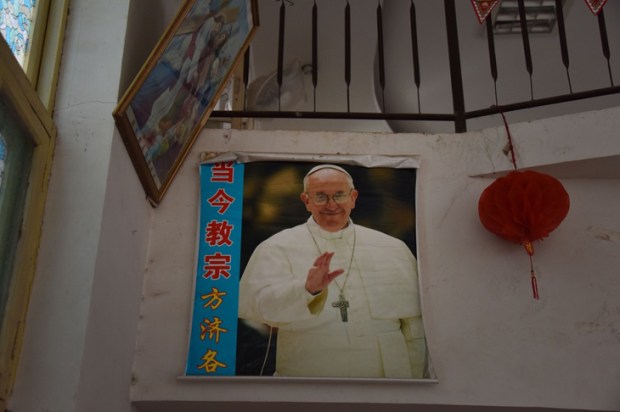
Totally at odds with Papa Bergoglio’s stated concern for the Church on the margins, in 2018 the Vatican signed a secret agreement with the Chinese Communist party on the appointment of Catholic bishops. In doing so, the Vatican abandoned loyal Catholics in China who have been intermittently persecuted for their loyalty to the papacy for more than 70 years.
Indeed, Pope Francis’ voice on the persecution of believers throughout the world was muted, to put it mildly, over the 12 years of his papacy. Rather, he focussed his attention on persecuting those, mainly young, Catholics in the Church who preferred the Traditional Latin Mass, whom he accused of having a ‘mental imbalance, emotional deviation, behavioural difficulties, a personal problem that may be exploited’. Further attempts to restrict the Latin Mass entirely last year faced stiff opposition from many bishops and laity, and thus far have not been carried out.
He had a similar treatment for those who called out the draconian nature of Covid restrictions, including the mandating of Covid vaccines – the taking of which he said was a ‘moral imperative’.
Another of Francis’ ‘moral imperatives’ was climate change. In his encyclical Laudato Si, (named after the first words of St Francis of Assisi’s famous prayer), he called for an approach that hears ‘both the cry of the earth and the cry of the poor’. Cardinal Pell observed that this approach advocated a ‘Hindu-style pantheism’. Francis also made numerous calls to action for global leaders to implement the Paris Climate Agreement.
While Francis’ trolled those who were most devout in their faith, thumbing his nose at one of the few growth areas of the Church, he repeatedly welcomed prominent LGBT activists at the Vatican, such as the Jesuit Fr James Martin, who he appointed as one of his key communications advisers.
Despite his numerous declarations of ‘zero tolerance’ of clergy sexual abuse, such declarations were undermined by his reported involvement in the cover-up of a number of high-profile cases, including two where the individuals concerned had been convicted of sexual abuse.
One case goes back to Bergoglio’s time as Archbishop of Buenos Aires, which may explain why Francis never returned to his native Argentina during his papacy, unlike John Paul II and Benedict XVI, who returned to their native Poland and Germany respectively soon after their elections.
The fact that the vast majority of the world’s media, usually rapacious in their reporting of Catholic clergy accused of sexual abuse, remained largely silent on these matters, is a scandal in itself.
So where to now for the Church? The most talked about papabili presently are the Vatican’s Secretary of State, Cardinal Pietro Parolin, an Italian and chief protagonist of the pact with China. However, this time a ‘diversity pick’ might be good for conservatives, with Cardinal Sarah from Guinea also being mentioned.
There is a saying, though: Chi entra papa nel conclave ne esce cardinale (He who goes into the conclave a pope comes out a cardinal). Whoever the next pope is, he must, as Demos declared, ‘understand that the secret of Christian and Catholic vitality comes from fidelity to the teachings of Christ and Catholic practices. It does not come from adapting to the world or from money’.
The next successor to Saint Peter must unify and inspire Catholics, not divide and confuse them. Otherwise, a schism will ensue, the results of which will be disastrous, not just for the Church, but for the world.
Got something to add? Join the discussion and comment below.
You might disagree with half of it, but you’ll enjoy reading all of it. Try your first month for free, then just $2 a week for the remainder of your first year.