All minerals are critical minerals for the modern world. The most important critical ‘mineral’ is energy which must be cheap and reliable to enable low-cost mining, beneficiation, smelting, refining, manufacturing and food production. Australia has not had cheap reliable energy since the introduction of ‘renewables’ and cannot rely on the rest of the world for energy. Because of geological variability, no country can be completely self-sufficient although Australia has mines and unmined deposits of most basic commodities. Tier 1 mineral deposits are very large tonnage with a high metal content and operational in the bottom quartile of low-cost producers for at least 25 years of production and sustaining capital to survive changes in exchange rates, metal prices, smelter charges, subsidised mining by overseas competitors, labour costs, union hostility, age costs and anti-mining governments and activists.
Surface outcrops of Tier 1 deposits in Australia led to mines at Bendigo (1851-1954), Ballarat (1851-2014), Cobar (1870-present), Mt Lyell (1882-2014), Mt Morgan (1882-1990), Broken Hill (1883-present), Renison Bell (1890-present), Rosebery (1890-present), Kalgoorlie (1893-present), Mount Isa (1923-present), mineral sands (1930s-present), bauxite (1963-present), Pilbara iron (1966-present) and Cadia (1998-present). These Tier 1 deposits were not plain sailing as there were loss-making periods and even closures due to loss of manpower during wars, weather events, rail line closures, economic depressions, strikes, high exchange rates, low metal prices, fatalities, environmental lawfare and government edicts.
In good times, gouging governments put their snouts in the trough and extracted higher royalties, taxes and union-driven labour costs which were not reduced during the inevitable bad times. There was once a time when Australian mines had scores of copper, lead, zinc, nickel, gold, silver, tin and iron smelters on site or at ports to convert concentrate to metal. These added value and reduced transport costs. There are now only a few smelters in Australia. Most concentrates are shipped abroad because of the high energy, labour and regulatory costs and our remaining smelters are struggling.
All mineral deposits have a finite life. On current reserves and geological factors, the unexposed Olympic Dam deposit (1975-present), coastal and inland mineral sands deposits and the Pilbara iron ore deposits will be the only operating Tier 1 deposits in 25 years time. Most of our Tier 1 mines are old, reserves have been depleted and exploration for reserves replacement is hampered by land access, approvals delays and red, green and black tape. New Tier 1 mines have not been discovered in Australia.
With reduced Tier 1 minerals exports in a few decades time and no major manufacturing industries, Australia will be pushed into poverty. The problem can’t be solved when the shortage occurs. If I have a geological idea for mineral exploration today, it will take 25 years and massive high-risk capital before successful exploration can lead to minerals production and payment of royalties. This is because regulatory processes including future nature-positive restrictions, environmental and Aboriginal lawfare, tenement acquisition, surface exploration, deep geophysics, deep drilling, metallurgical testing, financial due diligence, acquisition of capital and mine construction all take time. Approvals from three tiers of government and Aboriginal groups can take years. During this 25 years there are at least 8 terms of government when community attitudes will change and fickle markets can cripple project economics. Governments operate on short-term election cycles and do not consider the long-term stability and sustainability necessary for employment- and revenue-generating industries. Not many investors have an appetite for such long-term high-risk investments when there are more attractive investments elsewhere in the world.
Exploration for the McPhillamys gold deposit near Blayney started in 1980 and, after more than four decades of exploration, evaluation, mine planning, approvals, support from the local recognised native title-holders, support from the New South Wales government and vast expenditure, at the eleventh hour after massive sunk costs Tanya Plibersek cancelled approvals after an indigenous artist’s objection based on her own paintings of a mythical bee. This was concocted. In some countries, the fraudulent artist would be convicted as an economic terrorist. Why would an investor risk spending a penny on exploring to replace exhausted mineral deposits in Australia?
Australia is a very high-risk country for mineral exploration and mining, almost on par with many despotic Third World countries. Many Australian companies are now risking capital raised in Australia for exploration in Africa, the Middle East, Southeast Asia and South America where the ability to explore and bring a discovery to a productive mine puts Australia to shame. Minerals produced on the other side of the world by an Australian company doesn’t mean Australia will have access to these commodities. Other countries want to add value by constructing smelters and refineries to treat their own concentrates and gain export earnings.
More than half of Australia has very old rocks that are prospective for exploration for Tier 1 deposits because, in the early history of the planet, metals were transported and concentrated at well-defined geological times while the planet settled down to its normal daily dynamic business. Gone are the days of a deposit poking out at the surface. Now explorationists use a diversity of scientific techniques and research knowledge to search for unexposed deposits at depth.
Measurements of magnetics, gravity and radioactivity from altitude with follow-up ground truthing are undertaken; satellite infra-red imagery and other spectra are evaluated; deep electrical conductivity and resistivity plus the seismic properties of the substrate are measured; surface rocks are mapped; and the chemistry of soils and rocks is measured. Even plants, soils and air are sniffed for volatile chemicals that may indicate ore at depth. Mathematical analysis of huge data sets indicates whether more work needs to be undertaken or drilling can commence to provide a 3-D picture.
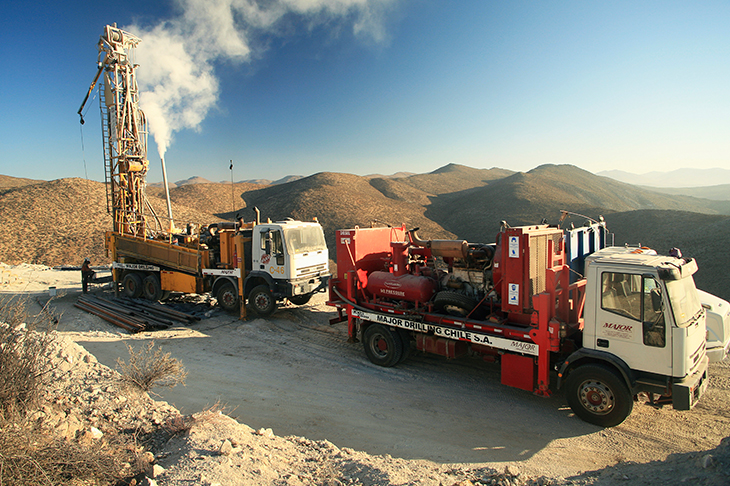
For Tier 1 porphyry-copper deposits, such as those in central-western NSW, at least 150,000 metres of drill holes will have to be drilled at hundreds of dollars a metre before metallurgical, mining and financial evaluations can be undertaken. Time, deep pockets, persistence, patience and highly skilled professionals are needed. For every 10,000 tenements granted, only one will result in a producing mine. Even though discoveries are frequently made, only five out of a hundred discoveries result in a mine. Of these five mines, three will financially struggle. Many marginal discoveries are chestnuts, warmed up for the stock market if prices rise.
Exploration is not for the faint-hearted. If governments want Australia to be a critical minerals force and stay affluent from mining revenues, they must support exploration, stay on message for decades, support the resources industry from concept to concentrate by taking it off the election cycle political agenda and add value by encouraging smelting and refining in Australia.
We don’t need a population Ponzi scheme to prop up the economy. We need an economy that turns rocks into metals, non-metallics and energy to support secondary industry; that turns soil into food, fibre and fermented fluids; and harvests our territorial waters. This requires knowledge, experience, vision and leadership by politicians to build the country rather than their own selfish political careers.
Got something to add? Join the discussion and comment below.
You might disagree with half of it, but you’ll enjoy reading all of it. Try your first month for free, then just $2 a week for the remainder of your first year.