To arrest a slump in sales, De Beers, the world’s biggest diamond producer, in December cut diamond prices by 10 to 15 per cent, a reduction that increased the drop in the price of polished stones to 35 per cent over two years. Why is De Beers struggling so much its parent company in February wrote down its value by US$2.9 billion? Mostly, the collapse of China’s luxury market.
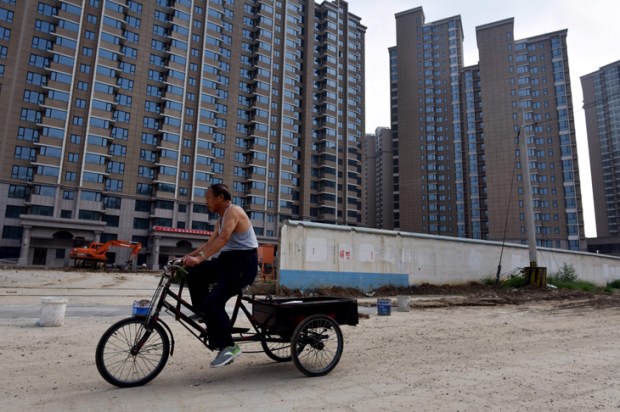
Chinese consumers, victims of crashing house prices, lost income during pandemic lockdowns, slowing wages growth and rising unemployment, have turned tight-fisted. Many European luxury goods companies are suffering similar large sales declines in China as De Beers.
The woes of China’s economy are battering other industries too. A drop in Chinese demand for capital goods is one of the blows that sent Germany into recession. Same jeopardy for countries that sell commodities to China. They now face fewer sales at lower prices.
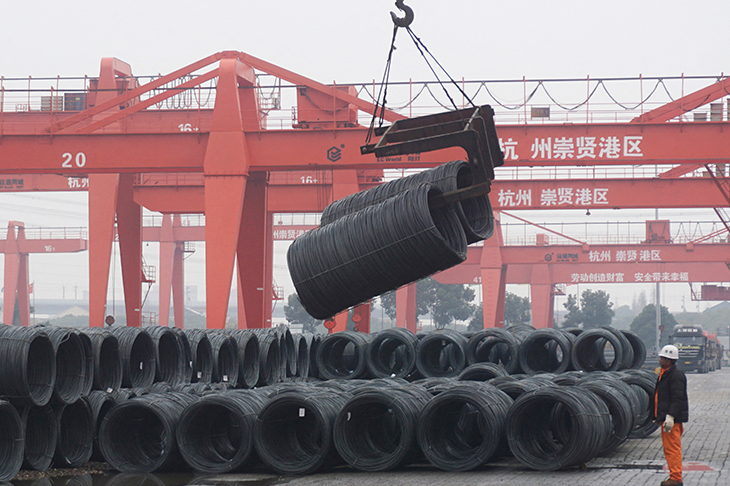
Australia, which in recent years sourced 35 per cent of its export revenue from China, is flirting with recession as reduced Chinese steel output undermines exports of iron ore.
Iron ore’s plunge from an all-time high of about US$220 a metric tonne in 2021 to as low as US$92 a ton in September will cost Australia a third consecutive federal budget surplus and inflict deficits thereafter because every sustained US$10 fall in iron ore immediately removes A$500 million of revenue from the budget. Treasury estimates a one-percentage-point drop in China’s GDP growth roughly costs Australia a quarter of a percentage point of growth, or about A$6 billion in lost output.
Examples of vanishing income include that BHP in February cut its interim dividend to an eight-year low of 50 US cents compared with US$2 in 2021 after first-half underlying profit sagged 23 per cent from a year earlier. Rio Tinto’s payout slid to a five-year low after interim profit slumped eight per cent. Fortescue cut its dividend to a six-year low after first-half profit dived 53 per cent.
Such are glimpses of how China’s economic troubles hurt countries and companies that export to the world’s second-biggest economy. The problem for the world is that China’s economy is so big few will escape the multiple blows emanating from its economic malaise.
A second thump for the world is that China’s economic stall is menacing global property prices. Chinese investors and creditors have sold, or are selling, property assets all over the globe, steps that are estimated to have wiped at least US$1 trillion off global real estate values.
The problem is that commercial property, already battered by pandemic lockdowns and work from home, enters 2025 with losses that must be released soon. Western banks with dubious capital coverage might be forced to write down the value of questionable property loans. While China is not the source of the problem, it’s magnifying risks.
A third threat for the world is China’s wobbling banks. Many indicators suggest a banking crisis is brewing in China. Bank profits are shrinking as margins contract to all-time lows. Bad loans tied to property have surged and a record number of people (8.5 million in 2023) have been blacklisted for missing repayments.
The Switzerland-based International Institute for Management Development, known as IMD, reports that Chinese provinces were forced to inject a record US$31 billion of capital into commercial banks in 2023. A Bloomberg report in September said Beijing was pondering a capital injection of US$142 billion to support banks.
The state-owned nature of most Chinese banks intensifies the risk of a banking crunch becoming a world-wide financial crisis. Come banking failures, Beijing may be unable to honour the guarantees it provides to state banks. IMD says a banking crisis in China could be ‘exponentially greater’ than the US subprime mortgage crisis of 2007-08, given the size and interconnectedness of Chinese banks with the global financial system. The four biggest banks in the world by assets in 2024 were Chinese – the country had 12 in the top 40.
A Chinese banking crisis could disrupt the Chinese manufacturers hired by multinationals, sparking production delays, higher costs and worldwide shortages. A banking crunch in China would rattle global financial markets, given the outsized role China’s capital flows play in world bond, commodity and stock markets. A Chinese-inspired plunge on Wall Street could endanger global financial stability.
The fourth way China’s slump hampers the global economy stems from Beijing’s quest to export its way out of trouble by subsidising production. China’s widening trade and current account surpluses and the overproduction of green goods such as electric vehicles have sparked retaliatory protectionism that stirs global inflation and reduces the efficient allocation of resources. The spiral of retaliation led by US President Donald Trump could intensify if the reprisals extend to devaluing currencies.
The fifth hit to the world is that many emerging countries face financial distress, even debt default, because they depend on China for trade and financially, through loans and direct investment. Many of these countries have signed lopsided deals with China to boost their main export industry – Venezuela with its loans-for-oil deals, Zambia and copper – and China is offering no debt relief now these countries are struggling. Zambia in 2020 and Sri Lanka in 2021 defaulted under agreements that extended repayment periods, which prolongs their financial agony, due to Beijing’s refusal to bear losses.
Emerging Asia and commodity-exporters are among the most vulnerable to China’s slowdown due to these financial and trading links. At risk too are the countries in Africa and elsewhere that borrowed more than US$1 trillion for infrastructure projects built by Chinese companies under Beijing’s Belt and Road Initiative.
A sixth hit is that the world will miss the contribution China has made in recent times to annual global growth. China’s woes, clearly, won’t be contained within China. The more a country such as Australia enjoyed China’s industrialisation, the greater its distress as China stagnates.
China’s troubles offer some benefits to the world, it must be noted. The country’s deflation eases global inflationary pressures. Many commodities such as copper benefit from Chinese investment in clean energy. Beijing is undertaking reforms within the financial sector to lessen risks and could take the necessary steps to revive its economy. But only if the government loosens political control. That won’t happen. The world will miss the China miracle. No one should be surprised it’s over. Economic booms, unlike diamonds, are not forever.
Got something to add? Join the discussion and comment below.
You might disagree with half of it, but you’ll enjoy reading all of it. Try your first month for free, then just $2 a week for the remainder of your first year.