Hold on! There is no basis for giving President Donald Trump all the credit (or the blame) for the so-far successful campaign to de-woke American corporate life that has provided the opportunity for 2025 to herald in a new era of thriving profit-oriented capitalism. All the destructive woke acronyms (DEI, ESG, NZBA, etc.) that for years had imposed their dismal negativity on prosperity, were already in a death spiral. This was well before the remarkable return to the White House of the former president under whose first four years wokery had managed to survive before thriving under Biden.
This time around at least Trump is committed to administering the coup de grâce and preventing any resurrection; that is, of course, depending on his executive orders surviving the courts – and his program passing a never totally predictable Republican Congress.
The demise of DEI (diversity, equity and inclusion) was described on this page four weeks ago. For ESG (environmental, social, governance), even an environmentally obsessed Bloomberg described it as being in its ‘flop era’. Reporting that over the past two years investors have withdrawn multi-billions of dollars from climate-related funds, Bloomberg blamed a ‘right-wing backlash’ that had turned ESG into ‘a four-letter word in terrified corporate boardrooms’.
Just ten days before Trump formally ended his four-year political exile by re-entering the Oval Office on January 20 to sign a mountain of anti-woke executive orders, it was a judge in a US District Court for the northern district of Texas, who stole the finance world’s attention with a major blow to ESG’s decades-long boardroom dominance. In a judgment that Bloomberg describes as ‘setting the stage for a potential earthquake in the world of ESG investing’ (and that could provide a legislative guide to enable a Dutton government to stop the current misuse for activist purposes of Australian superannuation funds’ massive proxy and corporate-influencing power), Judge Reed O’Connor found that imposing a self-serving ESG agenda on a superannuation fund is illegal.
‘The defendants breached their lawful fiduciary duties by mismanaging retirement plan investments in favour of ESG objectives, ultimately harming the financial interests of plan participants…. Unless ESG factors have economic relevance by way of fiscal benefit to the fund, they are not permissible under fiduciary obligations standards.’ In ruling for a pilot member against American Airlines’ BlackRock-administered superannuation fund, Judge O’Connor determined that, no matter how noble the aim, the law ‘does not permit a fiduciary to pursue a non-pecuniary interest as an end in itself but only as a means to some financial end’.
In this case the evidence established that BlackRock’s objectives were for ESG to have primacy in a context where the judge established that ESG investments ‘often underperform traditional investments by approximately 10 per cent’. Citing statistics of ESG fund performance in major stock indices, the court ruled that, ‘ESG investing is NOT in the best financial interests of a retirement plan’, leading to the conclusion that the company ‘acted disloyally by failing to keep its own corporate interests [American Airlines is an ESG supporter] separate from its fiduciary responsibilities, resulting in impermissible cross-pollination of interests and influence on the management of the Plan’.
As a result, ‘the court concludes that the facts compellingly demonstrated that defendants breached their fiduciary duty by failing to loyally act solely in the retirement plan’s best financial interests by allowing their corporate interests, as well as BlackRock’s ESG interests, to influence management of the plan.’
Naturally, there has been a plethora of legal commentary (and political speculation about potential legislative consequences) since this January judgment, particularly that section of it which, curiously, absolved the defendants from breaching their duty of prudence.
This was on the grounds that they were simply following contemporary industry practices – whose unsatisfactory standards the judge then slammed as stemming from BlackRock’s ‘alarming degree of control and influence over the “incestuous” retirement industry that is full of “oligopolist or cartel-like behaviour” that ensures that they are not properly scrutinised’.
The implications of the O’Connor judgment for Australia are significant, as both the American and Australian relevant legislation contain the key requirement that superannuation trustees must act ‘in the best financial interests of the beneficiaries’.
The failure of the ‘prudence’ claim is also of relevance to Australia in that the judge saw it as an attempt (‘that maybe should occur’) to ‘shift industry standards to better prioritise the oversight of proxy voting as an avenue to protect workers’ financial interests’. Evidence had been presented of BlackRock using the fund’s proxy vote to the financial disadvantage of the fund in pursuit of its own ESG agenda.
With the pasting BlackRock got in this case (and its many other legal battles over ESG), it is no wonder it not merely sniffed the breeze of the mounting scepticism about climate but bowed to the winds of change by leading a Wall Street exodus from environmental wokery, abandoning its leadership of feel-good acronym NZAM (net zero asset managers), which promptly suspended its operations. The dominoes fell as Mike Bloomberg-led and UN-backed climate associate GFANZ (Glasgow financial alliance for net zero) responded to widespread climate group defections by abandoning its core membership requirement of targeting net zero! And Goldman Sachs led the stampede of banks out of NZBA (net zero banking alliance) including leading Canadians, while its Australian members (all the major banks) remain in full woke mode – to provide Peter Dutton with a ready target.
So even before Trump’s election, Bloomberg reported that corporate leaders were running scared from ESG in response to a political backlash led by Republicans, particularly at state level; Texas is in court accusing large asset managers of conspiring to use ESG investing to hurt the state’s fossil fuel industry.
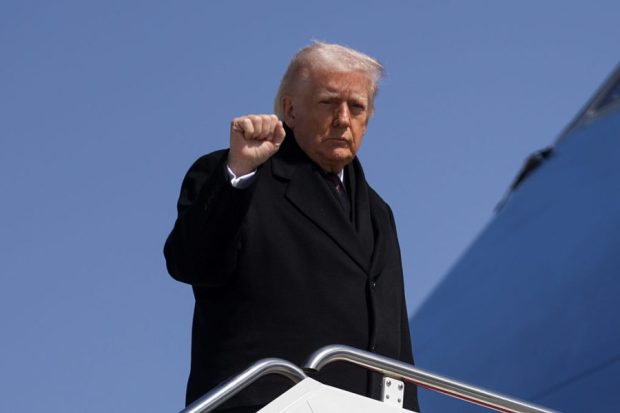
The tide had already turned, the pendulum was already swinging back when Trump redux took his second Potus oath. This is not to deny the impact, both direct and indirect, of Trump’s overt and enthusiastic campaign against wokery. – particularly after, in 2024, it became likely he would win. DEI’s weakened hand has been easily Trumped; he may need some court (pun intended) cards to knock over ESG’s remaining and more resilient true believers.
But Trump is already in the fray. As Kerry Wakefield reported in last week’s issue, the Davos elite got a taste of the dramatic policy changes that had occurred within days of Trump’s inauguration, telling them, ‘I terminated the ridiculous and incredibly wasteful Green New Deal, I call it the green new scam, withdrew from the one-sided Paris climate accord and ended the insane and costly electric vehicle mandate, we’re gonna let people buy the car they want to buy. I declared a national energy emergency … to unlock the liquid gold under our feet and pave the way for rapid approvals of new energy infrastructure.’
Trump is targeting the woke acronyms that are already in disarray. But they are not dead – yet.
Got something to add? Join the discussion and comment below.
You might disagree with half of it, but you’ll enjoy reading all of it. Try your first month for free, then just $2 a week for the remainder of your first year.