When Musk claimed that, ‘The snivelling cowards who allowed the mass rape of little girls in Britain are still in power… for now’, he must have known that his inflammatory remarks would inevitably reignite the debate about Pakistani Muslim gangs grooming and raping young working-class white girls.
Predictably, the response to Musk’s outrageous comments was divided along the left/right political boundary. Kemi Badenoch called for yet another inquiry into this matter, while Keir Starmer accused her of politicising this sensitive issue and pointed out that she had ample opportunity to hold an inquiry when the Tories were in government but had failed to do so. The same divide was apparent in the press, and the story finally received global attention. The Hindustan Times, never averse to a bit of Paki bashing, noted that ‘Gangs of men, often from Pakistani backgrounds, targeted mostly white girls from disadvantaged backgrounds, some of whom lived in children’s homes. The gangs operated in several English towns and cities, notably in Rotherham and Rochdale in the north, but also in Oxford and Bristol, for almost four decades.’ In the UK, the conservative press generally supported Kemi’s position, and the left-wing press was generally against yet another inquiry. The Telegraph headline was, ‘Majority of Britons back new grooming gang inquiry’, while the Guardian covered the same issue under the headline, ‘Does UK need another national inquiry into rape and sexual abuse gangs?’ The Independent wrote that ‘The vast majority of grooming gang offences are carried out by white men, the National Police Chiefs’ Council has said.’ New figures from the police database show that where ethnicity data was available, 85 per cent of ‘group-based’ child abusers were white in the first three quarters of 2024’.
Dr Waqas Tufail, Senior Lecturer in Criminology at a UK university argued that, ‘Within the context of Rotherham and Rochdale, the conjured image is of the dark Muslim male, sexually charged, violent, refusing to integrate and serving as an embodiment of a backward religion and dangerous, inferior culture. This (mis)representation has had serious and deleterious consequences for Muslim communities that have experienced isolation, alienation, racist attacks, and criminalisation as a result. According to Dr Tufail, this was a legacy of colonialism.
There have been, thus far, over a dozen reports into this appalling issue, and what the current controversy shows is that the validity of reports and inquiries is, like beauty, in the eye of the beholder, and the citizens of Britain remain divided.
What is undeniable is that a thorough investigation of the stories of alleged rapes and sexual abuse emerging from Rochdale, Rotherham, and other northern English towns, was not carried out because of the sensitivity of the racial element. According to a recent article on Sky News, a documentary about the issue made twenty-one years ago claimed that young white girls were being groomed for sex by Asian men. The police force at the time attempted to prevent the broadcast of the story as it ‘could inflame local tensions’. The report was subsequently broadcast after a three-month delay.
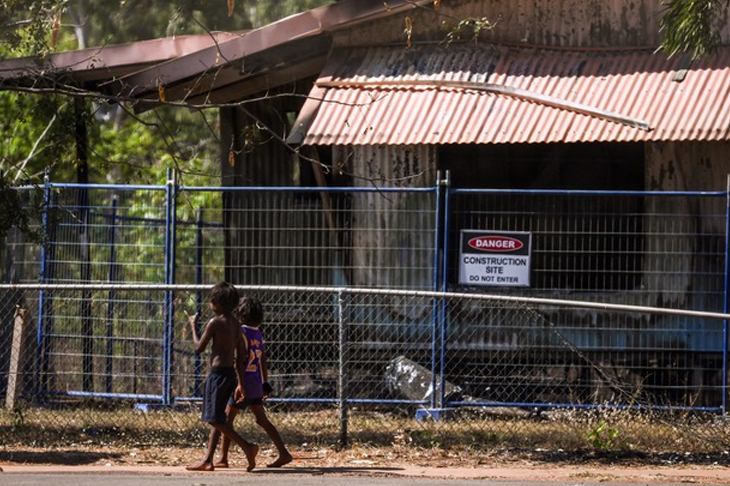
In Australia, the same division between the left and the right on questions of the relationship between race and criminality is evident in our media outlets. Just as the numerous inquiries into the grooming gangs in the UK have failed to establish a widely accepted interpretation of those atrocities, so in Australia numerous government inquiries and reports into social dysfunction and criminality in places like Wadeye are also completely ineffective. When it comes to investigations of the link between criminality and race, truth is determined not by mere facts or evidence, but by political power.
Just as Dr. Tufail, and dozens of his academic colleagues, argue that the rape of thousands of white girls was a legacy of colonialism, so in Australia, the prevalence of sexual abuse of children in remote settlements is due to the dispossession of Aboriginal land. And, just as the authorities in Britain were reluctant to investigate the sexual abuse in Midlands communities, the Australian authorities routinely turn a blind eye to a similar pattern of sexual abuse in Australia’s remote Aboriginal communities. In Australia, the rates of various forms of sexual abuse in Aboriginal communities are staggeringly high. A parliamentary report two decades ago noted that ‘for those young girls involved with the criminal justice system, the rate of sexual abuse is between 70 per cent and 80 per cent’ and, in one state, the Aboriginal and Islander Child Care Agency claims that 50 per cent of the children within the court system in their region are victims of incest’ (Child Sexual Abuse in Remote Australian Indigenous communities, 2001).
So, at the same time that young girls in the UK were being subjected to sexual assault, an incredibly high number of young girls in remote communities in Australia were also being sexually assaulted. In both the UK and here, government bodies were aware of the problem and did nothing. In both countries, the reason for inaction was political correctness.
In the UK, it was racial sensitivities which meant the government at every level failed to take action to stop the mass rapes. In Australia, the government at every level seems to be paralysed by the poison of the ‘stolen children’ ideology. As a consequence, the authorities are reluctant to intervene when there is strong evidence of social dysfunction in remote Aboriginal settlements. The incidence of syphilis in remote communities is 132 times higher than the national level. The incidence of gonorrhea in remote settlements is merely 72 times higher than the national average.
Is there also a class element in both situations? If the rapes in the UK had occurred in Knightsbridge or Mayfair instead of in working-class communities would it have taken twenty years before they attracted serious action by the authorities? In a similar manner, if the levels of sexual assault and domestic violence that are the norm in remote Aboriginal settlements were occurring in one of our major cities, would they not receive much greater attention?
The failure of Australian governments over the past twenty years to make substantial improvements in conditions in remote Aboriginal settlements directly parallels the UK failure to take appropriate action against the grooming gangs. Twenty years from now, the grooming gangs should be a thing of the past. I’m not so sure about the conditions in remote Aboriginal settlements.
Got something to add? Join the discussion and comment below.
You might disagree with half of it, but you’ll enjoy reading all of it. Try your first month for free, then just $2 a week for the remainder of your first year.