Something is rotten in the state of Victoria. It has been for a very long time. A visit to the city once dubbed Marvellous Melbourne is no longer possible because Melbourne is not marvellous at the moment and also because it now goes under the miserable monicker ‘Naarm’ which apparently means ‘place’ in Woiwurrung, the language of the Kulin people. Naarm as a name is about as inviting as a welcome to country from Senator Lidia Thorpe, otherwise known as an ‘unwelcome to country’.
Melbourne was once the cafe capital of Australia, with bustling businesses thriving in laneways. What’s booming now in Victoria are business insolvencies that have reached record highs. In the September quarter, 1,038 businesses went bust, 70 per cent more than a year earlier.
Unemployment is also higher than anywhere else in Australia except the Northern Territory, although there is a boom in public servants paying themselves ever higher salaries.
After a decade of Labor government, Victoria’s public service has doubled in size, and its wages bill has also doubled. At the same time, there are staffing shortages in essential service providers – teachers, police, nurses, paramedics, aged care workers – just no shortage of fat cats.
There is also no shortage of debt. That’s because state government spending has more than doubled since Labor came to power, increasing at almost twice the growth rate in the state’s economy.
This gloomy picture is set to get worse as gross state product fell 1.2 per cent per capita this year, more than any other state other than Western Australia, where the fall was due to a more normal harvest following bumper crops the previous year, and the mining industry experienced falls in production due to weather disruptions.
The fall in economic activity in Victoria means that government revenue has fallen. Indeed, over Labor’s period in government, debt has grown by more than 300 per cent, more than five times greater than the growth in the state’s economy.
As a result of ballooning debt and falling economic activity, net debt as a share of gross state product is now the highest in Australia. Yet, in terms of per capita disposable income, Victoria is the third poorest state in Australia. That’s too bad because the interest on the debt has to be paid, so state taxes and charges have been raised.
This is a problem that affects not just Victorians but all Australians. If Victoria goes broke, it is federal taxpayers – all of us – who will have to bail it out. Already, its economic self-sabotage — for example, in not developing its gas reserves – is rewarded with a greater share than it would otherwise get of GST.
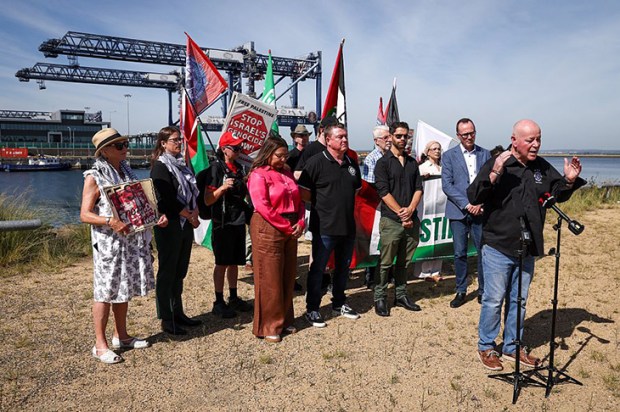
Victoria’s economic doldrums are reflected in the state’s tattered social fabric. The rise in antisemitism culminating in the firebombing of a synagogue is one example, but violent demonstrations have become a part of the city’s culture.
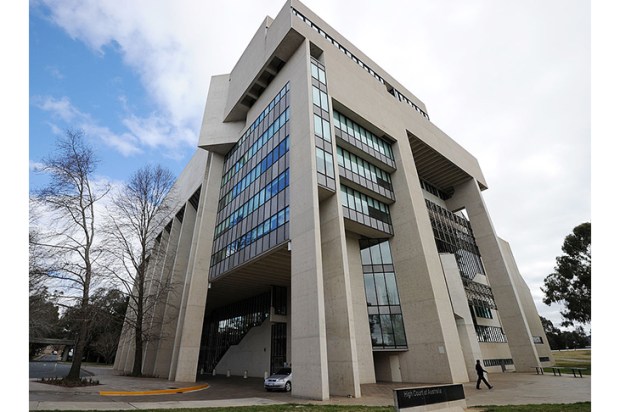
Miscarriages of justice, of which the persecution of Cardinal George Pell was the most prominent, have eroded confidence in the rule of law just as the extraordinary case of Lawyer X, aka Nicola Gobbo, has eroded confidence in the probity of the police.
Crystallising the travesty of what passes for justice is the case of cyclist Ryan Meuleman, who was seriously injured when he was struck in 2013 by the SUV of former Premier Dan Andrews and his wife Catherine. The case is finally going to trial after a report conducted by the state’s former Assistant Commissioner for Traffic and Operations found that Victoria Police had engaged in an ‘overt cover-up to avoid implicating a political figure in a life-threatening’ incident. The Andrews’ called the report ‘appalling conspiracy theories’.
All of this corrupt malaise was compounded during the Covid pandemic into a brutal authoritarian regime that imposed inhumane and destructive lockdowns, persecuted ordinary people for standing up for their rights, and deregistered honest doctors like the heroic Dr Mark Hobart who was deprived of his licence to practice simply because he issued valid Covid vaccine exemptions. He is still fighting to get his licence restored.
Yet perhaps the most troubling aspect of this sordid picture of social and economic decay has been the complete inability of the Victoria opposition to lay a glove on longstanding Premier Dan Andrews despite all the scandals that were investigated and went nowhere.
Recently deposed opposition leader John Pesutto was an adviser to both of the last Liberal premiers – Ted Baillieu and Denis Napthine – who, between them, only managed a single term in parliament.
Pesutto was preselected for Baillieu’s seat of Hawthorn after Baillieu retired from politics in 2014. He won the leadership challenge from now-opposition leader Brad Battin by just one vote in 2022, a testimony to the ongoing deep divisions in the Victorian Liberal party.
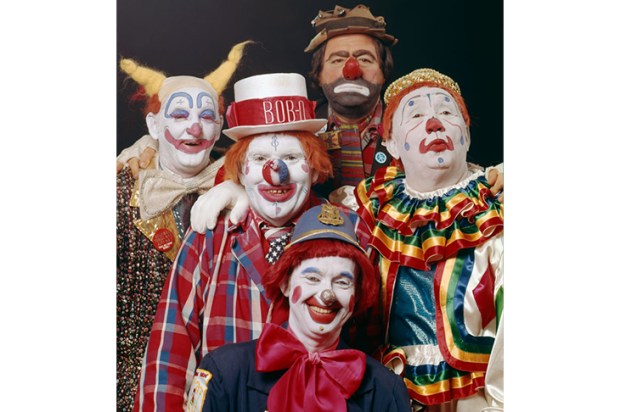
Pesutto seemed to take his cue cards from Labor, spending most of his unhappy tenure engaged in fighting an incomprehensible and utterly indefensible defamation case against one of his most talented junior MPs, Moira Deeming, instead of taking the fight up to the Labor government. The fact that his party backed him even after he lost the case suggests that it is not just Pesutto who is out of touch with the majority of Australians on the issue of the rights of women and girls.
With the change in Opposition leader from John Pesutto to Brad Battin, the party may be taking the first step in moving out of Melbourne’s well-off eastern suburbs to the mortgage belt where Australian elections are won and lost.
And not a moment too soon. For the first time in a long time, polls show that the Coalition and Labor are level pegging. Given the parlous state in which Victoria finds itself, simply drawing even with the government is hardly encouraging. Yet it represents an almost 5 per cent swing against Labor.
Battin is Suburban Man, which is who he needs to be to win the next state election. But nobody, least of all his colleagues, should underestimate the challenges he faces. He and his colleagues must genuinely heal their divisions and unite behind him to have a chance of winning. They must be aware that they face not just the Labor party but a public service, police force, trade unions, and judiciary, all staffed with Labor appointees. The challenge will be not just to win government but to root out the rot that has corrupted the state’s institutions. To do that, they need a strategy not just to win but to win more than one term. It will take at least two or three terms to make Melbourne marvellous again.
Got something to add? Join the discussion and comment below.
You might disagree with half of it, but you’ll enjoy reading all of it. Try your first month for free, then just $2 a week for the remainder of your first year.