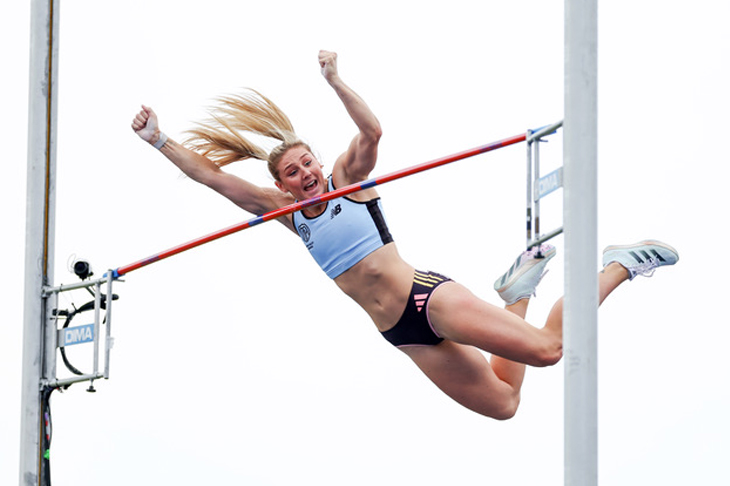
The public shaming of elite pole vault coach Alex Parnov reminds me of the time I was sent to cover a European athletics meeting. ‘Write something about pole-vaulting,’ the editor said. ‘Nobody ever does stories about pole vaulters.’ But when I got to the meeting I couldn’t find a pole vaulter to interview, so eventually I took a punt on a muscular young bloke doing stretches in the warm-up area. ‘Excuse me,’ I said, ‘are you a pole vaulter?’ ‘No,’ he replied, ‘I am a German – but how did you know my name is Valter?’
There’s nothing funny about pole-vaulting now, though – not in Australia, anyway. And sadly, Mr Parnov is only the latest in a long line of Australian coaches who’ve been accused of preying on their talented but all-too trusting charges. As a nation we should be thankful that, despite everything, it did not prevent many of them winning us lots of medals. Not long ago, I might have written, without any irony, that they’d been groomed for success. But the only international sport where the use of the words ‘groomed’ and ‘grooming’ would now be acceptable is dressage.
I’m sure I speak for many Speccie readers when I say that I miss the comparatively innocent days of doping scandals. This is one of the few sporting areas in which Australia has not punched conspicuously above its weight, but we’ve had our moments, and some of them involved athletes I really did interview. ‘When did you first start using them?’ was a question I put to sprinter Dean Capobianco only a few months before he was disqualified from international competition after testing positive to anabolic steroids. ‘When I turned professional,’ was his disarmingly frank response. ‘Who introduced you to them?’ was a question I subsequently asked Wallaby legend David Campese, to which he replied, ‘My coach.’ And when I asked Olympic gold medal weightlifter Dean Lukin ‘What would you say to young people about using them?’ he said, without hesitation, ‘Go for it.’ None of these mea culpas amounted to journalistic scoops, however, since they were all lines I had scripted for a 1996 TV commercial to launch the Adidas brand in Australia, the tag line of which was ‘Nobody says you can’t use performance-enhancing shoes.’
When it comes to grooming, we are still some distance behind the UK where, thanks to the desperation of police and media not to appear racist, grooming is now a euphemism for rape. As well as adding insult to the terrible injuries of the thousands of white working-class girls and teenagers now known to have been the victims of the so-called ‘grooming gangs’, this craven dereliction of official duty must have ramifications for other demographics. Do people employed by British racing studs and stables still call themselves grooms, for example? And how long before that bastion of progressivity and inclusion the Church of England – still reeling from the resignation of its 2IC following revelations of another massive cover-up – issues instructions to lesser clergy to remove the G-word from their wedding services, and refer instead to marrying couples as ‘the bride and bro’.
Like most Poms of my vintage, the closest I came to grooming as a child was watching it on television; specifically, watching documentaries in which an as-yet unknighted David Attenborough allowed 600-pound Rwandan gorillas to scan his then luxuriant locks for lice. Other episodes of the same ground-breaking series would locate him in the Serengeti in almost equally alarming proximity to an extended family of lions and their cubs. If he remade the same program today, of course, he would not describe such a group as a pride. Because just as the zeitgeist has stopped the word grooming being applied to standards of personal appearance, the word pride can no longer be used meaningfully in any heterosexual context.
Got something to add? Join the discussion and comment below.
You might disagree with half of it, but you’ll enjoy reading all of it. Try your first month for free, then just $2 a week for the remainder of your first year.