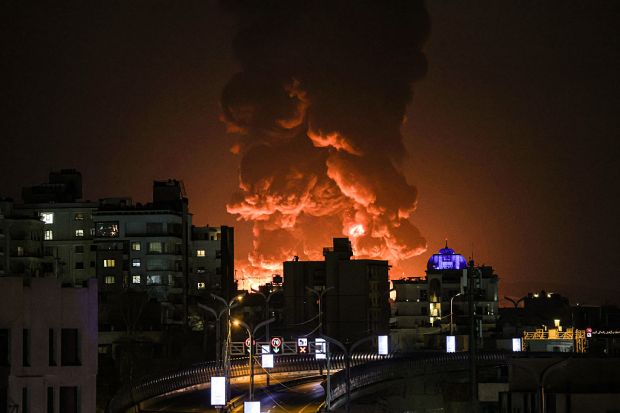
Nothing propels the advance of the Western anti-immigration right like a renewed display of Islamist fanaticism. And so it was that Austria’s terrorism near-miss in August fed straight into the first, thumping, national victory of the right-wing, anti-immigration Freedom party. A gang of young Muslim psychopaths, radicalised by Islamic State, planned to attack up to 87,000 fans going to a Taylor Swift concert in Vienna with a suicide car bomb and knives. The fast work of Austrian police, supported by US intelligence, averted a horror on a terrible scale.
As has become the norm in Europe recently, immigration, extremist Islam and security issues dominated Austria’s election campaign, a focus reinforced soon after the Taylor Swift scare by a failed Syrian asylum-seeker randomly knifing to death three people at a ‘diversity festival’ in Solingen in neighbouring Germany. The Freedom party, led by Herbert Kikl, an admirer of Hungarian Prime Minister Viktor Orbán – champion of strong borders and enemy of all things woke – is on a collision course with the EU in wanting no more asylum seekers. This policy resonated strongly, as did its fierce criticism of Green and transgender pieties. The party won 29 per cent of the vote – dramatically up from 16 per cent at the last election in 2019 – while the government coalition parties, the centrist Austrian People’s party and the Greens, went sharply backwards.
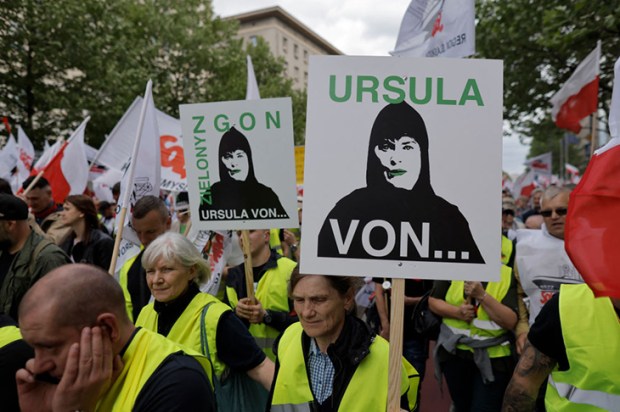
The international media predictably went into overdrive claiming that the result was a victory for the ‘far right’. Under any plausible definition, ‘far right’ and ‘hard right’ mean actual Nazis – violent, anti-democratic anti-Semites. While the Freedom party’s first two leaders between the 1950s and 1970s were indeed former Nazis, its record doesn’t bear out charges of extremism: it has participated in government frequently, including currently in three states, and had good relations with Austria’s long-serving Jewish socialist chancellor Bruno Kreisky. The party certainly worries about very high Muslim immigration in recent years – just like much of the rest of Europe. The one real concern is that the Freedom party, like a number of similar right-wing parties across Europe, is soft on Putin, encouraging him to think that the West is losing interest in opposing his savagery in Ukraine.
In Austria an increasingly familiar European political game now begins where a right-wing party shunned by polite society wins the election but falls short of a majority. Various outcomes are possible. One could be, as after recent elections in Poland and Spain, where the losing majority of parties simply shut out the victorious deplorables. Other options are: the right being admitted into the tent as long as their leader doesn’t head the government (which Geert Wilders accepted in The Netherlands); or minority governments excluding the right but backing their policies in return for parliamentary support (France, Sweden). The instincts of Austria’s President, a Green, will be to shut the Freedom party out, but the mainstream conservative People’s party could well prefer a coalition with them to teaming up again with the Greens and/or the Socialists.
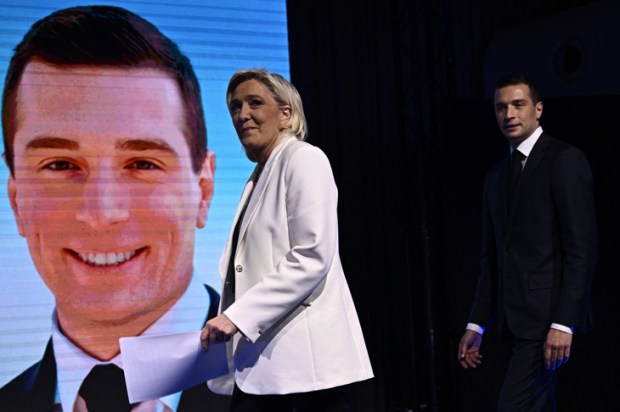
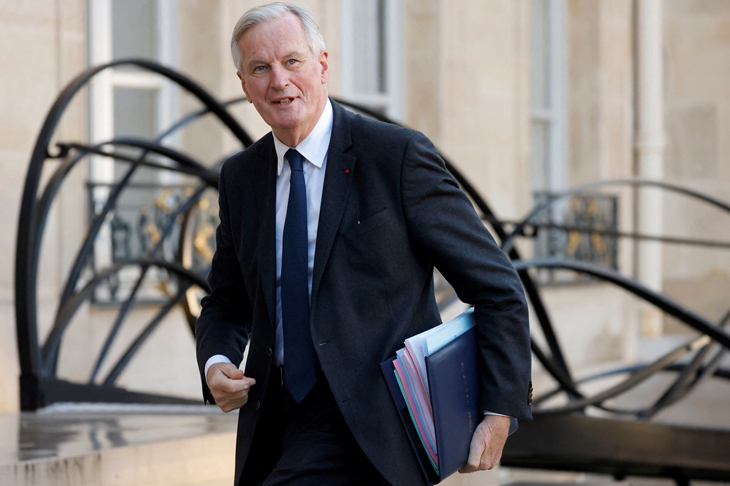
Few have noticed that not only Austria but France has also shifted decisively rightwards. Even though the left won the second round of national elections in July, the usually left-inclined Macron somewhat unexpectedly gave the prime ministership to Michel Barnier, who has recently echoed Enoch Powell: he’s said his first priority is to stop immigration, having previously said he’d like to do so for years. In consultation with Le Pen, he’s appointed the right-wing Bruno Retailleau to do this job as interior minister. With no working majority, the survival of Barnier’s government depends on Le Pen. And if Barnier’s government turns into a disaster, she can deny responsibility and remain focused on her key aim, winning the presidency in 2027.
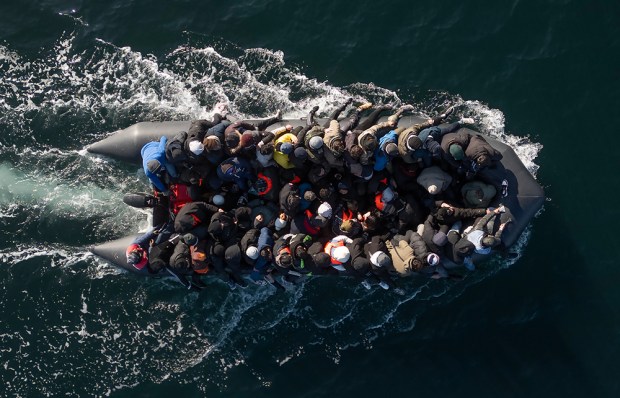
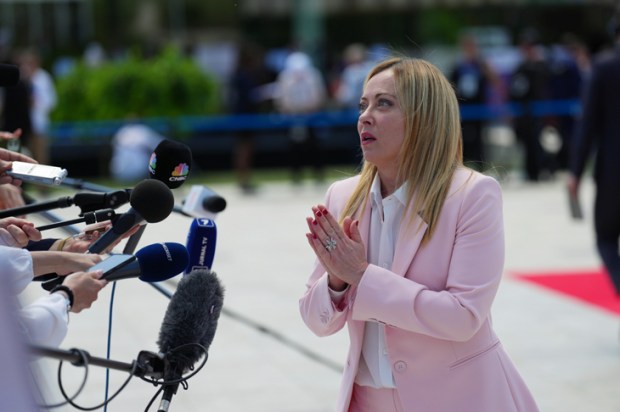
The same anti-immigration, rightward trend continues to surge across Europe. Sweden, since 2022 ruled by a centre-right coalition informally supported by the fervently anti-immigration Sweden Democrats, has abruptly gone from boasting of its acceptance of around half-a-million asylum-seekers in 2015-17 to now boasting of negative immigration, boosted by planned offers of US$35,000 to migrants to return home. It’s also banning cousin marriages. The new Dutch coalition government, in which Wilders’ party holds the immigration ministry, demands withdrawal from the EU regime which distributes asylum seekers around member states. And Italy’s Giorgia Meloni is finally moving on her promise to stop the boats, striking deals with Tunisia and Albania (set to become the Italian Manus Island), which seem to be behind a 60-per-cent drop in boat arrivals so far this year compared to 2023.
Germany’s left-green-dominated government meanwhile has been spooked by a series of state elections where the at times plausibly ‘far right’ Alternative for Germany party has won more votes than the three government coalition parties combined – and for the first time topped a state poll. Trying to stave off them and the resurgent opposition Christian Democrats, Germany’s mainstream centre-right party favoured to return to power in next year’s elections, Chancellor Olaf Scholz is trying to seem tough on immigration, re-establishing policed land borders, repatriating asylum-seekers to Afghanistan and embarrassing British Prime Minister Keir Starmer by publicly pondering use of the UK-funded Rwanda offshore processing facilities Labour has abandoned.
Still, Europe’s left isn’t giving up easily. The EU institutions still don’t reflect the shift to the right, so, for example, continue to punish Hungary for preventing asylum seekers arriving through the EU’s south-eastern border – which most ordinary Europeans would thank them for. Prominent figures on Europe’s right – Le Pen and Salvini, the former Italian interior minister who stopped the boats – seem disproportionately susceptible to legal action of dubious justifiability.
Over the past ten years Angela Merkel and Viktor Orbán have offered starkly different visions of Europe’s future. To the dismay of the Continent’s left-liberal political and media class, voters clearly prefer Orbán’s strong borders to Merkel’s’ ‘welcome policy’ – and all signs point to the trend continuing. It’s being reinforced by the growing popular backlash against climate catastrophism. That could have a global impact especially via Germany, where Christian Democrat leader Friedrich Merz, likely to lead the next government, wants to scrap the EU’s planned 2035 ban on new petrol cars.
Aside from Britain and Ireland for the foreseeable future, Merkel’s legacy could be wall-to-wall right-wing governments across Europe.
Got something to add? Join the discussion and comment below.
@markhiggie1
You might disagree with half of it, but you’ll enjoy reading all of it. Try your first month for free, then just $2 a week for the remainder of your first year.