Australia would not be alone in being grateful, as recommended in the Weekend Australian by former top defence and home affairs bureaucrat Mike Pezzullo, for the ‘invaluable’ damage Israel is now inflicting on Iran’s terror proxies, especially as it steps up its campaign to destroy the Shi’ite Hezbollah in Lebanon. Already one such effective ‘thank you’ to Israel has come from an unlikely source – a political leader within Lebanon itself, former prime minister Fouad Siniora, who is no friend of Israel’s, having been prime minister last time Israel and Hezbollah were at war. Like Israel, he also wants Iran out of Lebanon, but there is no way he would be volunteering a positive view of Israel’s expected ‘significant response’ to Iran’s recent missile assault.
Israel’s successful retaliatory attacks following Hezbollah’s unhindered launching of missiles into Israel from Lebanese soil (with a special series for the Jewish Holy Day of Yom Kippur), have brought an unintended benefit to the majority of Lebanese – the serious weakening, through the destruction of its leadership, of the Hezbollah terrorist organisation. It is now up to Lebanese voters to deal a similar blow to its disproportionate political representation in the (leaderless) Lebanese parliament.
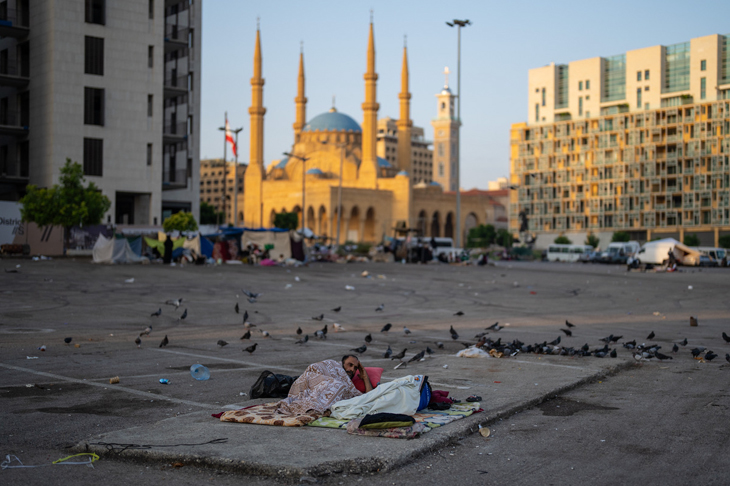
As a political leader of the main Muslim sect in Lebanon, the Sunnis, it is significant that Siniora sees a silver lining to the dark cloud of the current Gaza-induced Israel-Hezbollah war. While the high cost in civilian casualties involved in Israel finishing the job of destroying Hezbollah makes him a strong and vocal opponent, demanding an immediate ceasefire before Lebanon collapses completely, he considers that Israel’s already significant ‘weakening’ of Hezbollah provides real hope for Lebanon’s future. It paves the way to an end to Lebanon’s disastrous ‘failed state’ years of leaderless political chaos, internal racial division, murderous sectarian conflicts, financial corruption and the ‘hijacking of power’ by the Iran-backed minority Shi’ite terrorist Hezbollah
Although it was submerged in most media reports by the political necessity for Siniora to excoriate Israel with accusations of war crimes, the hope for a better future for Lebanon thanks to Israel emerged last weekend when he indicated to Sky News that Israel’s successes against Hezbollah gave Lebanon ‘a great chance to reduce the influence of Hezbollah’ which had ‘hijacked the country and the government’.
‘Lebanon must turn a problem (Israel’s destructive attack on Hezbollah and its leadership) into an opportunity. You cannot rule the country when you have two states… the state of Hezbollah… and the proper state that has been diminishing in authority.’ But this requires Iran staying out of Lebanese affairs ‘not only directly but also through its tentacles’. And Hezbollah must be held to the full implementation of the UN resolution 2006 after the last Israel-Hezbollah war that prohibited its occupation of large parts of southern Lebanon from which it had launched continued attacks on Israel – a prohibition that it ignored and the UN did nothing to enforce – and that ultimately led to Israel’s current punitive land invasion.
The immediate need, according to Siniora, is for Lebanon’s political leadership vacuum to be filled by electing a president and ceasing the two years of powerless caretaker government. ‘We cannot wait for a ceasefire. We have been unable to elect a president since 2022, because some groups in the country, particularly Hezbollah, have been insisting that they want a president acceptable to them.’ Given Hezbollah’s weakened capacity to frustrate the election of a president, Siniora wants action now. This is also the view of the Biden administration, which, the Wall Street Journal reports, sees electing a president as a way of ending Hezbollah’s long-running dominance.
But while hopes may spring eternal in Beirut and Washington, the political realities appear far from favourable. Lebanon’s president is elected by the 128-member parliament, where no single bloc has the seats to choose a new leader on its own – the votes of Hezbollah’s elected political wing are needed. But with the US proposal depending on the support of Prime Minister Najib Mikati and Speaker Nabih Berri, both of whom have endorsed Hezbollah in its war against Israel, and with Hezbollah’s de facto leader Naim Qassem rejecting calls for a political rearrangement that would disadvantage it, Mikati and Berri are unlikely to be helpful despite their statements in support.
According to the WSJ, after US Secretary of State Antony Blinken called the leaders of Qatar, Egypt and Saudi Arabia last week to ask them to ‘support the election of a new Lebanese president in order to break the stranglehold that Hezbollah has had on the country and remove its veto over a president’, officials from Egypt and Qatar – which have played a key role in ceasefire negotiations in both Gaza and Lebanon – told US officials they viewed the American plan as unrealistic and even dangerous, and that Israel will never succeed in destroying Hezbollah which must be a part of any political settlement.
The WSJ also reported that Egypt, too, has expressed concern that trying to meddle in Lebanese politics during the crisis could heighten the risk of internecine fighting in a country that suffered a debilitating civil war that ended in 1990. Many of its political factions are led by former warlords from that conflict. ‘Anyone seen as taking power as a result of Israel’s attacks on Lebanon could face blowback from the Lebanese public and rival political forces.’
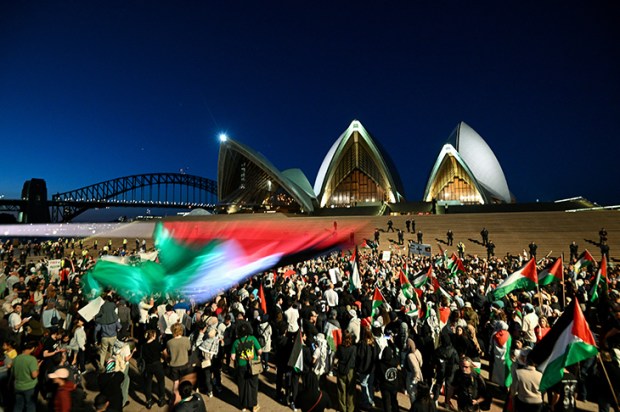
Whatever the outcome, it may have little impact on the Lebanese diaspora in Australia, where almost two-thirds of the quarter of a million with a Lebanese background, are Christians who have long-standing problems with the bitter sectarian divide in their homeland. Ever since Malcolm Fraser’s disastrous Lebanese concession of 48 years ago (no immigration checks on self-nominated Lebanese civil war ‘refugees’) dumped a flood of largely unskilled Muslims (many bringing their Sunni-Shia conflicts with them) into what had been a Christian Lebanese patch of well-integrated Australian citizens. As for the one-third or so of Lebanese Australians who are (overwhelmingly Sunni) Muslims, the noisy participation of many of their leaders in public discourse overstates their size and influence; they are only a fraction of Australia’s total Muslim population that makes up only 3.1 per cent of our 27 million. A façade of ferocity is perpetuated by bellicose imams stirring up anti-Israel and anti-Semitic demonstrations (supported eagerly by rent-a-crowd neo-Marxist anti-capitalists) along with ego-prompted (and unrealistic) threats of creating influential religion-based political parties claiming to represent what is, in reality a hugely divided, both ethnically and spiritually, local Muslim cohort; there are now more Asian and sub-continenalt followers of Islam in Australia than from the Middle East. So there is no such thing as a cohesive ‘Muslim vote’. Nor should there be.
Got something to add? Join the discussion and comment below.
You might disagree with half of it, but you’ll enjoy reading all of it. Try your first month for free, then just $2 a week for the remainder of your first year.