During the past year, if anyone has asked me about the US presidential election, I have replied that the biggest challenge to Donald Trump is… Donald Trump! Having watched the debate with the Democratic party candidate Kamala Harris last week, my impression was only reinforced. Most observers – including those who support the former president – concede that Vice President Harris out-performed him during the televised debate. Their assessment of the consequences vary widely from Mr Trump having lost the election to the debate making little difference. Being so far from the US and not being able to observe and assess the campaigns on the ground –especially in the crucial three or four swing states –it is very difficult to judge the impact of the debate. This is true of the campaign generally. My experience of campaigning for over three decades in Australia, is that the local campaigns – generally not observed by the national media – can be critical to success or failure. Listening to so-called experts simply regurgitating the lines from one party or the other is not enlightening. This seemed to have reached absurd proportions after the US debate. Commentators were reporting, for example, that the ‘Harris team were claiming that the debate had been decisive.’ To paraphrase Mandy Rice-Davies, ‘They would say that, wouldn’t they!’ There was no interrogation of the claim, just the repeat of the lines circulated to the media. The left-wing media was equally incredulous about the Taylor Swift endorsement of the Harris/Walz team. If celebrity endorsements counted, Hillary Clinton should have won two terms in the White House.
Lest I be misunderstood, I am no fan of Ms Harris. She strikes me as an example of an unfortunate phenomenon in politics – the person who rises through the ranks because of patronage rather than talent. The old saying comes to mind, ‘You only get to the top by not asking any questions; and you only remain there by not answering any!’ ‘Whatever it takes’ appears to be her philosophy. Her mendacious attacks on Mr Trump, equating him with Nazis is a factor in the extreme toxicity of the presidential campaign. She was chosen as the vice presidential candidate to appeal to certain demographics; and became the presidential candidate because there was no other easy pathway for her party. Despite all of this, she may well become the 47th president of the United States of America.
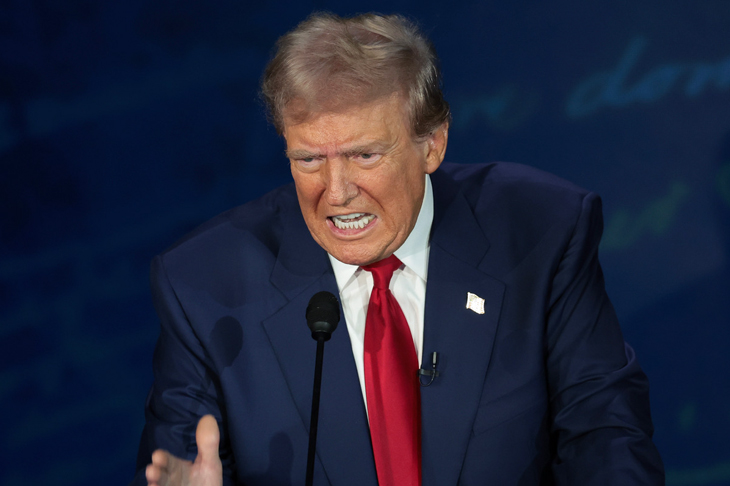
But let me return to Mr Trump. Despite making some telling points about immigration, for example, he often appeared petulant and undisciplined. Claims have been made subsequently that he was baited by Ms Harris. This is no doubt true, but he must have expected her to do so. Instead of going on and on about unfairness and lies, why didn’t he dismiss her claims quickly and pivot to the subjects that concern ordinary Americans such as the cost of living, the state of the economy and illegal immigration? He could have restated these issues over and over, reminding his audience that Ms Harris has had four years to fix the problems, but has failed. He could have also summarised her flip-flopping policy positions, pointing out her deceptions and asking why she won’t revert after the election.
Mr Trump also claims that the debate was rigged against him and that the moderators were biased in favour of his opponent. Again this appears to be true. It has since been alleged by an insider at the network that the broadcaster agreed not to ask certain questions of Ms Harris. Her many claims were not fact-checked by them. But he must have expected this to be the case. He went into the debate knowing that the mainstream media is firmly pro-Harris. John Howard taught me that you front up, argue your case and don’t complain about the process. He was unimpressed once when I declined to appear on a television program. My staff had advised that it was totally stacked against me. The moderator, the panellists and the audience were all hostile. The prime minister was unmoved. ‘You should always turn up and prosecute your case,’ he said. ‘People, respect that. Don’t complain about it, however unfair.’ It was good advice. People don’t like whingers.
Other aspects grated. Trump’s answer on Ukraine, for example, seemed evasive. He appeared to fumble his answer to a question about healthcare, saying that he had ‘concepts of a plan’ without referring to any specifics. Given the prominence of Obamacare in national discussions for many years, this was a lost opportunity to at least highlight its deficiencies.
Surely Mr Trump has advisors to counsel him about these issues? I have met some of the people who served him in the White House. They were experienced, professional advisors who understood the nuances of public debate. I get the impression that Trump ignores the advice tendered to him.
As the debate reached its conclusion with closing statements from the candidates, I recalled some advice a constituent once gave me: ‘Don’t stuff it up!’ Instead of reiterating his key political messages, Mr Trump again launched into his ‘I was robbed, they are telling lies’ mantra. Undoubtedly he has been under immense stress. The almost constant barrage of lawfare against him must seem unbearable at times. He has displayed considerable personal courage following two assassination attempts – and reports also of an Iranian plot to kill him. It is difficult to imagine how taxing this has been.
Clearly both candidates were pitching to their base. But each of them needs to secure enough of the undecideds or those who currently do not plan to vote.
This analysis may be misplaced. I found over the years that there is no substitute for continuously monitoring the grass roots: on the streets, in the shopping centres, in community groups and on talkback radio. Listening to their comments and criticisms, and endeavouring to distill the common themes and messages, was more valuable than any poll. This face-to-face feedback is not always picked up in polls. Many people are reluctant to share their opinions on a phone poll. Polls best reflect trends over time.
It may be that Mr Trump’s messages – such as his references to increased crime – reflect the concerns of ordinary Americans. If not, his contributions to the debate will be viewed as an indulgent waste of an opportunity to convey his solutions to the nation’s real challenges. We will find out in less than two months’ time.
For decades, we have listened to and read the speeches of American presidents and candidates. From John F. Kennedy to Ronald Reagan and onto Barack Obama, they set out a vision for the land of the free. Such calls for the nation to fulfill the vision of its founders have been almost entirely missing from this campaign. The polity is the poorer as a consequence.
The debate again reflected the differences between the parliamentary and presidential systems. Australian members of parliament have to answer questions every day. Bland, general statements do not suffice. An absence of detail is marked down here. A politician who repeatedly attempts to avoid answering questions – such as Dan Andrews – may get away with it for a while, but is eventually penalised. This is the danger that Anthony Albanese currently faces. A sullen quiet electorate doesn’t equate with support. More likely, the voters are waiting with their baseball bats for the next election.
Got something to add? Join the discussion and comment below.
You might disagree with half of it, but you’ll enjoy reading all of it. Try your first month for free, then just $2 a week for the remainder of your first year.