Hollywood. A place where anyone can succeed, we’re told, regardless of race or creed. Its sacred studios are a factory of dreams. An ordinary person can become famous overnight with a little perseverance and the right agent. Ever since the invention of the motion picture, acting has been considered a noble profession. Once upon a time, we held actors in the highest regard as the living embodiment of the American dream, a career to which the average person could aspire but could never fully achieve.
But in Hollywood these days, it seems that the wealth of an actor directly correlates with their level of hypocrisy and stupidity. People who occupy a place in this social strata are sometimes referred to as the luxury-belief class. You see, Tinseltown will provide any aspirant actor with power, money and fame. One thing that is lost in this Faustian pact is basic, bloody common sense. The A-list elite in Hollywood now frequently trade intelligence for attention. Actors often embarrass themselves when it comes to the world of politics. Who can forget Seth Rogen verbally abusing people online who were telling him he’s not a well-informed, intelligent political activist or Ron Perlman exhibiting a hissy fit on social media about issues he clearly does not understand? Acting and morally righteous activism have come to be synonymous.
Environmental propaganda (sorry, ‘activism’) is by far the most common cause that actors get involved with. Ozi: Voice of the Forest, a new animated film, was released a few weeks ago by Leonardo DiCaprio’s production company, Appian Way Productions. The plot of this ninety-minute children’s film centres on Ozi, a young hipster orangutan who fights a nasty corporation that wants to destroy her rainforest home. She learns how to use social media from a few people she meets along the way, and she decides to turn into an online influencer in an attempt to shut down the company (yes, this actually does happen).
It was not well received. It appears to have gone down like a cold cup of sick on Masterchef. Even the Guardian gave it two stars – and they’re hardly climate sceptics. If the rule of direct proportion adheres to hypocrisy, then this one is inversely proportional, as the movie only made an average of $A430 per cinema during its opening weekend. It’s known as ‘go woke, go broke’ in contemporary lingo. Given DiCaprio’s personal wealth, he can afford to take the hit. Still, its creators won’t be discouraged. To them, winning over their ideological allies with praise is more important than maintaining narrative coherence or artistic integrity.
The movie is an allegory about the pervasive evils of capitalism, as you’d expect from anything green; it presents the pursuit of profit as a zero-sum game. It drives home the message that starting a business is by its very nature destructive. But this is not just about capitalism. The green narrative is easily refuted and countered, as if things couldn’t get any worse. Hint: they do.
A malicious, fictitious palm oil company is Ozi’s enemy. Apart from the protestations of a small group of environmentalists, palm oil is a ubiquitous but seldom discussed ingredient found in our store cupboards. Roughly half of all packaged goods in stores, including everything from chocolate to shampoo, are thought to contain it. The product has historically been associated with deforestation, but like many other products, its cultivation and production practices have greatly improved in recent years, ironically, thanks to technology and innovation, the twin pillars of free market capitalism.
There has been a shift in recent years towards sustainability in Southeast Asia, which produces 85 per cent of the world’s palm oil. Ninety-three per cent of the palm oil that is sold in Europe has sustainability certification. In 2020, Indonesia’s deforestation for palm oil accounted for just one-fifth of the country’s total ten years earlier. Another major producer of palm oil, Malaysia, has seen a precipitous decline in annual forest loss in recent years – deforestation has fallen 70 per cent since 2014.
Not that it matters to Ozi’s producers. Why let facts get in the way of a good story? I understand writers’ tendency to embellish things because I work as a movie critic. However, this isn’t Star Wars; this is sheer propaganda. It’s common knowledge that things are often simplified for children, but this is absurd. It reduces the world to a straightforward trade-off between the demands of climate change and the advancement of Western living standards. They tell the kids from their elegant, heavily guarded Californian mansions that you can’t have a more prosperous future.
To be completely honest, Hollywood’s obvious hypocrisy in lecturing us about the perils of free markets irks me more than the story itself. Hollywood’s cultural elite appear to have no problem circumnavigating the globe in private jets to demonstrate their virtue and commitment to ‘raising awareness’ of climate change. Yet the luxury-belief class would never give up the lavish lifestyle they constantly criticise.
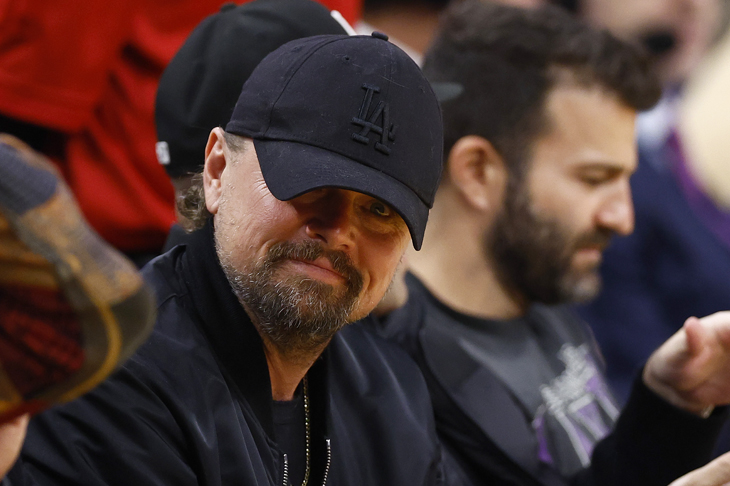
When it comes to eco-zealots, DiCaprio is among the worst. Wikileaks published emails in 2015 that showed the actor had once taken an astounding six private plane trips in the span of six weeks. He warned us that ‘climate change is real’ in his Oscar acceptance speech the following year. A few months later, he travelled eight thousand miles across the Atlantic in a private jet to accept an award for his environmental activism. Irony is built into the foundation of the luxury-belief system.
This is not limited to aircraft. One of DiCaprio’s conveyor belt of girlfriends accompanied him on a cruise aboard the Vava II, the biggest superyacht in Britain, which eats her way through a massive 300 gallons of diesel per hour.
DiCaprio is entitled to his private jet and legion of youthful girlfriends, whose consistently young age reads like the top-order average of the England cricket team. He can even have his hypocritical ideology. What really bothers me is the preachy propaganda he wants the rest of us to believe.
Got something to add? Join the discussion and comment below.
You might disagree with half of it, but you’ll enjoy reading all of it. Try your first month for free, then just $2 a week for the remainder of your first year.