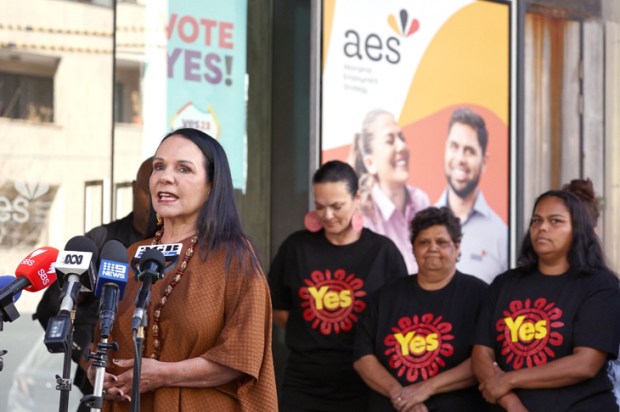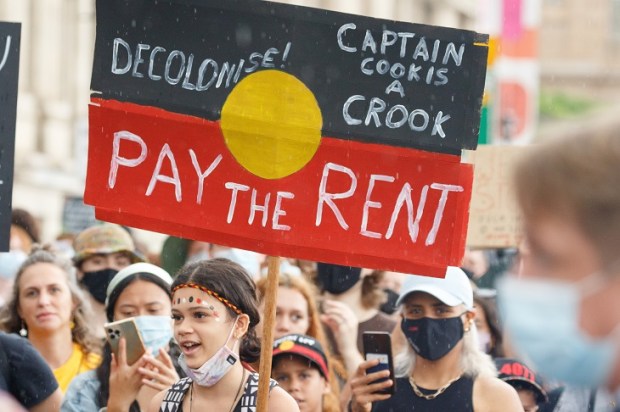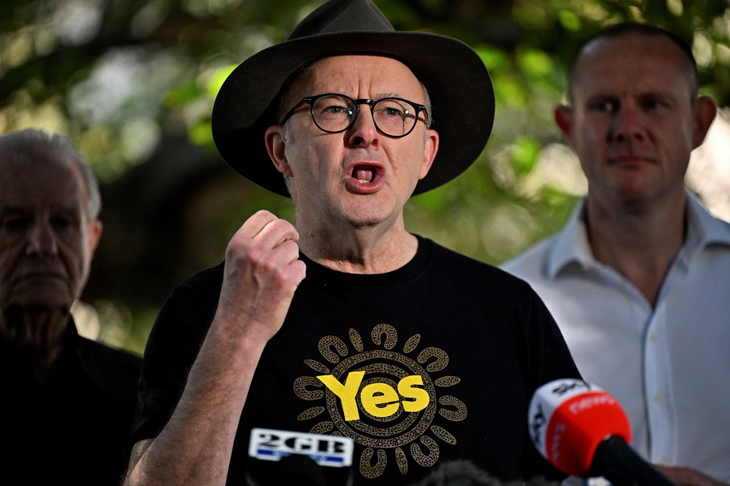
Less than a year after Labor’s proposal to permanently entrench race discrimination in Australia’s constitution with an eerily disembodied Voice to parliament, the people of the Northern Territory – of whom some 30 per cent are indigenous – used the old-fashioned megaphone of the ballot box to ‘Voice’ their own opinions. It wasn’t pretty.
The state-subsidised pundits at the SBS predicted a ‘tight race’ and the Green-left anarchists at the national broadcaster turned to a psychic crocodile called Speckles, no less, claiming that when it snaffled a fish attached to a picture of the Labor premier that meant it was voting for her. As it turned out, what Speckles did to the fish bore an uncanny resemblance to what Territorians did to Labor. Even the ABC was forced to admit that the election result ‘shattered Territory Labor’. They claimed this was because the election was ‘dominated entirely by law and order’ but failed to mention the key role the federal Labor government had played in fuelling the breakdown of law and order by ending the ‘grog’ bans that had been in place for 15 years in many remote indigenous communities with predictably disastrous consequences.
The NT already had the highest levels of domestic violence in the country, concentrated in the indigenous community, but unfettered access to alcohol obviously made that worse. Escaping the violence at home, bands of marauding youths took it to the streets of Alice Springs. Eventually, Prime Minister Albanese was forced into reversing the disastrous policy but the ABC only mentioned that alcoholism had ‘proved stubborn for governments of both stripes to fix’.
Yet for all the focus on law and order, that is far from Labor’s only failing. When the federal Labor party won government in 2022 it promised not just to implement the Uluru Statement from the Heart but to develop policy informed by a ‘First Nations Voice’. But whose voice?According to a former senior indigenous officer of the Department of Foreign Affairs and Trade writing earlier this month, ‘the voice’ of ‘First Nations’ from Brazil to the Pacific to Australia is increasingly unified in ‘calling for an end to fossil fuel use’ because they are observing ‘the early onset of catastrophic climate change’ and are ‘unwilling to kowtow to colonial, industrial and extractive economic ideas, systems and rationalisations’.
That point of view has no doubt influenced Labor thinking, but as the Minerals Council of Australia points out, mining employs a higher proportion of indigenous Australians than any other sector of the economy, including about 18 per cent of indigenous men in remote areas, with around 10 per cent of all mining apprenticeships filled by indigenous people.
Utterly indifferent to the importance of mining to many indigenous people or to other considerations like, say, national prosperity, in late July Prime Minister Anthony Albanese announced that the Jabiluka uranium reserves would ‘never be mined’ and instead would be incorporated into the neighbouring Kakadu National Park.
Former Labor environment minister and frontman for 1980s rock group Midnight Oil, Peter Garrett, was thrilled. Together with representatives of the Mirarr people he’d lobbied the federal minister for just this outcome. Garrett says the Jabiluka lease contains highly significant indigenous cultural sites but presumably nobody, other than a select few designated by the Mirarr people, will be allowed to see them.
No one should be surprised that federal Labor’s uranium mining policy is being shaped by aging rock star activists. When then Labor prime minister Kevin Rudd put an end to the party’s utterly ‘out-dated and illogical’ policy on uranium mining, as South Australian Labor premier Mike Rann put it, Garrett and Albanese were vocal in their opposition. Rann said of the ditched policy in 2010, ‘It’s gone now, for all time’, but with Albanese running the country it seems Rann spoke too soon.
Nobody was surprised either when the Federal Environment Minister Tanya Plibersek banned a new Central Queensland coal mine near the city of Rockhampton in 2023 which was to be built by businessman, former MP and founder of the United Australia party Clive Palmer.
Plibersek rejected the mine on the grounds that it posed too great a risk to the Great Barrier Reef because of run-off, even though it would have been 10 kilometres from the coast, let alone the reef. Plibersek is not, of course, concerned about run-off from the construction of giant wind turbines within 10 kilometres of the coast.
When Plibersek put the kibosh on a $1 billion gold mine however she sent shockwaves not just through the mining industry but through the international business community. That’s because she blocked the new mine after it had received every single approval in Australia’s regulatory quagmire – environmental, indigenous, construction, and labour – a process that took four years.
What’s worse, Plibersek relied on an obscure clause in the Aboriginal and Torres Strait Islander Heritage Protection Act – Section 10 – to keep the reason for opposing the mine secret because it is ‘culturally sensitive’.
All we know is that even though the mine was approved by the official local Aboriginal land council who were keen to benefit from the jobs created, Plibersek blocked the mine based on a submission from another group claiming Aboriginality.
The chief executive of the Association of Mining and Exploration Companies commented that the ruling sets a ‘truly terrible precedent’ for investment risk and ‘sends a clear signal to international investors that any project, and any investment in Australia, can now be derailed by the objection of a small number of people’. As international business magazine Forbes observed, the ban has sparked warnings of a ‘sovereign risk crisis in Australia’.
Normally, the rule of thumb is that state and territory elections tell you little about how people might cast their votes in federal elections. But the outsized role of the federal government in the Territory’s politics and the huge amount of time and energy it invested in the Voice at the expense of dealing with crime and with cost-of-living pressures that affect everyone have led some pollsters to talk about whether the result has a message for federal Labor.
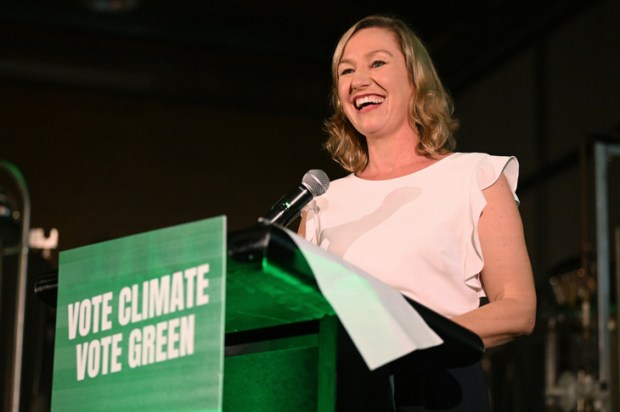
Up to now, the federal government has seemed indifferent to the economic and social consequences of its war on mining, but the Northern Territory election result may just have threatened jobs that really matter to Labor — their own.
Got something to add? Join the discussion and comment below.
You might disagree with half of it, but you’ll enjoy reading all of it. Try your first month for free, then just $2 a week for the remainder of your first year.