Within a week, Britain will have the most left-wing government in its history. This won’t be because of Labour’s popularity, but disappointment with the Tories. Many previous supporters will stay at home or vote for Nigel Farage’s Reform UK.
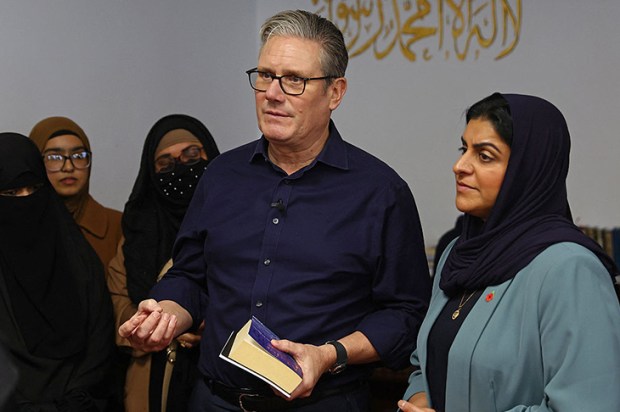
To get elected, Keir Starmer has projected himself as moderate and patriotic. But be in no doubt: the real Starmer is the former Trotskyist who describes himself as still a socialist, who prefers Davos to the British parliament, who ‘took the knee’ for Black Lives Matter, who removes his remembrance poppy before meeting Muslims, who claimed that a ‘racist undercurrent… permeates all immigration law’ and who said the hard-left Jeremy Corbyn would make ‘a great prime minister’.
He won’t be quite the calamity that Corbyn would have been, but he’ll interpret Labour’s likely landslide as public support for radical change. Class warfare will be unleashed on private education. Wokery throughout publicly-funded institutions will be unrestrained, junking for example recent restraints on the proselytising of transgender ideology in schools. Green fanaticism will be unleashed further and tax increases will be needed to fund Labour’s mad ambition to ‘de-carbonise’ the energy grid by 2030. They’ll also be needed as they lose revenue by strangling North Sea oil and gas – while destroying 200,000 jobs and further eroding energy security.
Starmer has ruled out new taxes only on ‘working people’ – whatever that means. Candidates for increases will include council tax, inheritance tax and capital gains tax. Wealth taxes on property might even be introduced.
On immigration, Starmer claims he’ll reduce sky-high current legal levels ‘significantly’ and will be robust in stopping cross-Channel immigration. But with Labour dominated by human rights lawyers and refugee activists, plus party strategists who believe the more non-European arrivals and demographic change the better, expect amnesties for illegal immigrants already in Britain and new arrivals – legal and illegal – to continue soaring.
Such is the dire state of the polls for the Tories that many of them would consider a loss on the scale of Tony Blair’s 1997 landslide – when they were left with 165 of 659 House of Commons seats – a good outcome. Most polls point to the result being much worse and their worst ever, one forecasting a close to a near extinction-level 53 seats. Casualties could include three-quarters of the cabinet, including Rishi Sunak.
How did the party that won an 80-seat majority in 2019 end up with this disaster? In a word, disappointment. Its supporters thought they were voting for conservatives. Boris Johnson’s delivery of Brexit obscured the fact that the rest of the Tories’ agenda was well to the left of what voters wanted.
The most spectacular of the Tories’ many failures has been immigration. They repeatedly promised to reduce legal immigration to the ‘tens of thousands’. Instead, the Tories since 2010 have added a net 4.3 million people to an already crowded country. This has come to symbolise epic elite betrayal on the central issue of our age, and the Tories now struggle to persuade people to believe them on anything.
Sunak claims he worked from the first day of his premiership to reduce immigration. Former home secretary Suella Braverman flatly contradicts him, saying he was ‘not interested’ in reducing numbers. On illegal immigration, having presided over the arrival of 130,000 cross-Channel asylum-seekers, Sunak probably called the election early because his Rwanda offshore processing plan risked stalling yet again with renewed legal challenges – or, even if planes finally took off, might flop with no deterrent effect.
The Tories completed the destruction of their base’s support with their Green fanaticism, the highest tax burden since Clement Attlee, the surrender to wokery of public institutions, including the police and the BBC, and the authoritarian outrages of the Covid lockdowns.
Sunak has failed to produce clear, bold policies on issues people care about, instead focussing on crackpot irrelevancies such as popularising chess, reforming school exams or emulating Jacinda Ardern’s bizarre, now abandoned anti-smoking policies. His early departure from the D-Day 80th anniversary events showed woeful political judgment, like his comment when chancellor that people would ‘just have to get used to’ higher utility bills inflated by Green taxes.
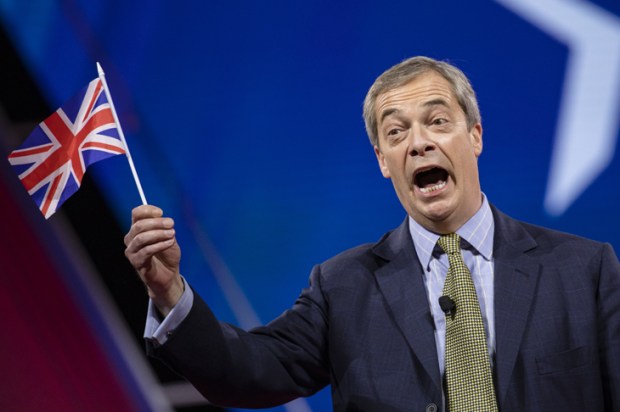
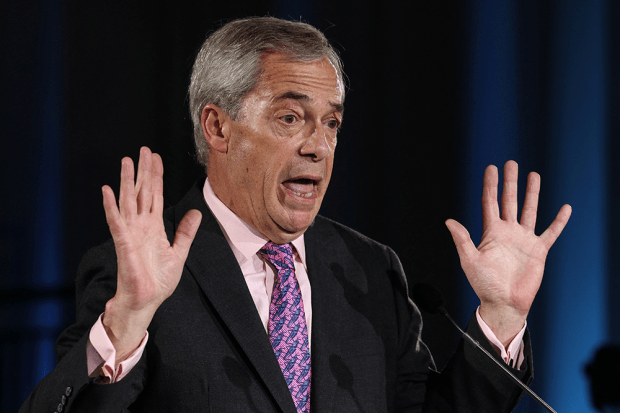
With the Tories having effectively vacated the right-of-centre ground, there’s long been an obvious gap in the market for a genuinely conservative party. And Nigel Farage has grabbed the opportunity. He doesn’t claim Reform UK can win this time – his aim is to establish a parliamentary beachhead. He’s on course to achieve that. Several polls put the party ahead of the Tories and it’s likely to win at least several seats. Farage’s policies are a blast of fresh conservative air: bold tax reductions; steps to stop the boats and to dramatically reduce other immigration; ending Green net zero; slashing sky-high foreign aid; and a war on wokery in public institutions. Farage is by far the election’s best communicator. His one misstep has been to echo Kremlin talking points in blaming the West for Putin’s invasion of Ukraine. He also says Putin’s invasion of a sovereign nation was wrong. It’s a pity he didn’t leave commentary on Ukraine at that. His perceived softness on Putin will generate doubts among some potential supporters who otherwise like his policies.
How should Britain’s conservatives vote? The Tories’ last, desperate argument is that votes for Reform UK will make the coming landslide bigger and Labour rule longer than it otherwise would be. Farage responds that Labour would win big even if Reform UK didn’t exist, that the Tories – whom he helped to power in 2019 – richly deserve destruction and that the central issue is who will be the most effective opposition to Labour. The answer is undoubtedly Farage, assuming he wins his seat. And even though the Tory wets will probably end up with at least ten times the number of Reform UK’s seats, they will be demoralised and divided. The party could split, with the ‘One Nation’ Tories possibly joining the Lib-Dems and the right joining Farage, so furthering his ambition of re-fashioning Britain’s right ahead of winning in 2029.
If I were British, I’d vote for Farage – despite his silliness over Ukraine – rather than for the hopeless Tories. They had their chance but blew it and deserve to be consigned to history.
Got something to add? Join the discussion and comment below.
@markhiggie1
You might disagree with half of it, but you’ll enjoy reading all of it. Try your first month for free, then just $2 a week for the remainder of your first year.