The fact that no highly respected economist is lauding the budget, and the public is clearly unimpressed, is bad enough for the Albanese government.
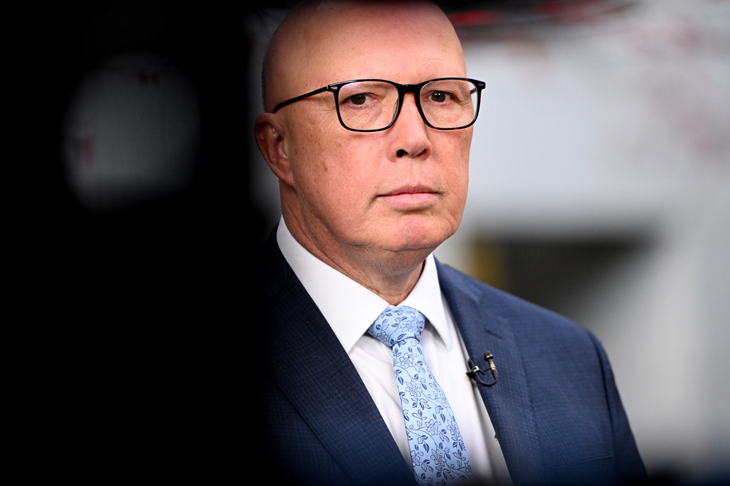
Worse, opposition leader Peter Dutton’s budget reply speech significantly increased the trend of him being seen as prime ministerial in a way that Anthony Albanese is clearly not.
The level of broad support for his call for a significant reduction in immigration and a ban on foreign investment in housing indicates that he could well be the next prime minister.
Without the Teal’s seats, that would seem difficult. But because they are increasingly dismissed as an ineffective, single-issue, Labor-lite party, obsessed with pushing ‘renewables’, their support is declining significantly.
And as Australians increasingly conclude that ‘renewables’ are excessively expensive environmental disasters that will not change the temperature in the slightest, the Teals’ hold will be consequently weakened. This will be accelerated if Nick Cater’s well-documented argument on ADH TV that they have been mainly and significantly funded by ‘renewables’ investors becomes widely known.
The Teals have enjoyed generous media support since the 2019 launch of the campaign by a then unknown independent, Zali Steggall, in Tony Abbott’s seat. To broadcast her launch live from the Domain, a popular current affairs programme was even cut short, an unprecedented decision.
But in addition to the Teals probably losing support, Labor’s hold on some of its seats may be weakened as rank-and-file electors find that under Dutton the Liberals will not be pushing unattractive Labor-lite policies.
Instead, Dutton is offering a strong range of real solutions to the many failures of the Albanese government.
Apart from immigration being seen as out of control, the Albanese government is incapable of exercising even minimal control over spending, defending the realm, controlling criminal detainees, and ensuring potential terrorists do not sneak into the country.
Traditional Labor support has fallen following the growing realisation that the parliamentary party has long been bent on eliminating working class jobs.
This began with sending manufacturing to China and is now reaching its zenith with the ideological campaign against fossil fuels.
Blue collar workers are increasingly realising that Labor, including union leaders, too often adopt positions that destroy their very supporters’ livelihoods.
Just recall what they did to the merchant navy and motor vehicle manufacturing.
It seems that the future Labor support base will consist of a rump of working-from-home public servants, assorted well-educated wealthy virtue-signallers, and those who have abandoned work for the endless dole or other modes of generous lifelong support by taxpayers.
They will be represented in parliament by career politicians, most of whom, it can be said, have never had a ‘real job’.
As voters get to know Peter Dutton, they are seeing a distinct difference, a man who has had a successful life outside of politics both as a policeman and as a small businessman. In addition, they will acknowledge that he has been a no-nonsense minister and an achiever.
Dutton only began to emerge in the public consciousness as a potential PM during the Voice referendum. He was widely commended both in his choice of the impressive Senator Jacinta Nampijinpa Price as indigenous shadow minister and his strong and courageous statements of policy.
The result was that the No vote was so successful that the Labor-supporting media, a large segment, did what they usually do with all bad news for Labor governments.They treated it as though it never happened.
More recently, voters will have noticed Dutton’s firmness in the face of Beijing’s aggressions, his rejection of Albanese’s and Wong’s rewarding of Hamas terrorists, and his overarching commitment to national defence.
Meanwhile, Labor’s anti-dam policy ensures that immigrants pour into Sydney, Melbourne, and, to an extent, Brisbane.
There, instead of standing up to Canberra, Labor premiers are obediently rushing to crowd the cities with too-often jerry-built high-rise buildings and without the range of essential services needed.
Other leading election issues will be the cost of energy, the cost of living generally, crime, and defence.
In all of these areas, Dutton is closer to the electorate than the Albanese government.
As to energy, Dutton has sensibly indicated that the nuclear energy ban will be repealed.
To avoid the inevitable scare campaign, he would be wise to indicate that decisions on specific locations are best reserved for the states and the people, as the constitution always intended.
Perhaps wisely, Peter Dutton has proceeded without challenging the theory of man-made global warming.
Apart from the theory being challenged by many eminent scientists, there is a very important political consideration.
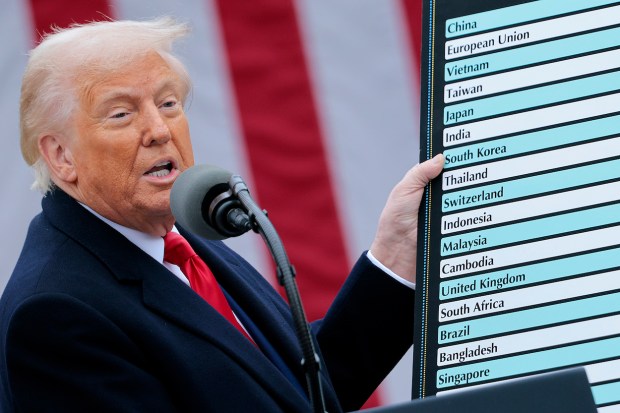
The likely Republican candidate in the November election, Donald Trump, has declared global warming a hoax.
As President, he is likely to remove the United States from any commitment to it, including zero emissions. This will result in a worldwide variation of Hans Christian Andersen’s fable, with the President revealing that the Emperor is wearing no clothes and that global warming is a hoax.
Except for those blinded by ideology or heavily invested in green technology, an increasing number of people suspect that the West is being taken for a very big ride.
It is curious that the ruling classes need someone of Trump’s strength as leader of the West to admit that this hoax serves only the interests of Beijing and various investors.
To conclude, the government’s win in Dunkley was the result of the media granting it the longest honeymoon any government has ever had in Australia and the opposition not campaigning on some damaging news at the time.
As I suggested in this column, the result would be a government tempted to proceed to an early election, especially if a royal visit takes place. Despite being republicans, Labor politicians would take any advantage they believed flowed for them from this.
Although the government long claimed the budget would be austere, as it approached, they reversed this and became profligate spenders.
It could now readily serve as a pre-election budget. This suggests that there is a temptation to go to an election before things get worse next year. And when has this Prime Minister resisted temptation?
Got something to add? Join the discussion and comment below.
You might disagree with half of it, but you’ll enjoy reading all of it. Try your first month for free, then just $2 a week for the remainder of your first year.