There is a tension at the heart of the Yes campaign for an indigenous Voice to parliament. It has puzzled me for some time why, when the government is doing all it can to convince us the Voice is just a gracious invitation on the part of indigenous people for us to join them in a journey towards a new national unity (or some such claptrap) and that it’s just a simple change to the constitution, on the other hand the members of the Referendum Working Group are going out of their way to tell us what it’s really about – voice, treaty (including reparations and some form of joint sovereignty) and truth-telling. We’ve had Marcia Langton, Thomas Mayo, Megan Davis and Marcus Stewart all giving us the lowdown for months.
Recently, video footage emerged of Megan Davis urging all Australians to read the full 18-page Uluru Statement from the Heart. I refer, of course to the non-Readers Digest version of the Statement, aka Document 14. Document 14 consists of five sections – the one-page Summary or mission statement, Our Story, Guiding Principles, Reform Priorities and Roadmap. This contains the demands that Prime Minister Albanese has committed to implementing in full. It’s frightening stuff, which is obviously why Albanese wants to keep it under wraps or, at the very least, avoid talking about it before the referendum. And I can understand why. The more Australians know about the full agenda the less likely they are to vote Yes.
So why aren’t the Referendum Working Group apparatchiks playing along and keeping schtum?
Let me offer a theory.
The Voice is the key. It is the enabling mechanism for treaty and truth-telling. The Guiding Principles of Document 14 tell us so:
A constitutionally entrenched Voice to parliament was a strongly supported option across the Dialogues. It was considered as a way by which the right to self-determination could be achieved. Aboriginal and Torres Strait Islander peoples need to be involved in the design of any model for the Voice.
There was a concern that the proposed body would have insufficient power if its constitutional function was ‘advisory’ only, and there was support in many Dialogues for it to be given stronger powers so that it could be a mechanism for providing ‘free, prior and informed consent’. Any Voice to parliament should be designed so that it could support and promote a treaty-making process.
As I have argued previously, the imperative that the Voice not be advisory and that it should be a mechanism for ‘providing free, prior and informed consent’, is the reason why the referendum question does not contain a caveat to the effect that the Voice is advisory only and, in fact doesn’t even use the words ‘give advice’ but rather ‘make representations’.
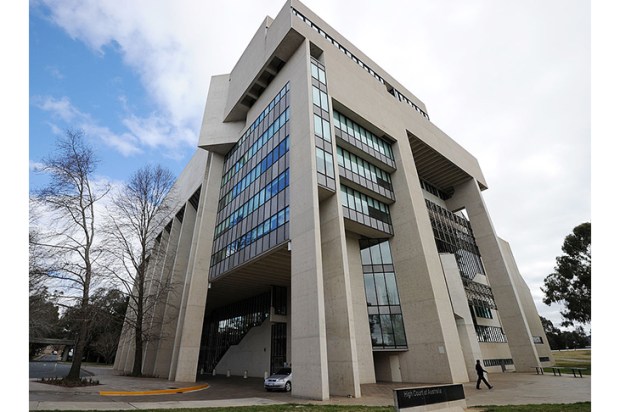
It is inevitable that if the Voice finds itself in conflict with the government, especially a future government – if the government refuses to accept advice on a matter that the Voice considers imperative – that the Voice will challenge that decision in the High Court. Among other things, it is likely to argue that our obligations under the United Nations Declaration on the Rights of Indigenous Peoples demand that government not enact any measure without obtaining ‘free, prior and informed consent’.
In this case the Court will have to satisfy itself whether or not the government is in breach of the constitution. Judges are divided on how to do this, and it is impossible to predict with any accuracy what they will do.
But one of the ways in which it could do this, is to examine the parliamentary and public debates before the referendum to determine what was in the public mind. What were they voting for.
If there had been no discussion in the public forum, no public awareness of the Uluru Statement’s Guiding Principles, during the referendum campaign, that would make the Court’s ability to find for the plaintiff somewhat problematical. Particularly if the government had continually insisted the Voice was to be advisory only. And even if it legislated the Voice in this way.
But if the Voice could point out that, during the referendum campaign, the public were made fully aware of the detail and implications of the Guiding Principles e.g., that the intention was that the Voice should have real power, then it would be that much easier for an activist High Court to find for the Voice. That is, that it is not a mere advisory body, but that its representations should be binding on government.
So here we have one part of the team whose imperative is to maximise its chances of achieving real political power, clashing tactically with the other half whose imperative is to win a referendum and write the PM’s name into the history books.
The only scare campaign being waged is that of the Referendum Working Group who are telling us what Albanese doesn’t want us to hear. They are, or have been, banking on the people not really listening and just going with the vibe. That might have worked but for the fact that the No campaign has been so effective. Maybe that’s why both Megan Davis and Pat Anderson so quickly recanted their previous positions that the Uluru Statement is an 18 or 26-page document, when it became an embarrassment for the government.
Theoretically, this tension also poses a dilemma for the No campaign. The more we know about the real agenda, the more likely it is that Australians will vote No. But, on the other hand, if the Voice does get up, it will have fertile ground to argue that the Australian people voted Yes in full knowledge of the agenda proposed by the Uluru Statement from the Heart.
If the No Campaign drags all this Uluru dirty linen into the open, we’d better make damn sure we win. Otherwise we will have someone like Megan Davis standing up in the High Court and saying, ‘Your Honours, we made it quite clear, as did the No campaign, what we were asking’.
On balance, I still think the members of Referendum Working Group are the best asset the No campaign has.
Got something to add? Join the discussion and comment below.
You might disagree with half of it, but you’ll enjoy reading all of it. Try your first month for free, then just $2 a week for the remainder of your first year.